Ducati Panigale V4

2027 Ducati Panigale V4

Even More Fire in the Red Corner

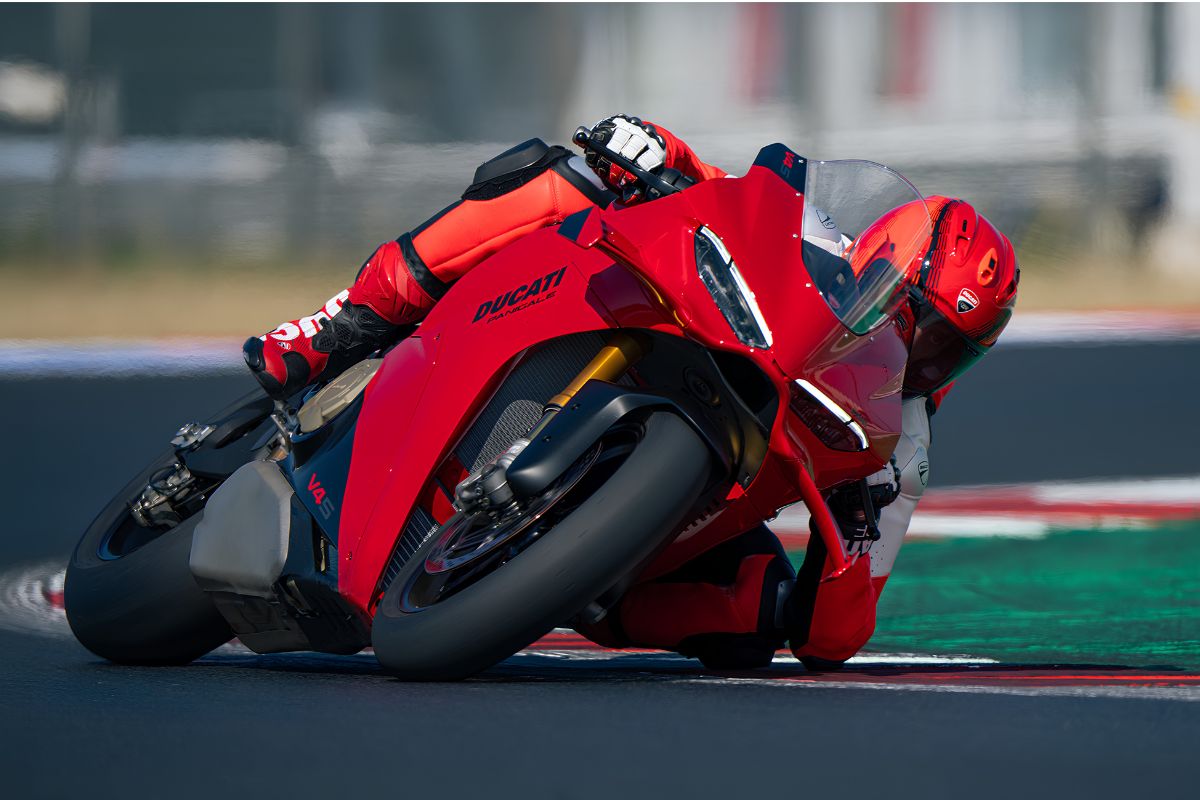
Some motorcycles are built to get you from A to B. Others are built to make the journey interesting. Then there is the Ducati Panigale V4, a machine that seems to regard a race circuit as its natural habitat and a straight road as an invitation to ask a few rather serious questions of your ability to hold on.

For 2027, Ducati has given its flagship V4 superbike another round of attention. The recipe remains familiar: a 1,103cc V4 engine, sharp Italian styling and technology with a foot firmly planted in racing. But the latest changes go deeper than a fresh coat of red paint. Ducati has worked on the engine, chassis, aerodynamics, braking control and electronics, all with one objective in mind: helping the rider go faster and make better use of the bike’s considerable performance.

And yes, there is more power. Because apparently 216 horses were not quite enough.

Ducati Panigale V4

Engine: 

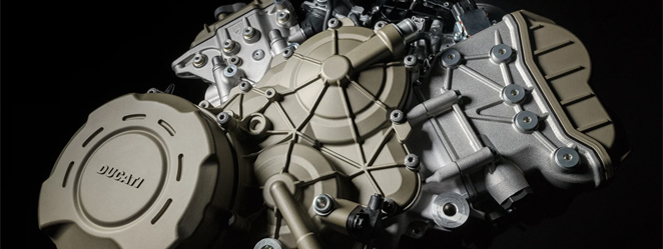
At the heart of the Panigale V4 sits Ducati’s 90-degree Desmosedici Stradale V4 with a displacement of  1,103cc. It uses desmodromic valve timing, with the valves mechanically opened and closed, and a counter-rotating crankshaft. That last feature helps counter some of the gyroscopic effect produced by the wheels, contributing to the bike’s handling characteristics.

For 2027, Ducati has revised the intake, exhaust and lubrication systems to improve efficiency and reduce internal losses. The result is a claimed 218hp (160.4kW) at 13,500rpm, with maximum torque of 120.6Nm that arrives at 11,000rpm.

That’s an extra 2hp over the previous version, but the interesting part is not simply the peak figure. Ducati says that the gains are particularly noticeable between 12,000 and 14,000rpm, precisely where a rider pushing hard on track wants the engine to keep pulling.

The enlarged air intake  helps the engine to breathe more at high speed, while revised final gearing gives the bike longer legs. The rev limiter now reaches 15,000rpm in second through fifth gears, allowing the rider to stay in a gear for longer and potentially reduce the number of shifts around the circuit.

A six-speed gearbox with Ducati Quick Shift 2.0 handles clutchless upshifts and downshifts, while a hydraulically operated slipper and self-servo clutch helps manage the back wheel when the rider gets enthusiastic with the downshifts.

This is still a high-revving superbike engine that wants to be worked hard.

The difference for 2027 is that Ducati has tried to make its performance more useful, not merely more impressive on a specification sheet.

Suspension: 

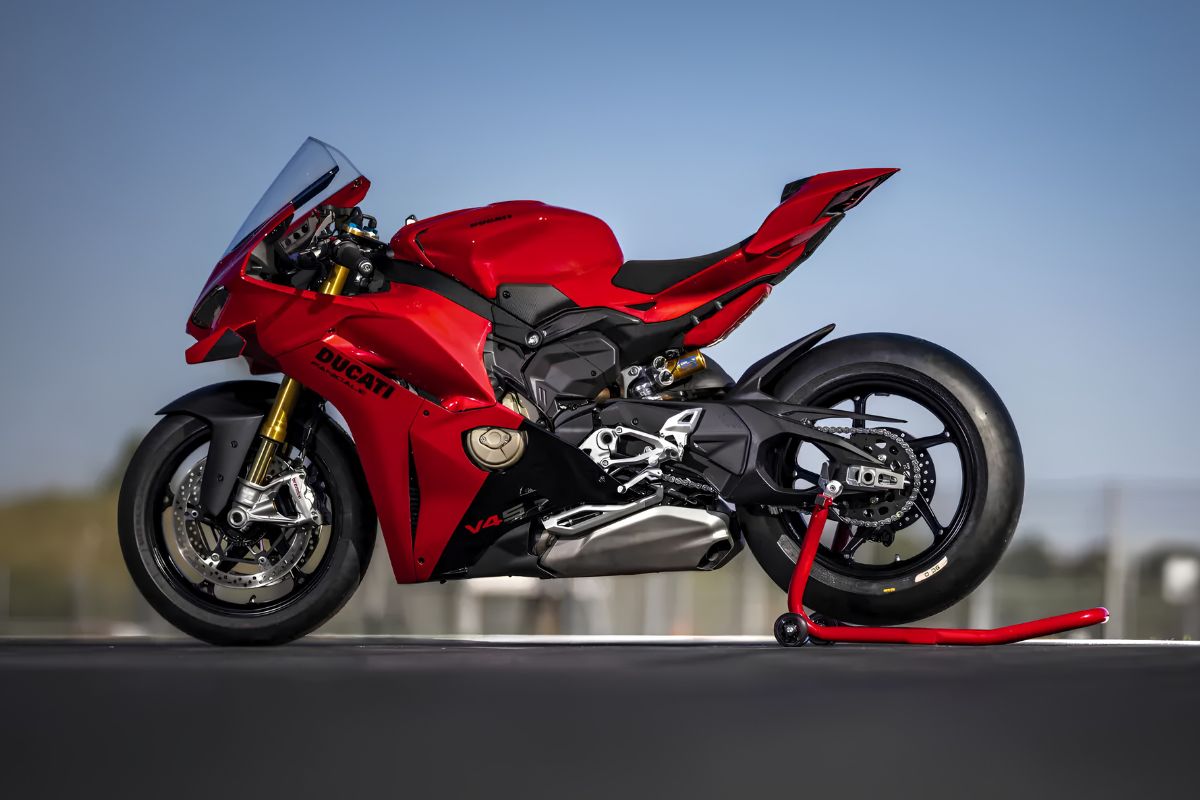
As usual, there is a distinction between the standard Panigale V4 and the V4-S, and suspension is one of the big ones.

The standard model gets a fully adjustable 43mm Showa Big Piston Fork at the front and a fully adjustable Sachs rear shock. That gives riders the ability to tailor the setup to their weight, riding style and intended use.

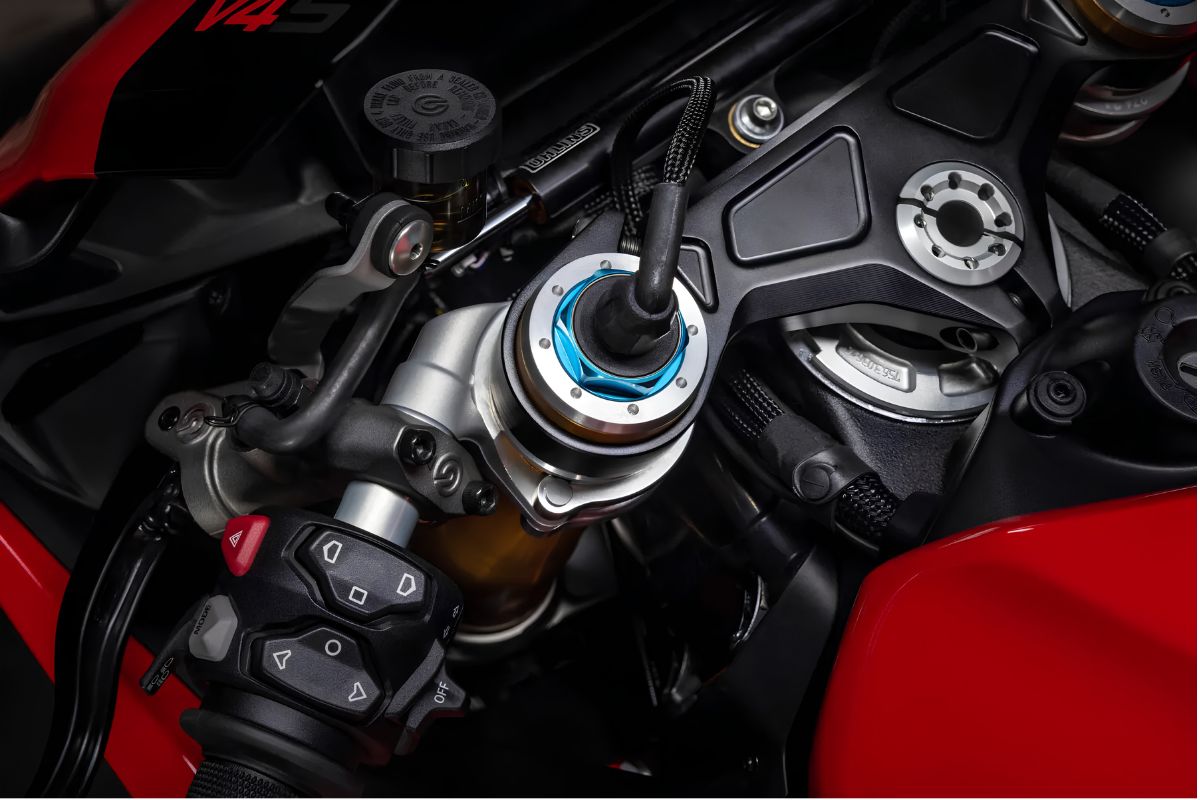
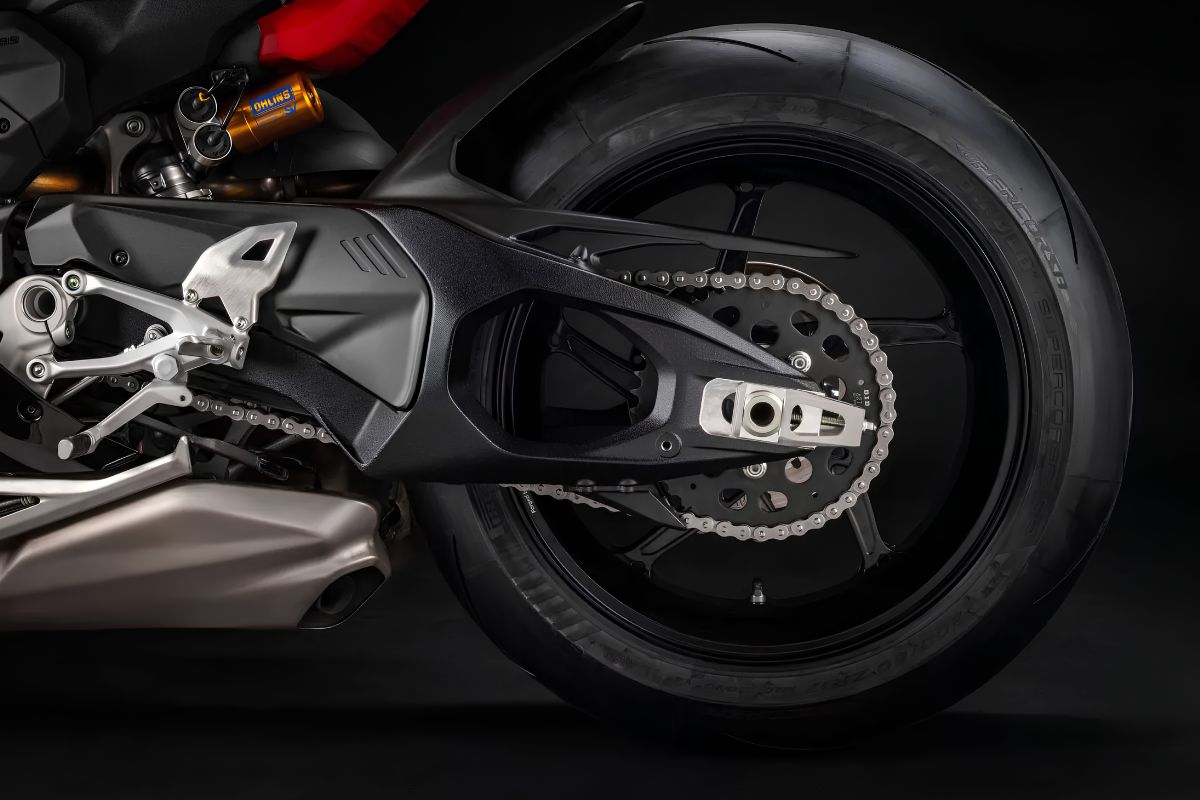
The V4 S moves into more sophisticated territory, with Öhlins electronic suspension with a Smart EC 3.0 control system. The electronically controlled damping can adapt to riding conditions and the demands placed on the bike, while allowing the rider to select the appropriate setup.

For someone spending serious time on track, that adaptability can be a major advantage. For the rest of us, it is a reminder that superbike suspension has moved well beyond simply turning a few adjusters and hoping for the best. 

Both versions use the same basic aluminium Front Frame concept, although the V4 S adds its own premium equipment package. Ducati has revised frame stiffness for 2027, aiming to improve feedback and behaviour during braking, corner entry and acceleration out of turns.

Brakes: 

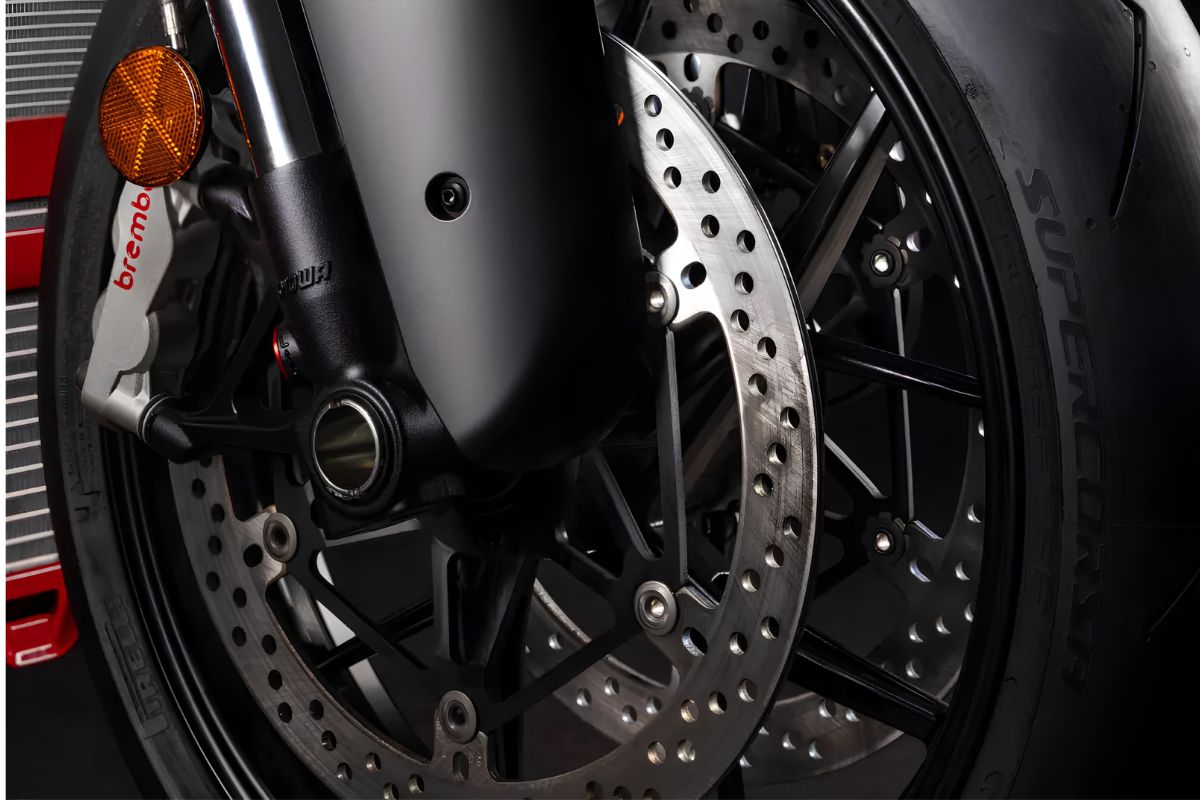
Ducati has fitted Brembo Hypure monobloc callipers to the latest Panigale V4.  those grip on to twin 330mm semi-floating front discs. At the rear, a 245mm disc works with a two-piston caliper.

The Panigale also uses Race eCBS, an electronic combined braking system with cornering functionality, designed to coordinate braking forces and help the rider manage the bike during demanding manoeuvers.

For 2027, Ducati has added Race Brake Control, or RBC, alongside Dynamic Engine Brake control. These systems are intended to help manage the bike’s behaviour when braking hard, turning into a corner and transitioning towards acceleration.

Naturally, electronics cannot rewrite the laws of physics or rescue every overcooked corner entry, but when a superbike is capable of arriving at a braking marker at a rather alarming rate, having carefully calibrated assistance in the background can make a serious difference. 

Chassis: 

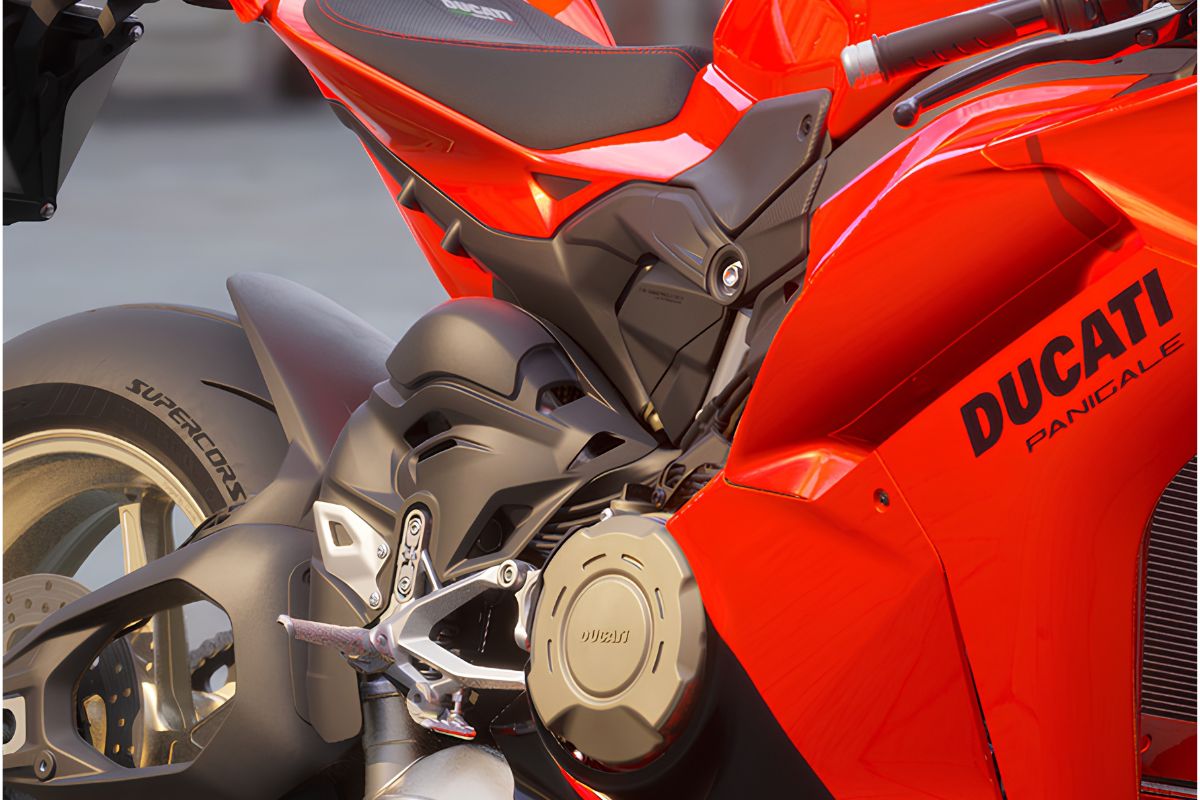
The Panigale V4 uses an aluminium alloy front frame, with the engine contributing to the motorcycle’s overall structure package. For the 2027 model, Ducati has modified the frame’s stiffness characteristics to improve the balance between stability and feedback.

That balance matters. A frame that is too stiff in the wrong places can limit the information reaching the rider, while a carefully tuned structure can help the tyres communicate what is happening beneath them.

Ducati’s changes target the moments when a superbike is working hardest: braking at the end of a straight, turning in, holding the line through the middle of a corner and driving towards the next one. 

The manufacturer reports an average lap-time improvement of 0.4 seconds at Italy’s Vallelunga circuit compared with the previous model. That is a Ducati test result rather than a promise of a four-tenths improvement for every rider, but it gives an indication of where the development work has been focused.

Wheels and Tyres: 

Both versions run 17-inch wheels and Pirelli Diablo Supercorsa V4 Tyres, with a 120/70 ZR17 front and a substantial 200/60 ZR17 rear.

The standard Panigale V4 gets five-spoke light-alloy wheels, while the V4 S uses forged aluminium wheels. 

Ducati quotes a kerb weight without fuel of 191kg for the standard model and 187kg for the V4 S. That four-kilogram difference may not sound like much when you’re carrying shopping, but reducing weight on a performance motorcycle can influence how quickly it changes direction and how it responds to rider input.

The wider rear tyre profile and the overall wheel-and-tyre package are designed for the demands of serious sporting use. 

Aerodynamics: 

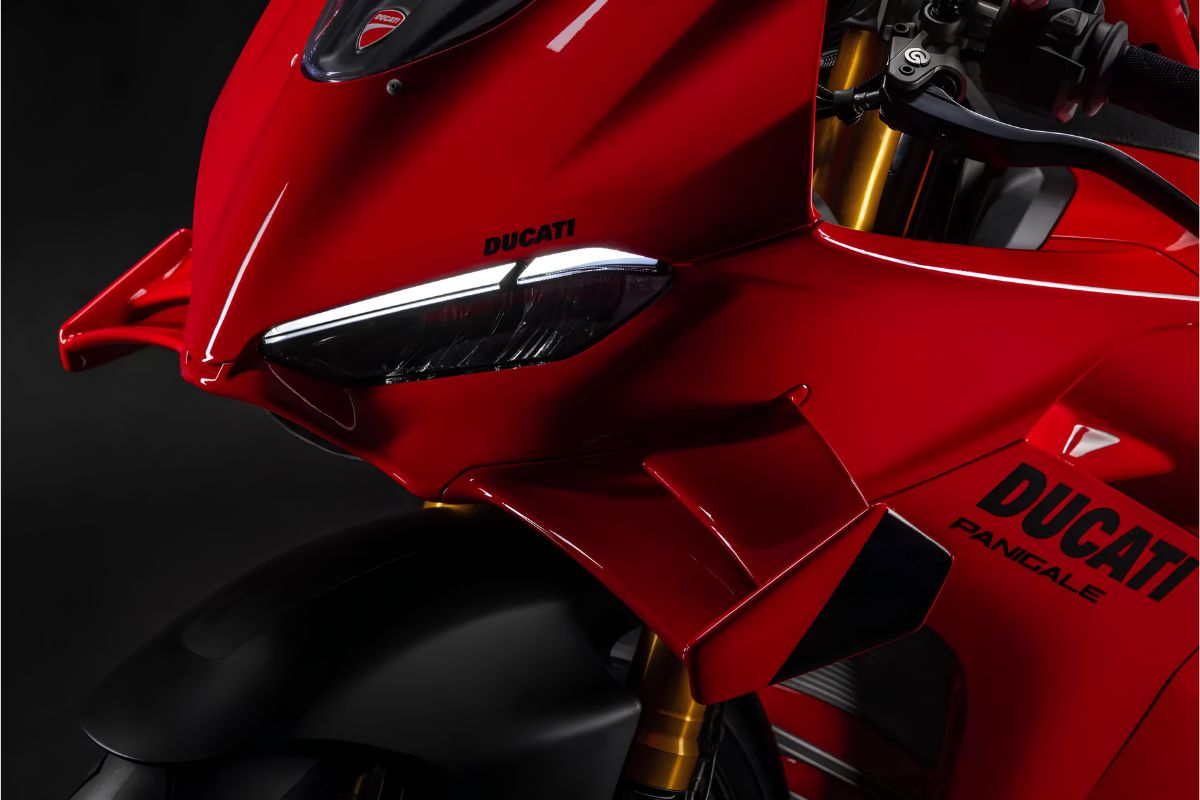
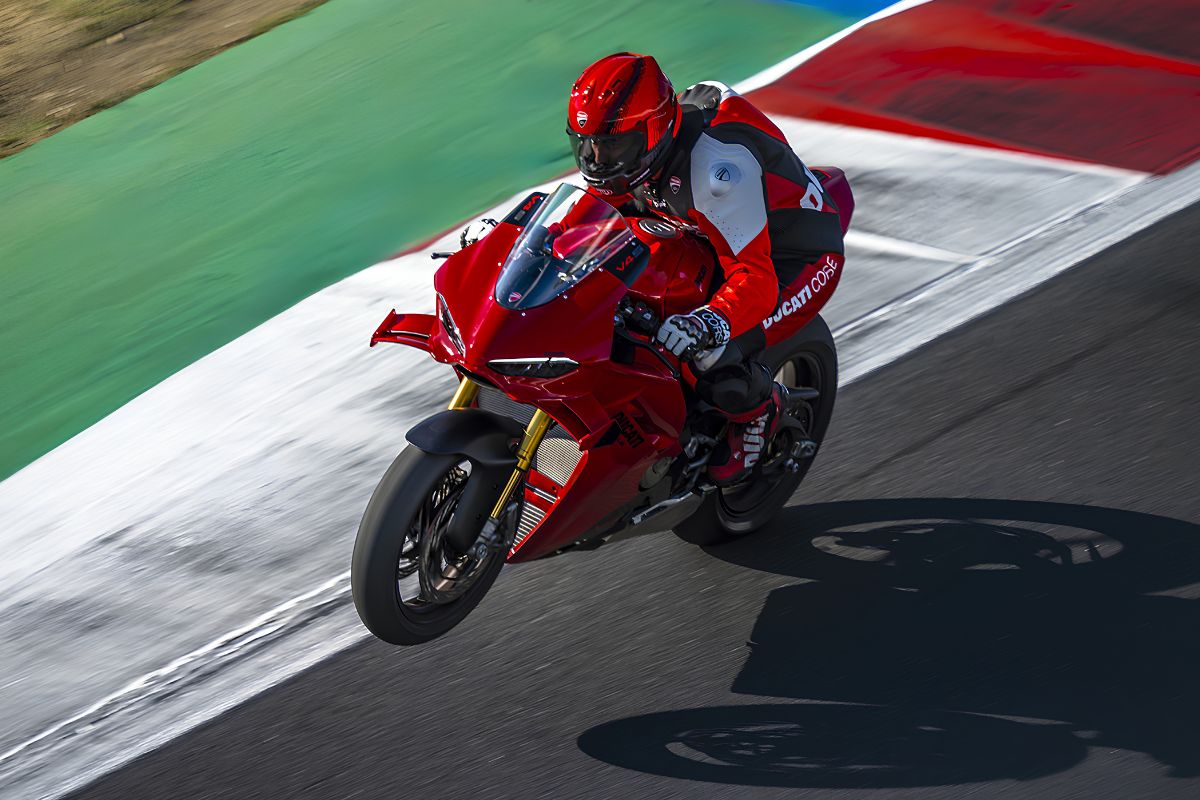
The Panigale’s aerodynamic package has become part of its identity, and the 2027 bike gets redesigned biplane-style wings with larger outer sections integrated into the bodywork.

These are not there simply to make the bike look as though it escaped from a MotoGP garage. At speed, aerodynamic downforce helps to keep the front end settled and improves stability under acceleration.

Of course, those benefits are speed-dependent. At normal road speeds, the wings are not going to transform your morning commute. On a circuit, however, where acceleration, stability and braking zones come in rapid succession, aerodynamic details become much more relevant.

Electronics: Ducati Vehicle Observer.

Modern superbikes have reached the point where the electronic package deserves as much attention as the engine and chassis. The Panigale V4 uses a six-axis inertial measurement unit to help its systems understand the motorcycle’s movement and orientation.

That information feeds a broad suite of rider aids, including Ducati Traction Control, Ducati Slide Control, Ducati Wheelie Control and Ducati Power Launch. There is also Dynamic Engine Brake control, Race Brake Control and the Race eCBS braking system.  

Ducati’s Vehicle Observer technology helps estimate the forces acting on the bike, allowing the control system to respond more precisely to changing conditions. The idea is not to take the riding out of the rider’s hands, but to help manage the fine line between using the available grip and asking for more than the tyres can deliver.

The bike has Five riding modes, Race A, Race B, Sport, Road and Wet, allow the rider to tailor the bike’s behaviour to the conditions and intended use. A 6.9-inch full colour TFT dashboard brings the information together.

There is a lot to get your head around, and no one needs to master every menu before enjoying a motorcycle. But on a machine with this much performance, being able to tailor the electronic assistance to your experience and environment is genuinely useful.

Ergonomics: 

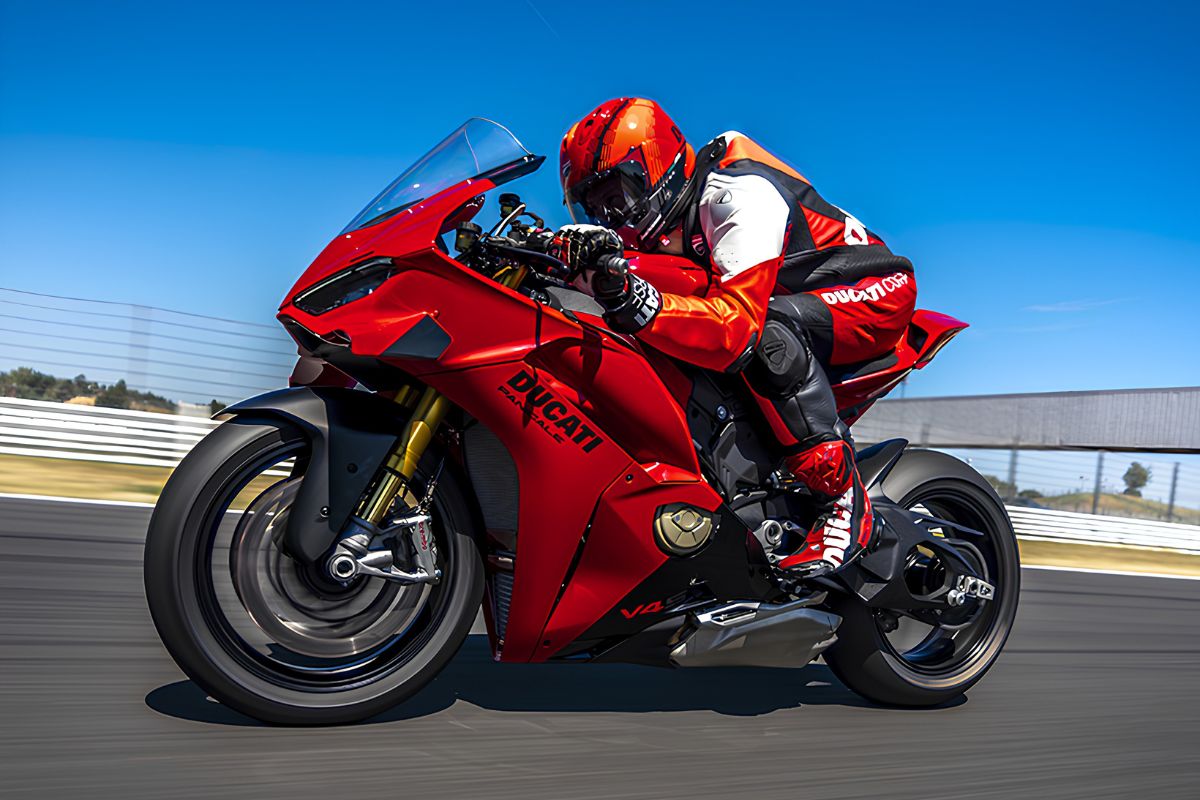
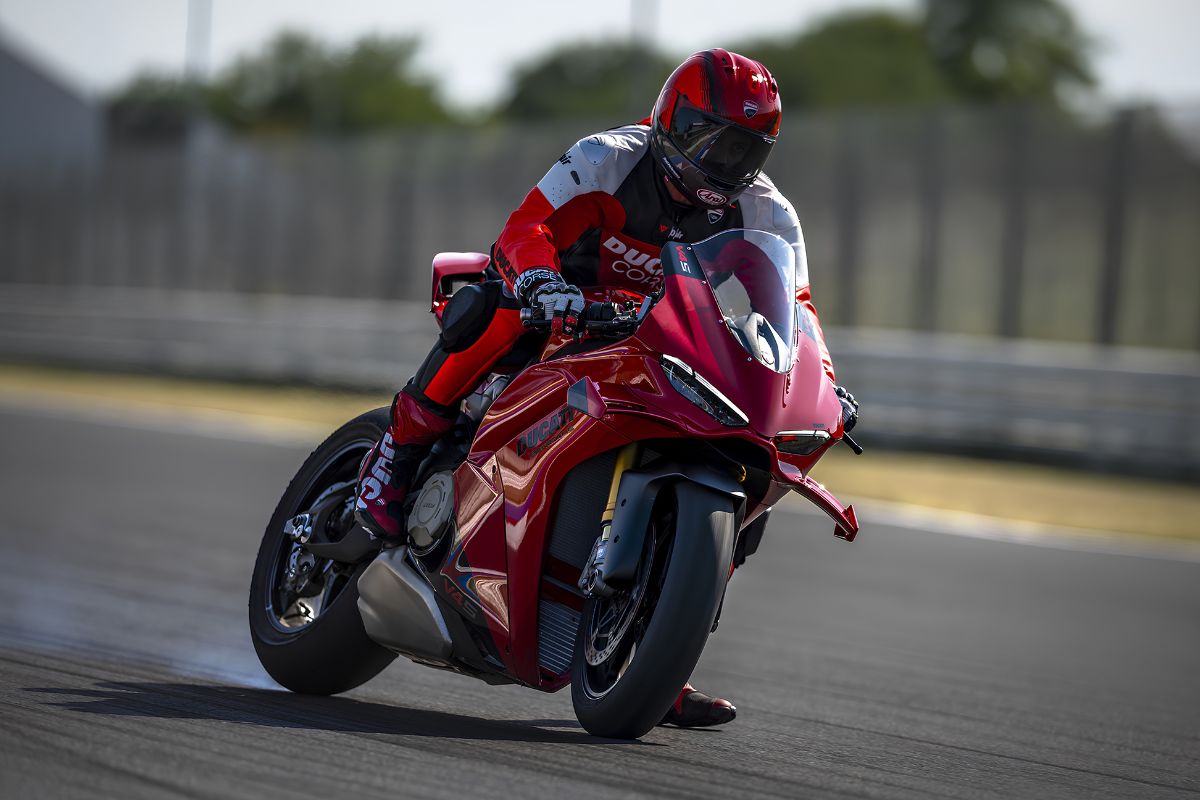
The Panigale V4 is unashamedly superbike, and it makes no attempt to disguise the fact. The riding position is focussed, with clip-on handlebars, rear-set footrests and a body shape that encourages the rider to tuck in behind the fairing.

Seat height is 850mm, so shorter riders will want to check how comfortably they can get a foot down before committing. The standard model has fixed clip-ons, while the V4 S gets adjustable clip-ons intended for track use. 

The Panigale is built around a sporting brief. Its natural playground is a sequence of corners, a clear track and a rider who understands that the throttle works both ways.

The V4 S: Is the Extra Hardware Worth It?

The standard Panigale V4 is hardly short of performance equipment, but the V4 S adds several desirable upgrades: Öhlins electronic suspension, forged aluminium wheels, a lithium battery and a lower claimed weight, meaningful differences for riders who spend time chasing lap times or who appreciate the ability to fine-tune suspension behaviour. The standard bike, meanwhile, retains fully adjustable conventional suspension and the same headline engine output.

The choice comes down to budget, intended use and how much value you place on the S model’s premium components. Neither version is short of capability; the S simply takes the hardware a step further.

Chat to your Ducati Dealer.

What you need to know about the 2027 Panigale V4 

  1. How much power does the 2027 Ducati Panigale V4 produce?

The 1,103cc Desmosedici Stradale V4 engine produces a claimed 218hp (160.4kW) at 13,500rpm, with maximum torque of 120.6Nm at 11,000rpm.

  1. What is the top speed of the 2027 Ducati Panigale V4?

Ducati has not confirmed an official top speed for the 2027 model. Its high-revving V4 engine and aerodynamic design are built for serious high-speed performance, particularly on a race circuit.

  1. What is the difference between the Panigale V4 and V4 S?

Both models share the same basic engine and headline power output. The V4 S adds Öhlins electronic suspension, forged aluminium wheels, a lithium battery and a lower claimed kerb weight without fuel, making it the more premium, track-focused option.

  1. Is the 2027 Ducati Panigale V4 suitable for everyday road riding?

It is road-legal in its road-specification form, but its aggressive riding position, high performance and track-focused setup make it less practical for everyday commuting than a more upright motorcycle. 

  1. What electronics does the 2027 Ducati Panigale V4 have?

The Panigale V4 features a comprehensive electronic rider-aid package, including traction control, wheelie control, slide control, launch control, engine-braking management and cornering braking assistance. Five riding modes, Race A, Race B, Sport, Road and Wet, let riders tailor the bike’s behaviour to different conditions.

Leave a Comment

Scroll to Top