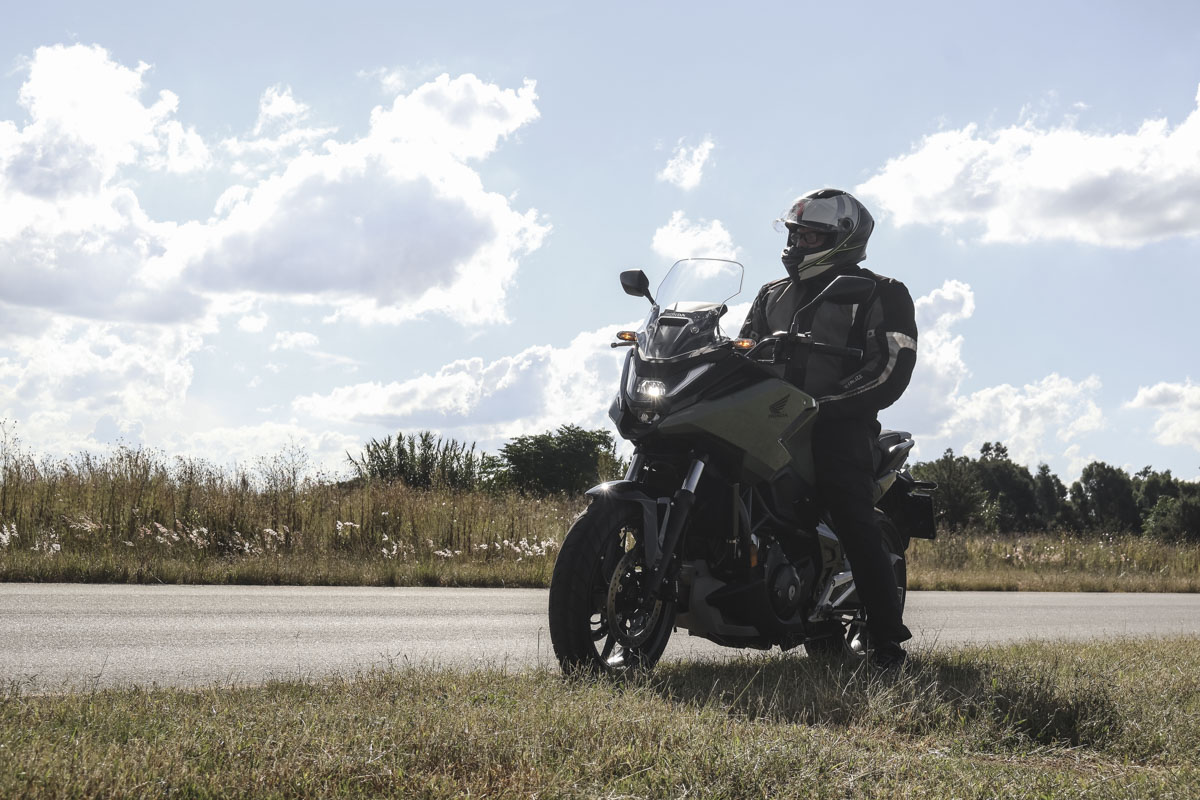
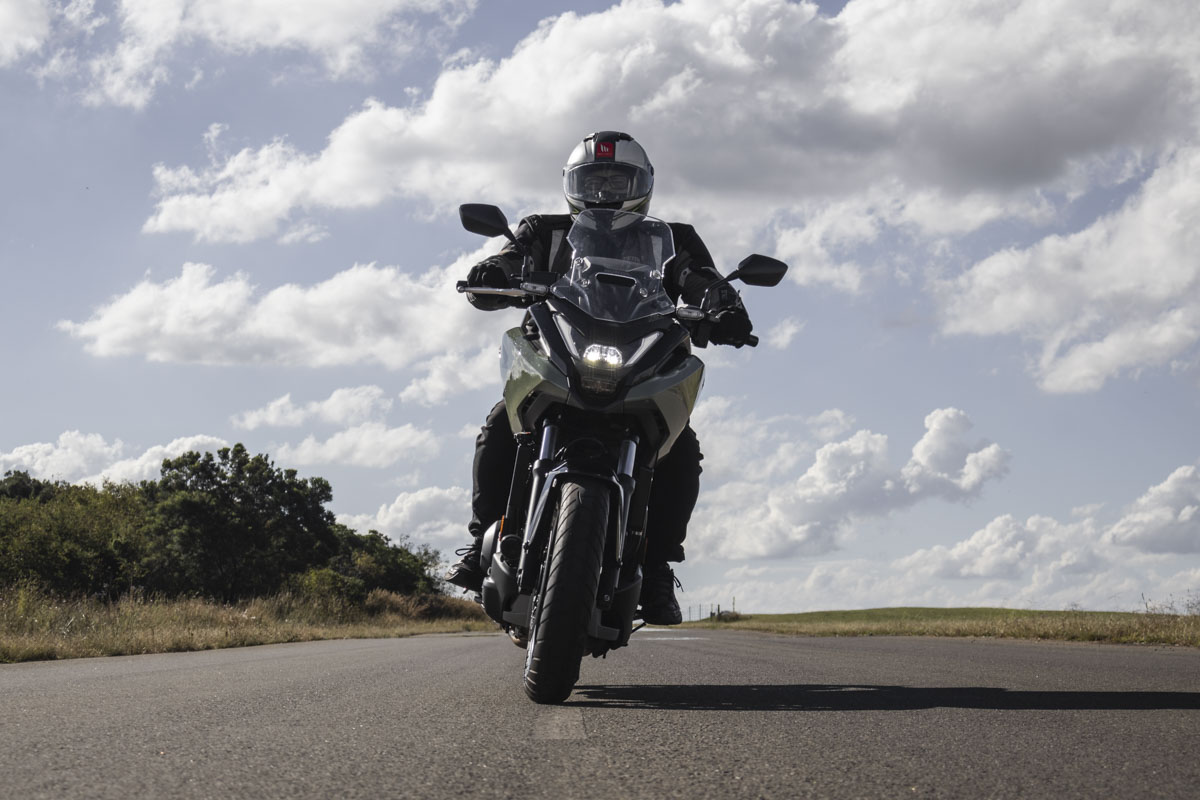
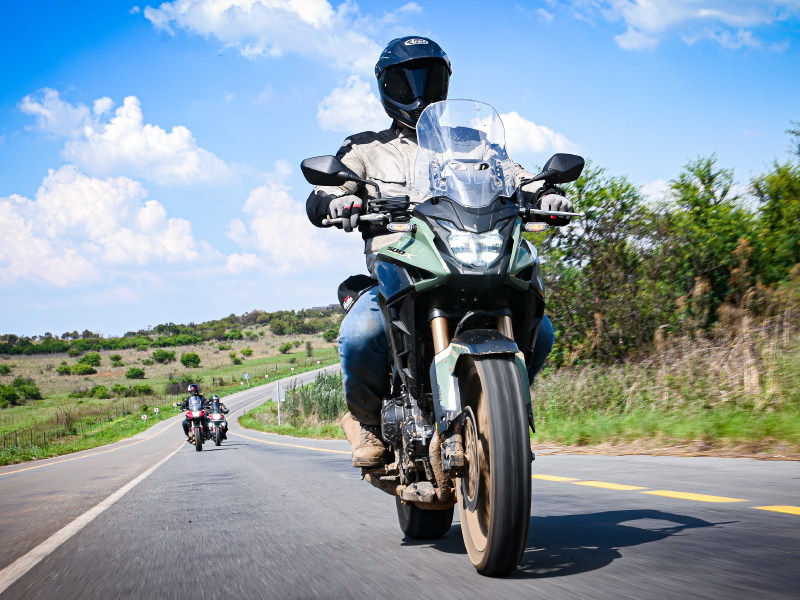
Every time we get a Honda NC, we always check how far we can go on a single tank of fuel, because this bike has built a reputation on being frugal.
We’ve managed to get more than 500 km out of the 14.1-litre tank before, but we also received comments where people say that’s not how a normal person rides a bike, and they are quite correct.
We gave the bike to Deon who owns a 2017 NC750X manual and told him to do a comparison between his bike and the very latest NC from Honda…
He says: Thiswas the first opportunity I’ve had to ride Honda’s latest DCT.
I own a 2017 Honda NC750X myself, and I absolutely love it. I’ve ridden the new manual NC before when we shared it with Donovan from The Bike Show, that was the test where he pushed it past 500 km on a single tank.
No clutch, no problem.
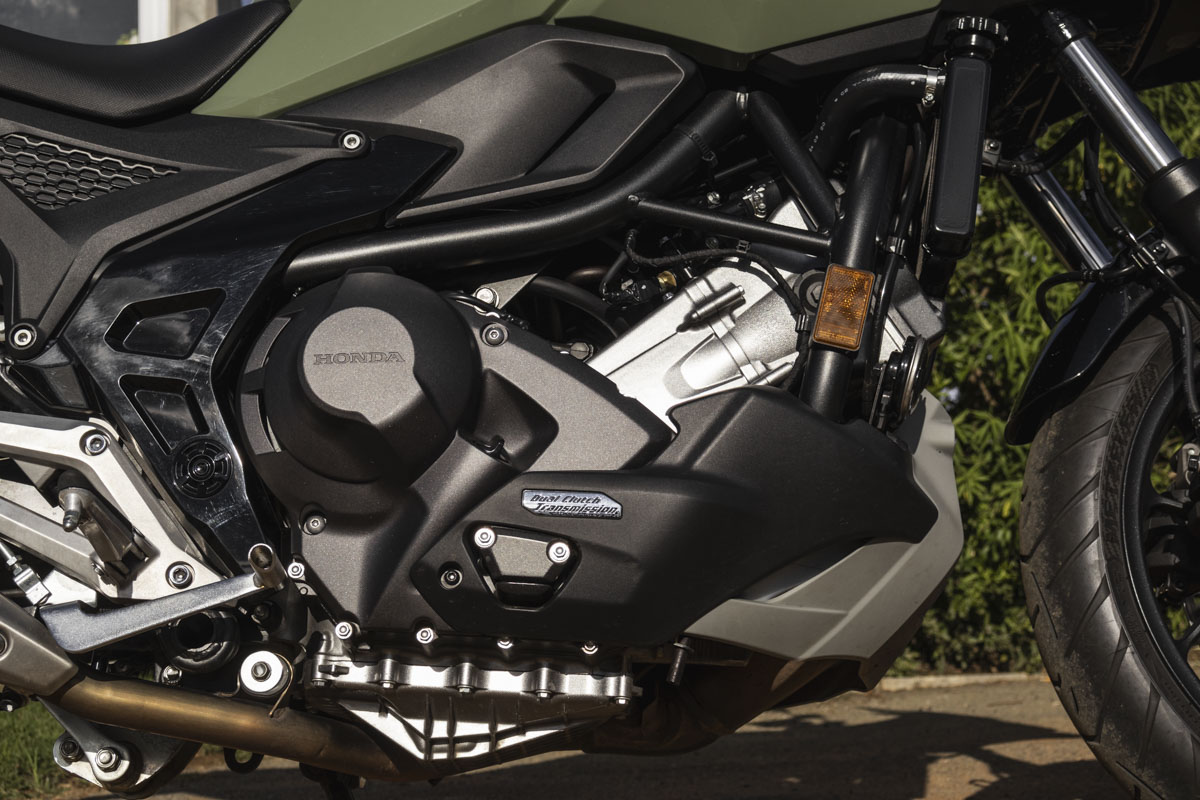
Let me tackle the DCT side of things first.
I expected it to take a while to get used to the fact that there’s no clutch, however, that wasn’t the case. It does feel a little strange at first, but we humans adapt very quickly.
I can definitely see the appeal, it makes riding incredibly easy, relaxed and simple. When slowing down, the gearbox can take a moment to downshift, unless you brake hard, in which case it drops gears quickly and decisively. It’s pretty amazing to experience.
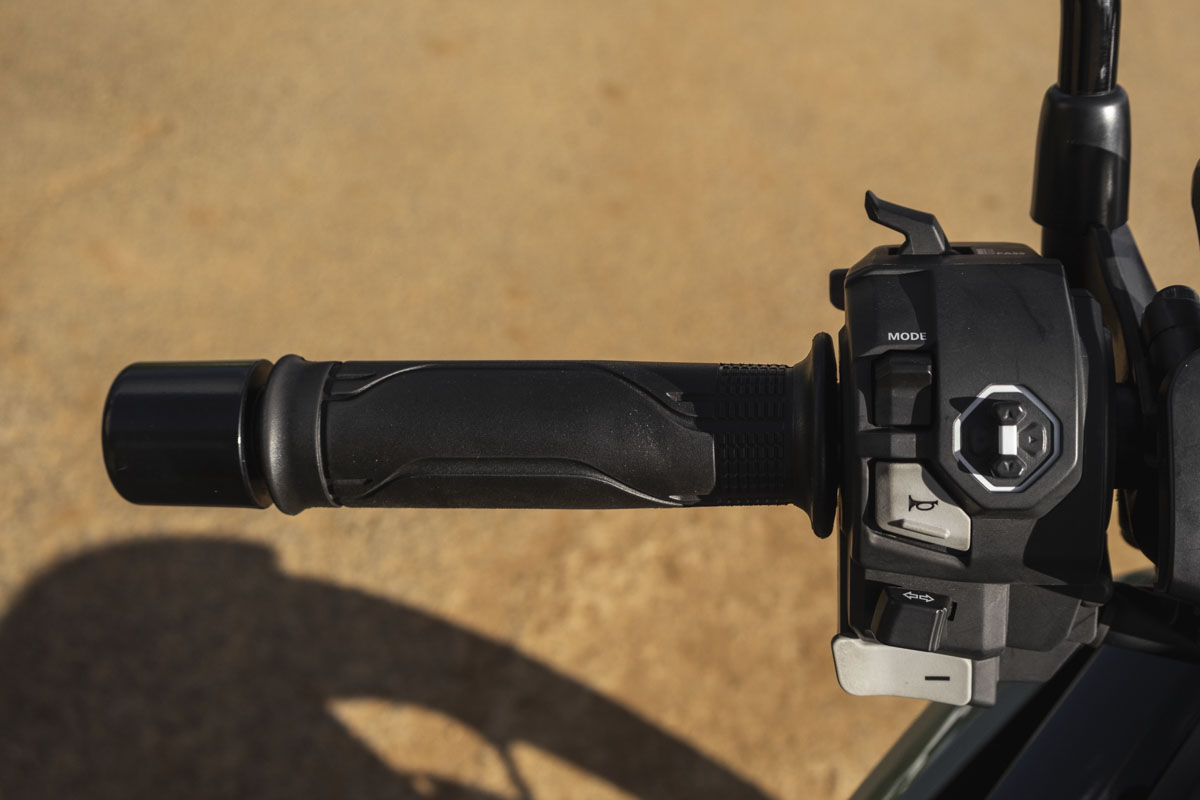
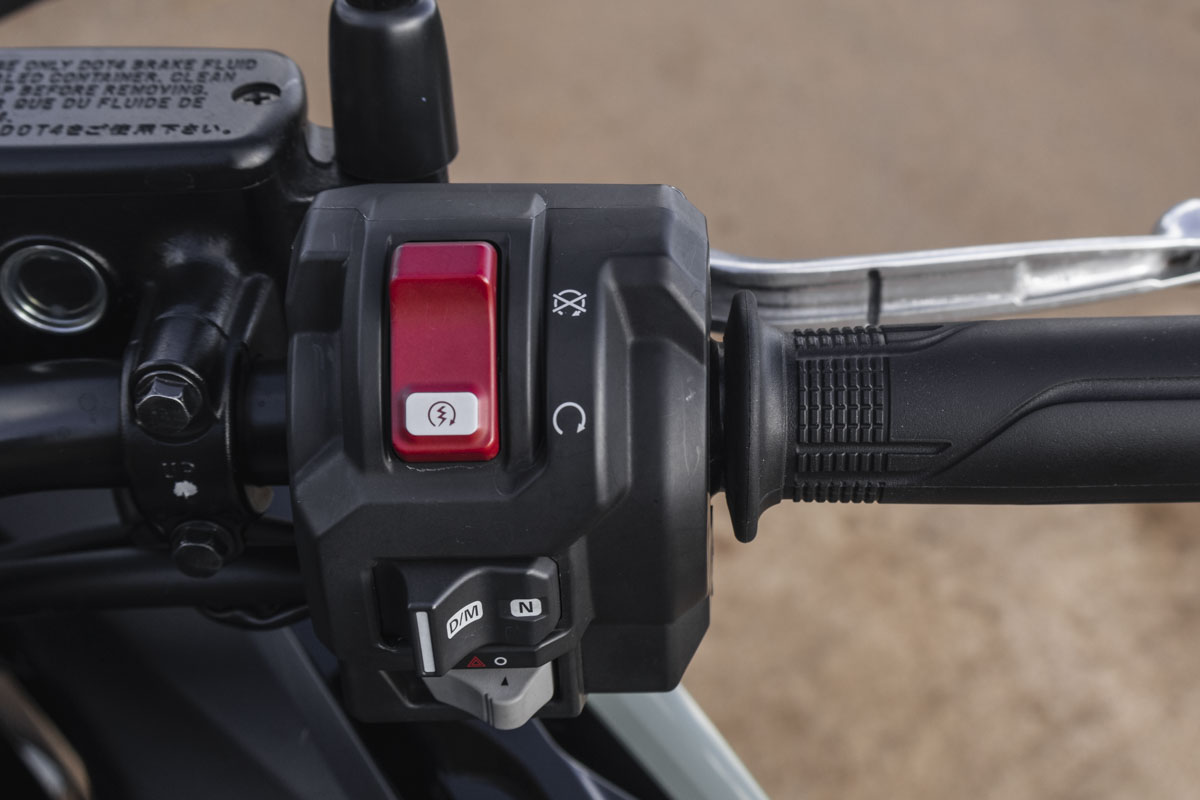
The NC also features paddle shifters on the left handlebar, allowing the rider to shift up and down manually. I tried this for a while and it was fun, but I soon reverted to full auto, which I’m pretty sure most riders will do.
Compared to a traditional clutch bike, the DCT does take getting used to, then it becomes just like any other motorcycle. Most motorcyclists will say that they prefer using a clutch, it just feels more engaging, like you’re properly riding the bike. With the DCT, it might sometimes feel like the bike is doing the riding for you, but once you start to understand it, it makes more and more sense. The bike works hard to make your job easier, by taking the extra hassle of gear selection out of the equation, keeping you in the optimal rev range no matter your speed.
Now, back to the real-world ride.
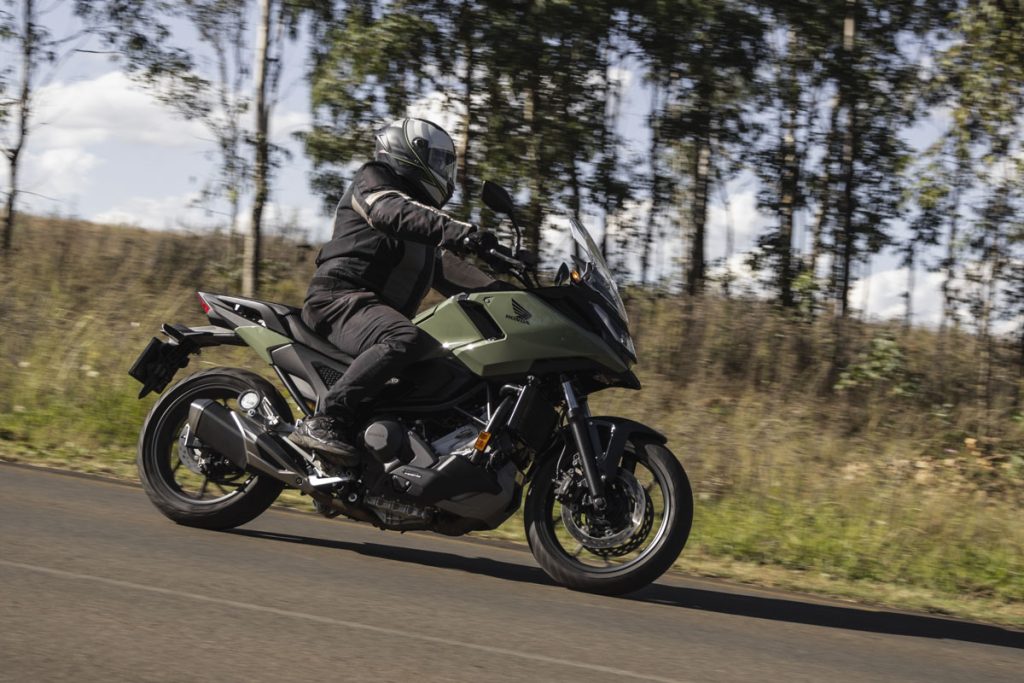
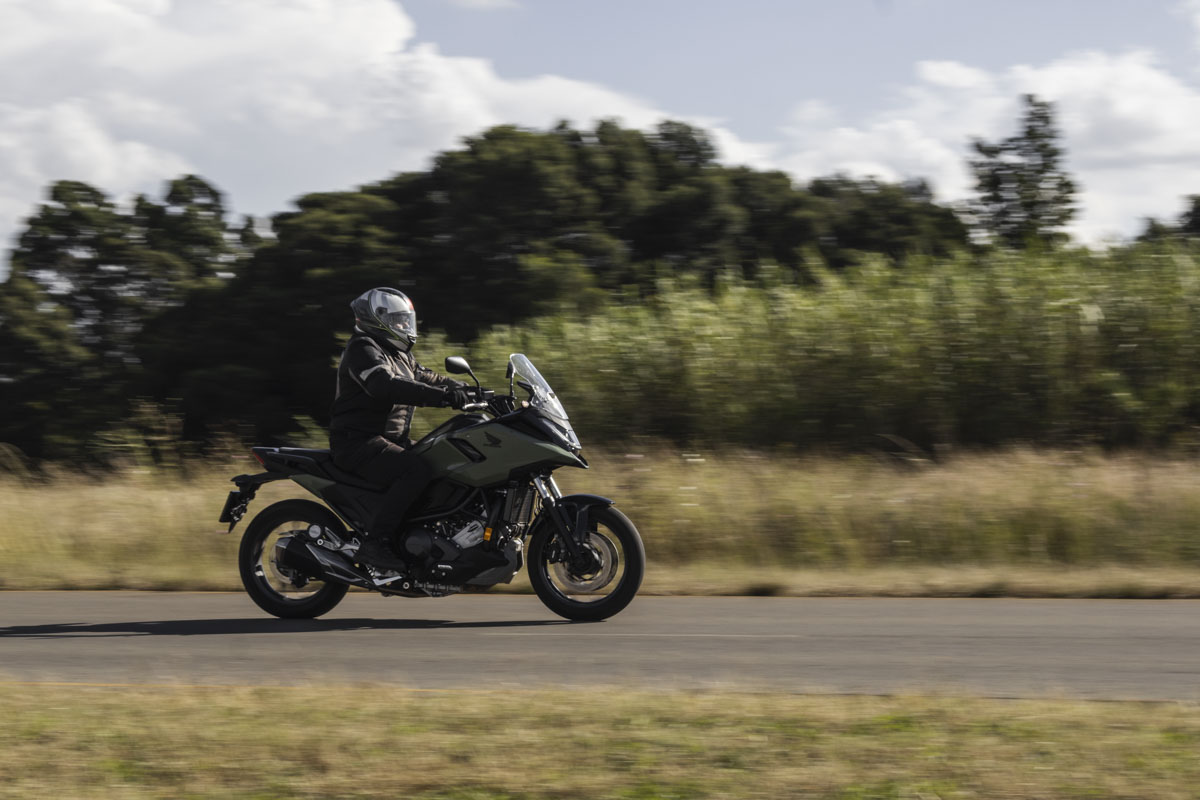
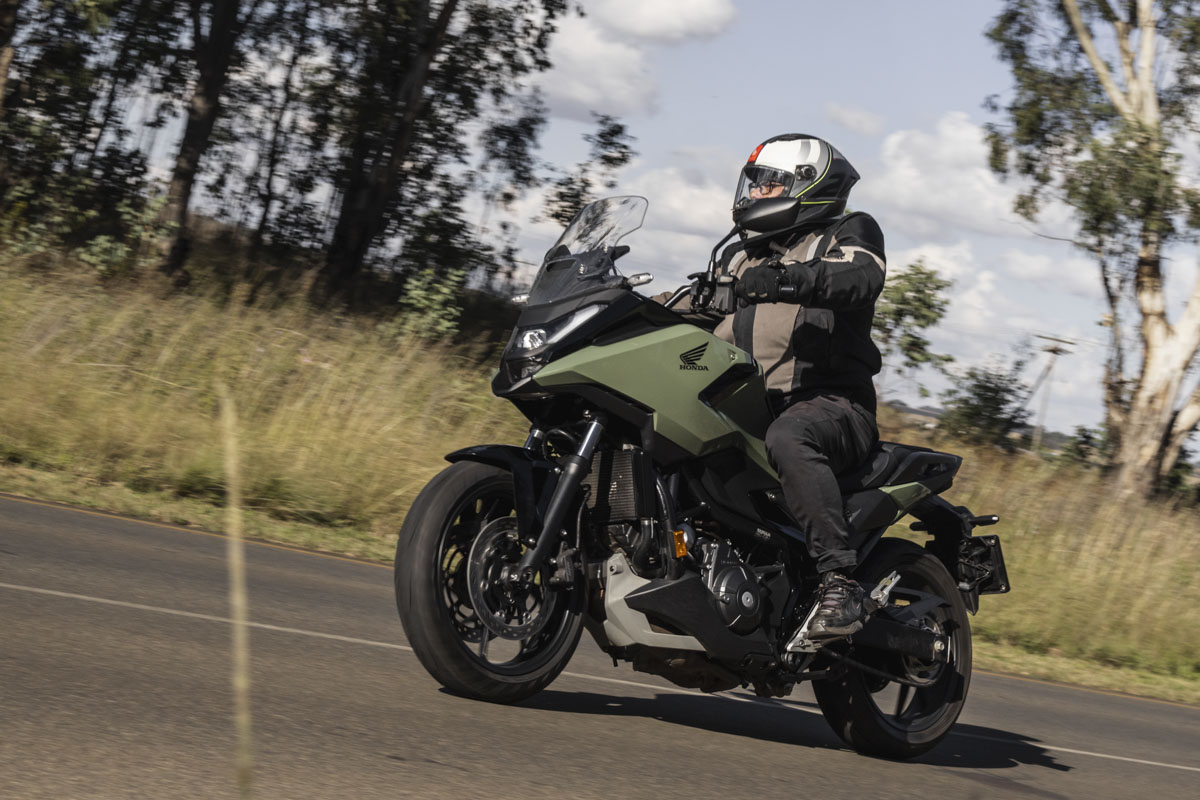
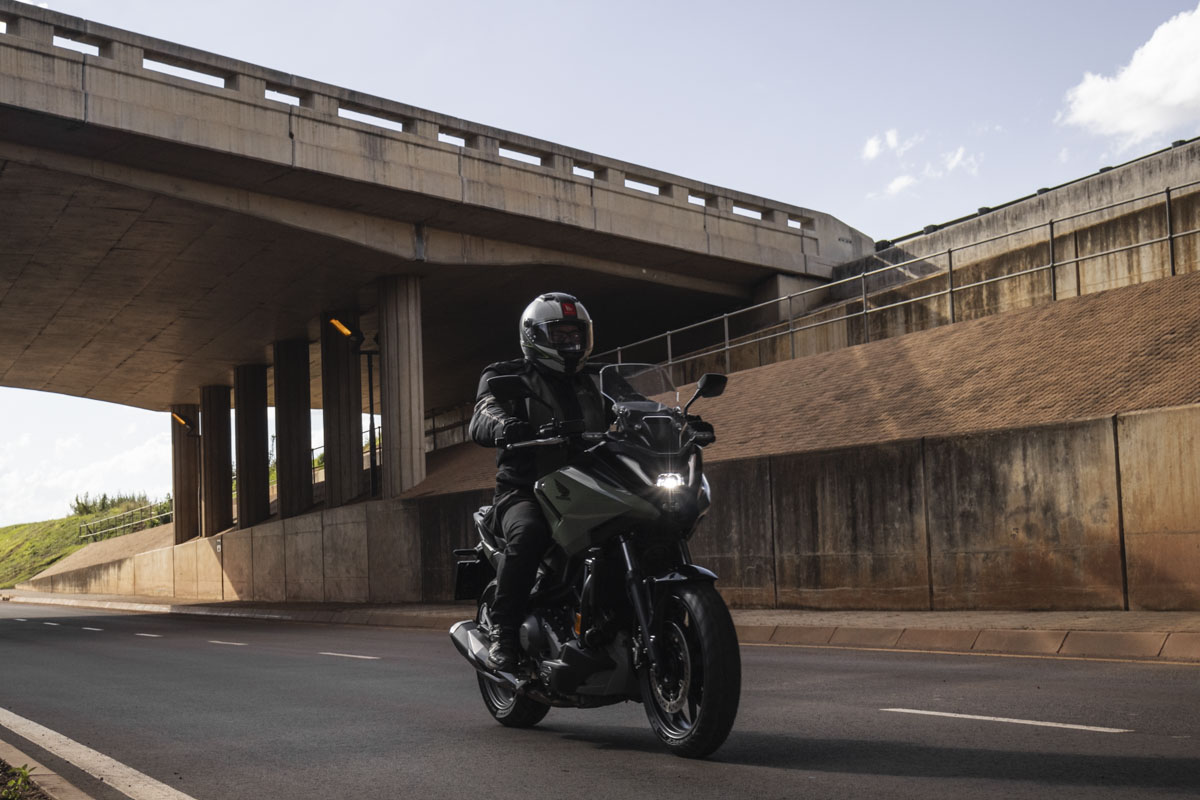
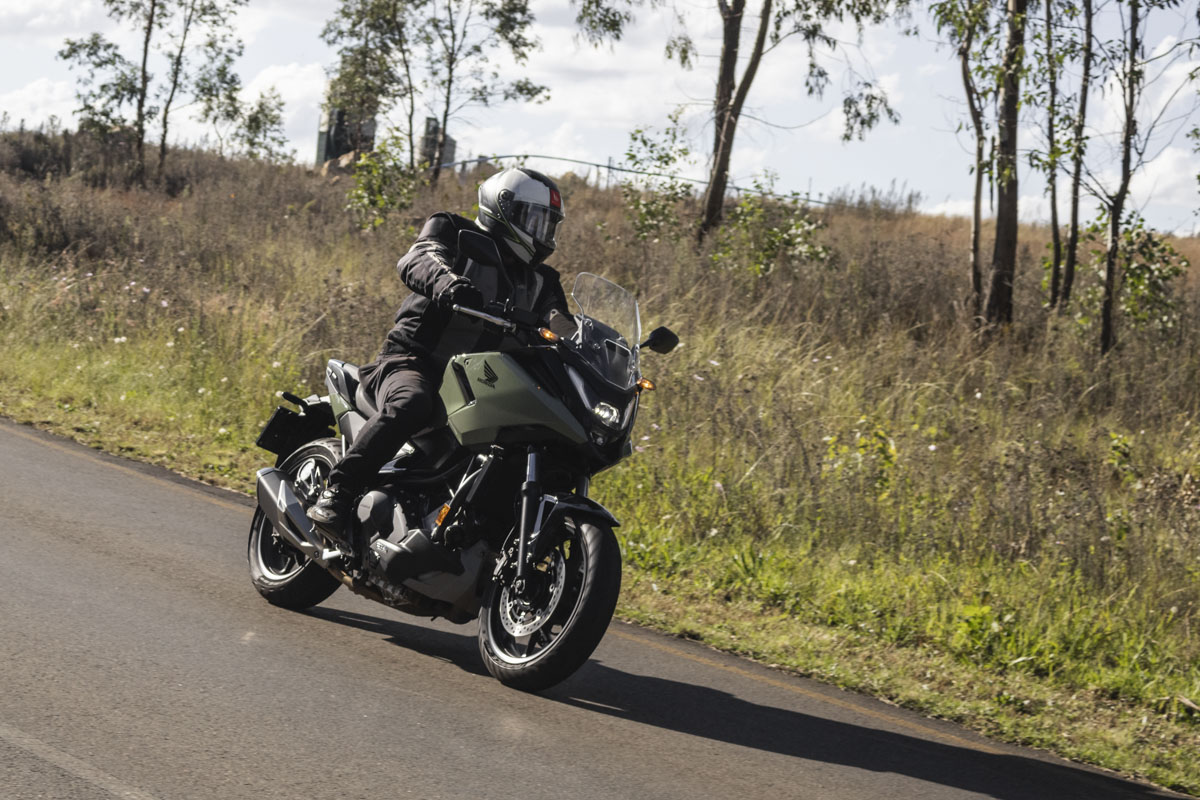
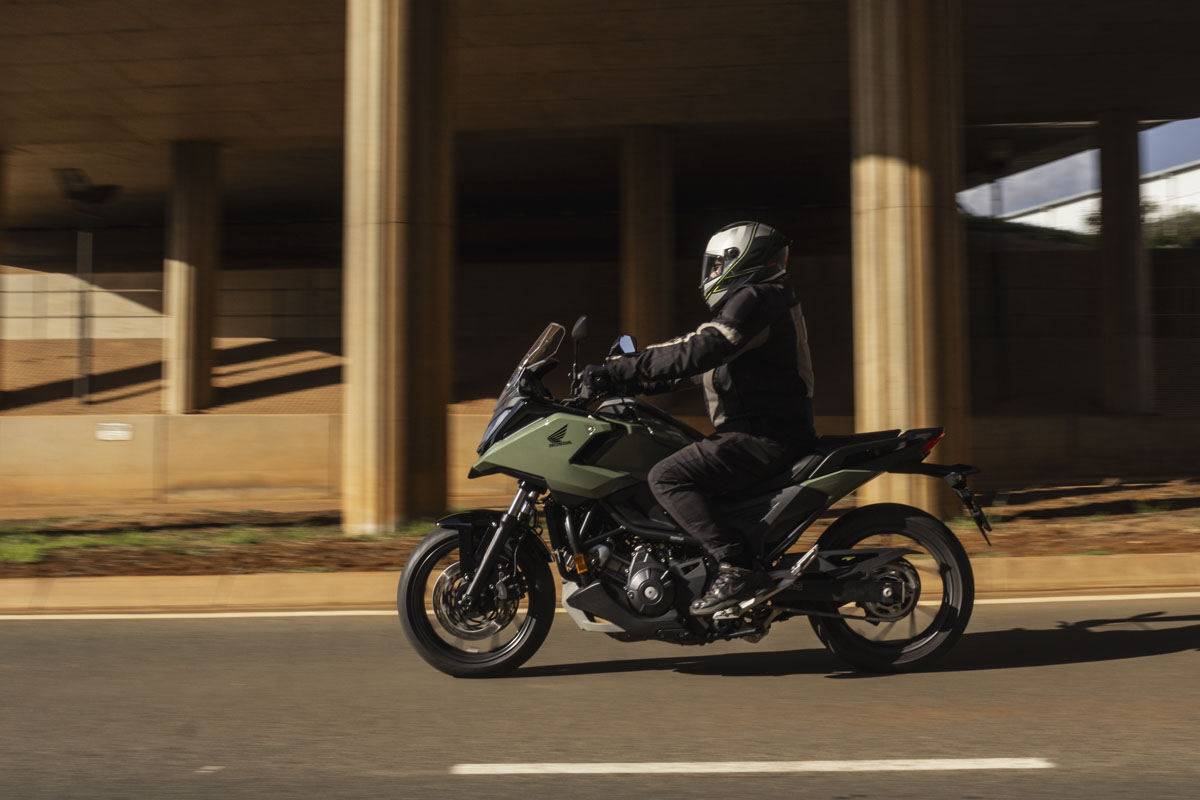
We had the NC for a week, and I used it for everyday running around, visiting customers, mostly riding a bit quicker than the speed limit, as most of us do. The real test came over the weekend. On Saturday, I headed to the racing at Redstar Raceway, where I opened it up, averaging around 160 km/h there and back. On Sunday, I went to Zwartkops for Honda’s Brunch Cruise. Once again, I rode the NC hard, holding 160 km/h on the highway and launching hard off the line at traffic lights to get well ahead of those pesky cars.
I’ll admit, I wasn’t gentle with the NC at all. I wasn’t reckless, but I rode her as hard as everyday conditions allowed. We all ride motorcycles for the thrill of it, and I had to prove you can have a thrilling ride on this economical machine.
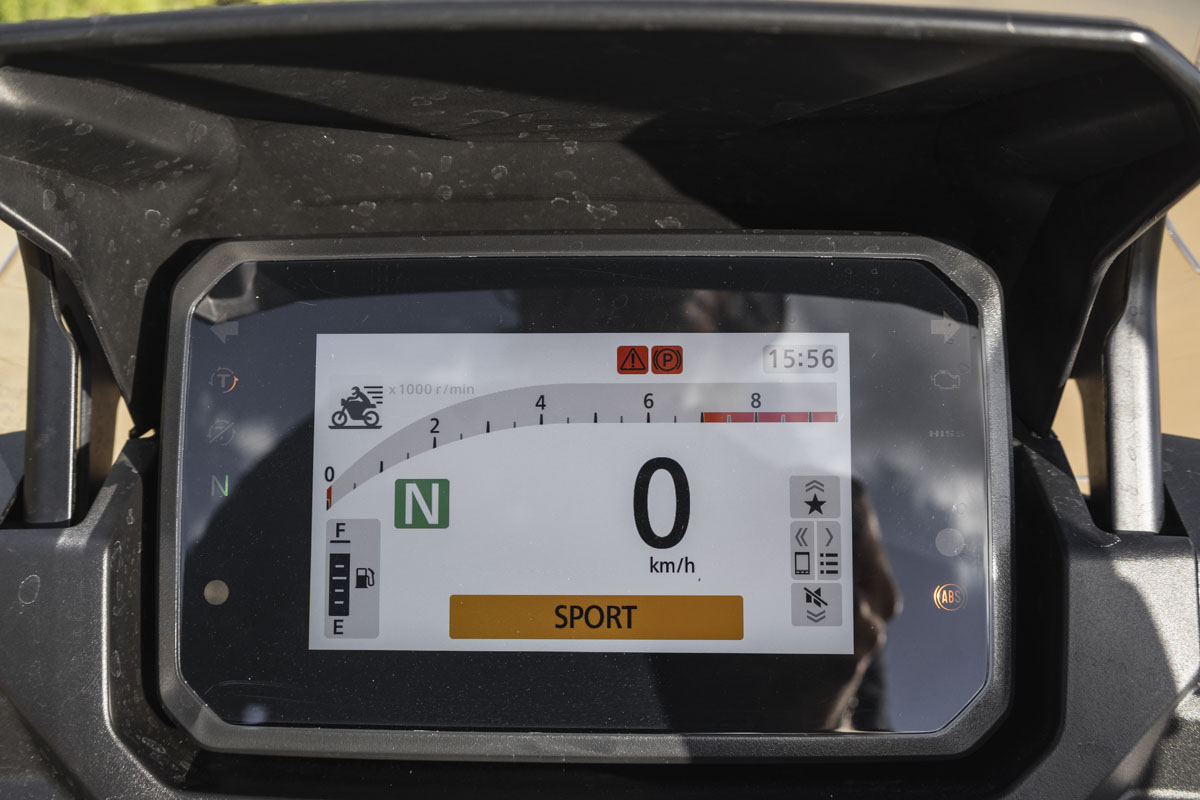
When we received the bike, it was averaging 4.3 L/100 km. By the time it was collected, that figure had risen to 4.7 L/100 km. So yes, there was an increase in consumption, but not by much at all. And yes, the bike was kept in sports mode for the whole week.
Even when ridden far harder than most would recommend, the NC750X remains one of the most fuel-efficient bikes on the market.
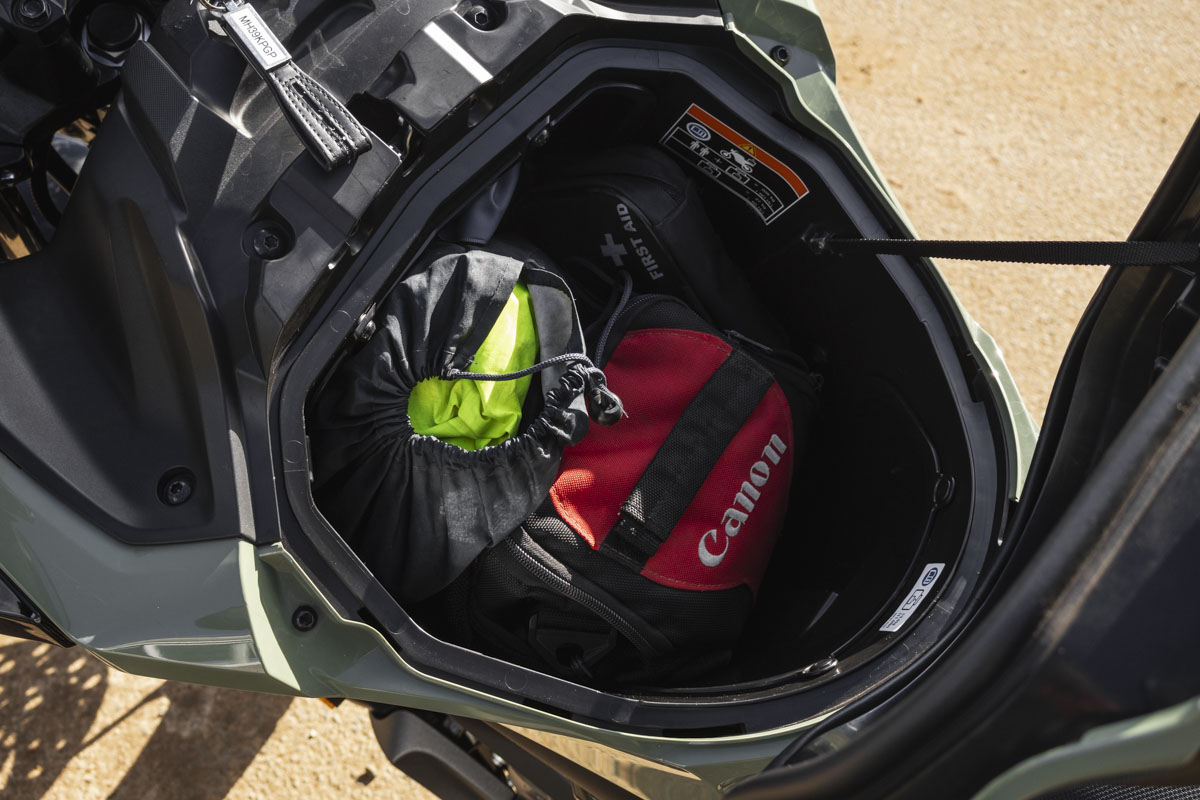
The reason why I bought my NC was mainly the fuel consumption. I use mine every day and on most weekends chasing the GP racing. This is where the storage compartment where the tank should be, really comes in handy. It’s not quite big enough for my helmet, but I can fit my camera bag and a few other bits n bobs in quite nicely.
The other reason that a choce an NC is for comfort, which feels identical between my older model and this one.
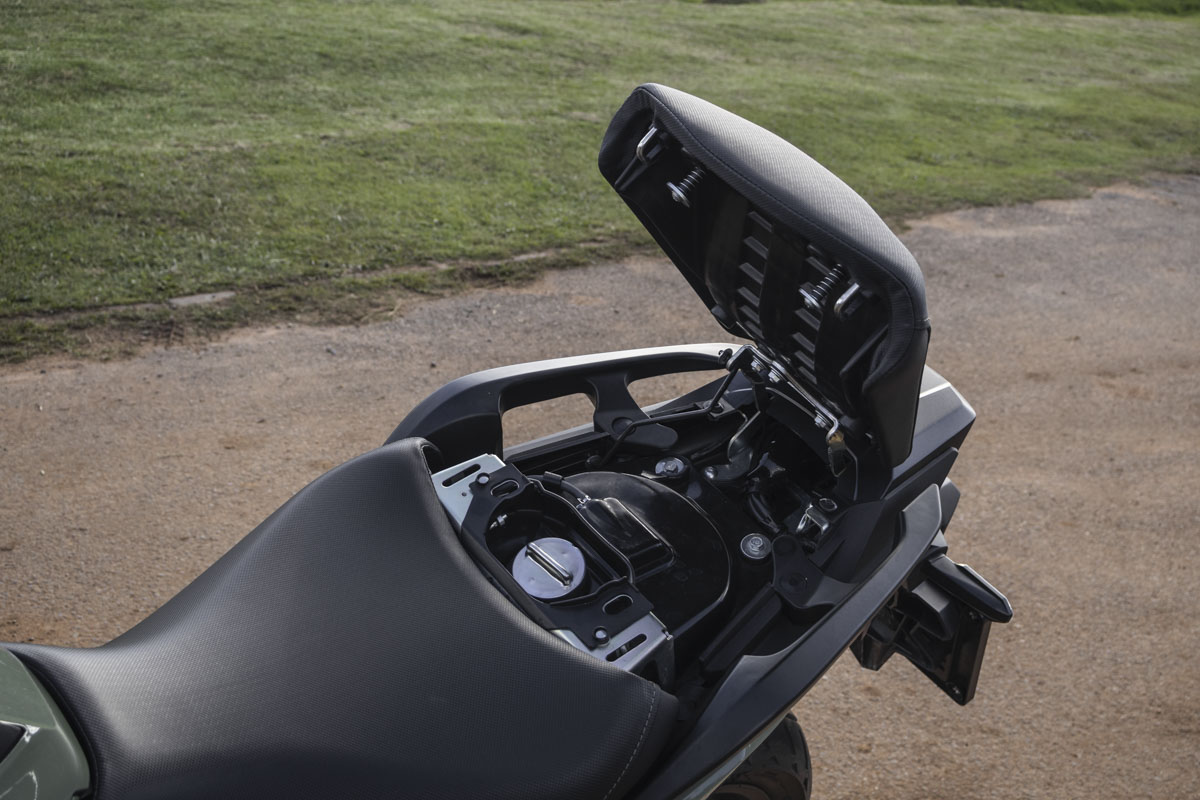
I like the upright position and logical rider triangle. Locating the fuel tank under the seat gives the bike a good center of gravity – she handles exceptionally well for everyday riding.
Yes, the NC750 isn’t the world’s fastest bike, and I don’t care. It’s more than fast enough to comfortably sit at 160km/h and will get you over the 180 KPH mark if you need it to.
It’s most comfortable cruising between 140 and 150km/h.
My well run in NC has an average consumption of 24.8 kilos per litre. I found that this DCT model is slightly thirstier – we saw 21.3 kilos per litre. that’s still pretty respectable!
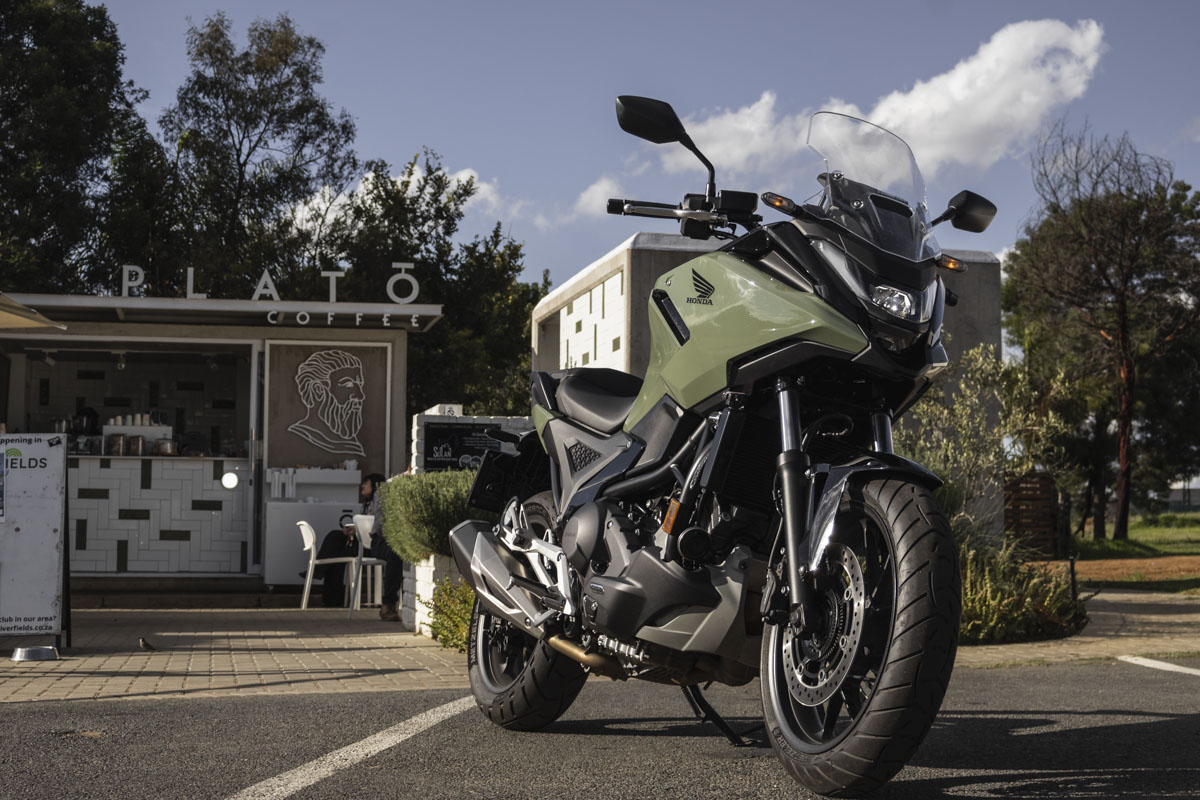
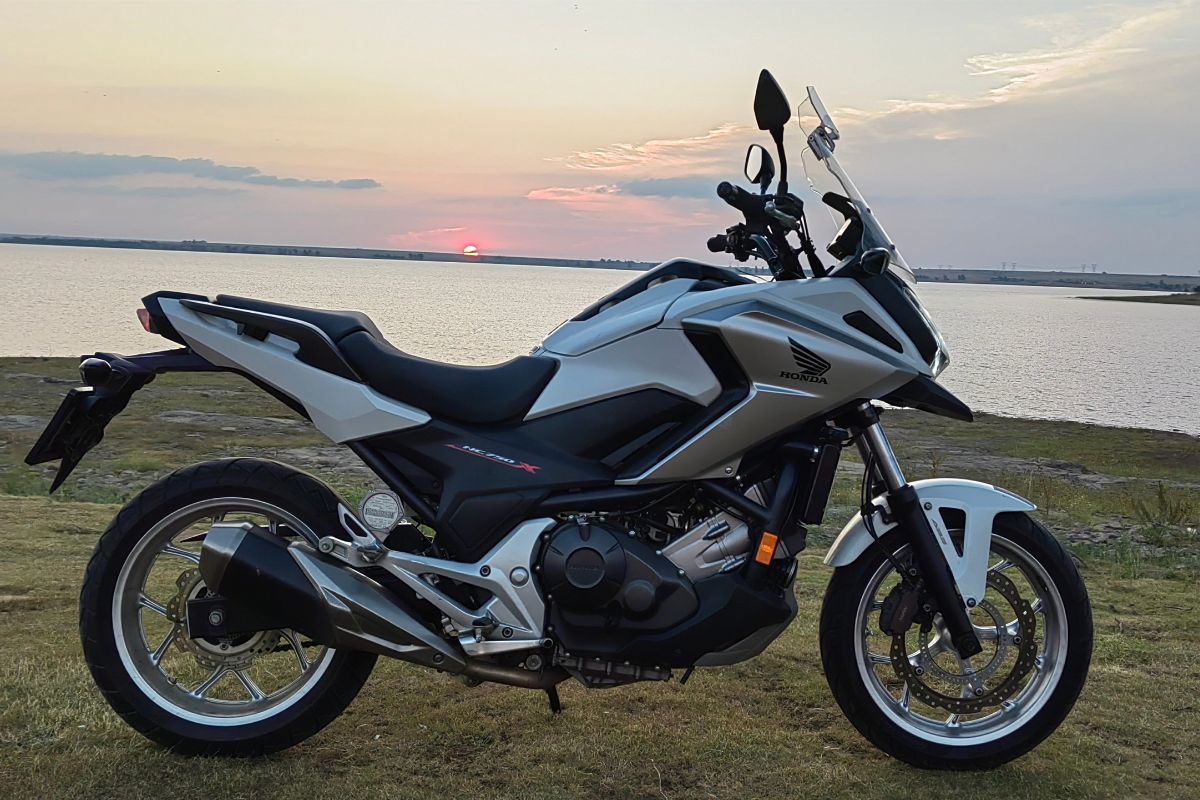
Old VS New Honda NC750X.
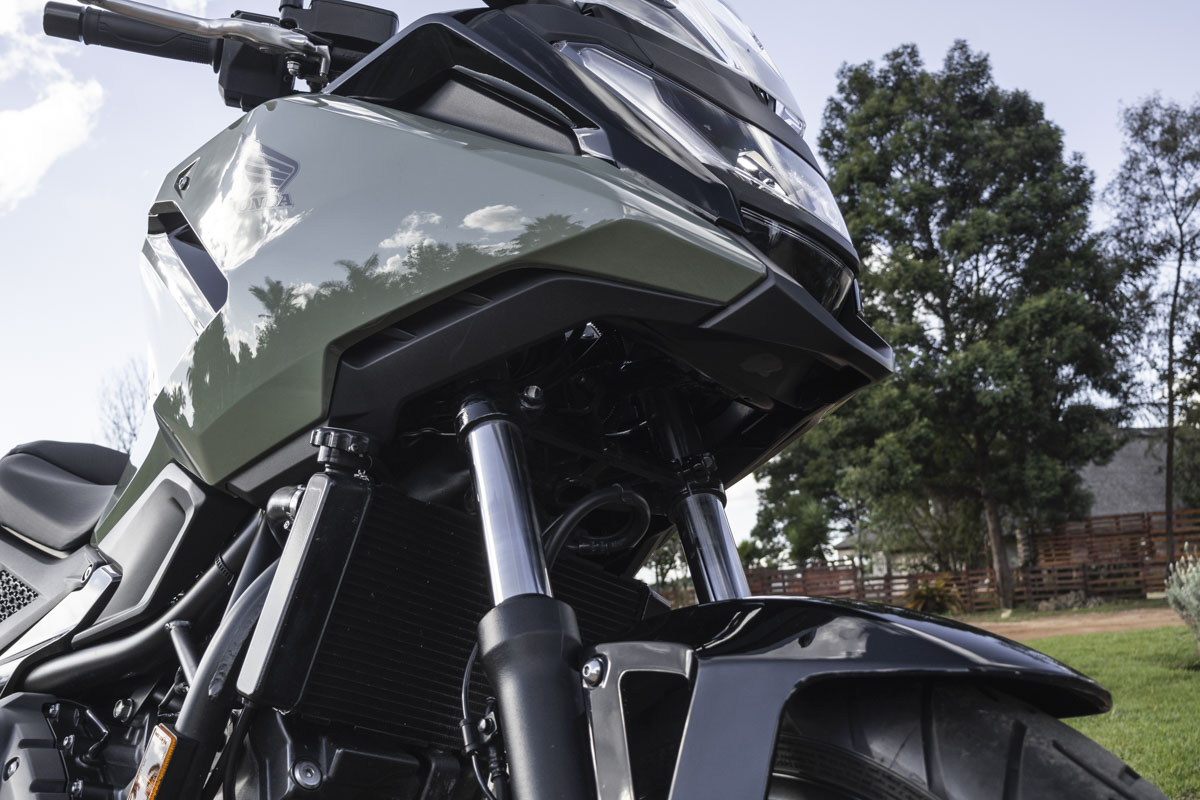
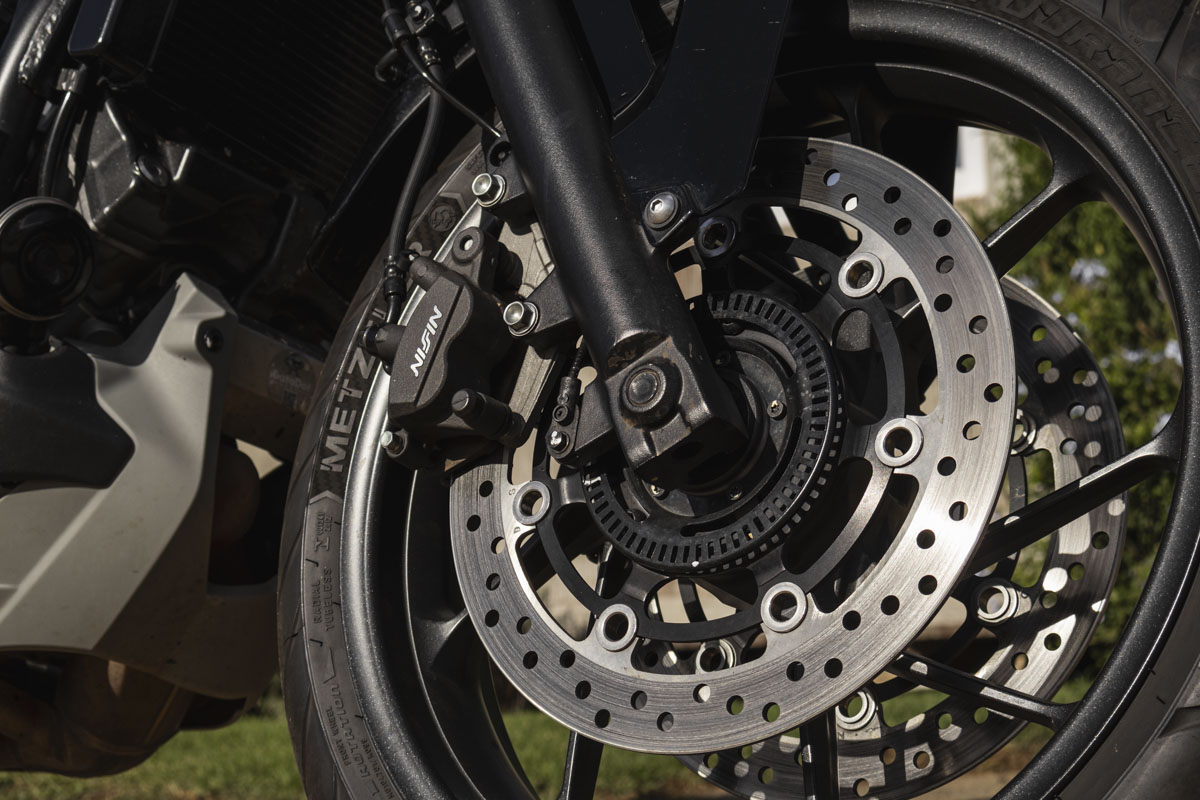
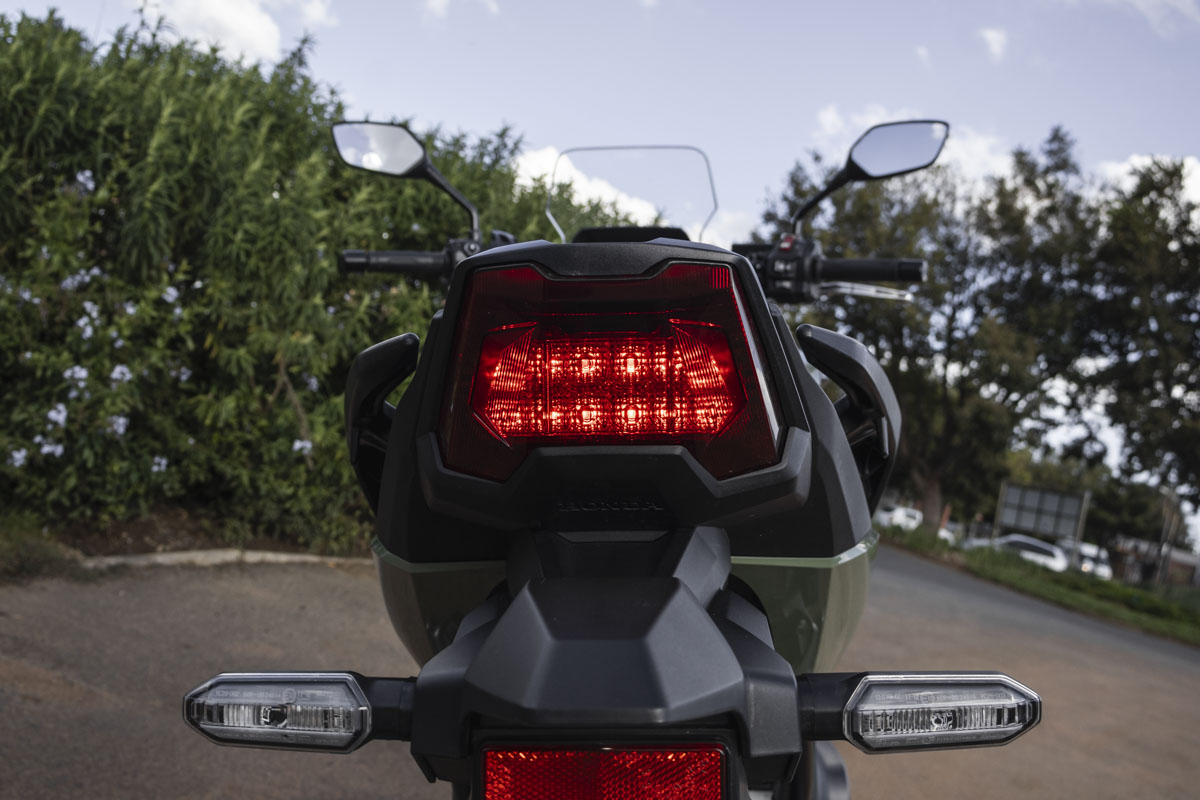
The comfort and riding position remains the same. The biggest change (Other than DCT) on this model is Rider Modes: Sport, Standard and Rain as well as 2 user modes. The latest bike boast a seriously cool full colour TFT display compared to my old LCD display. The 2026 model boasts traction control and Honda’s Road Sync. The new NC has updated suspension – it’s plusher than my bike – and (Big bonus), now comes with double brake discs up front.
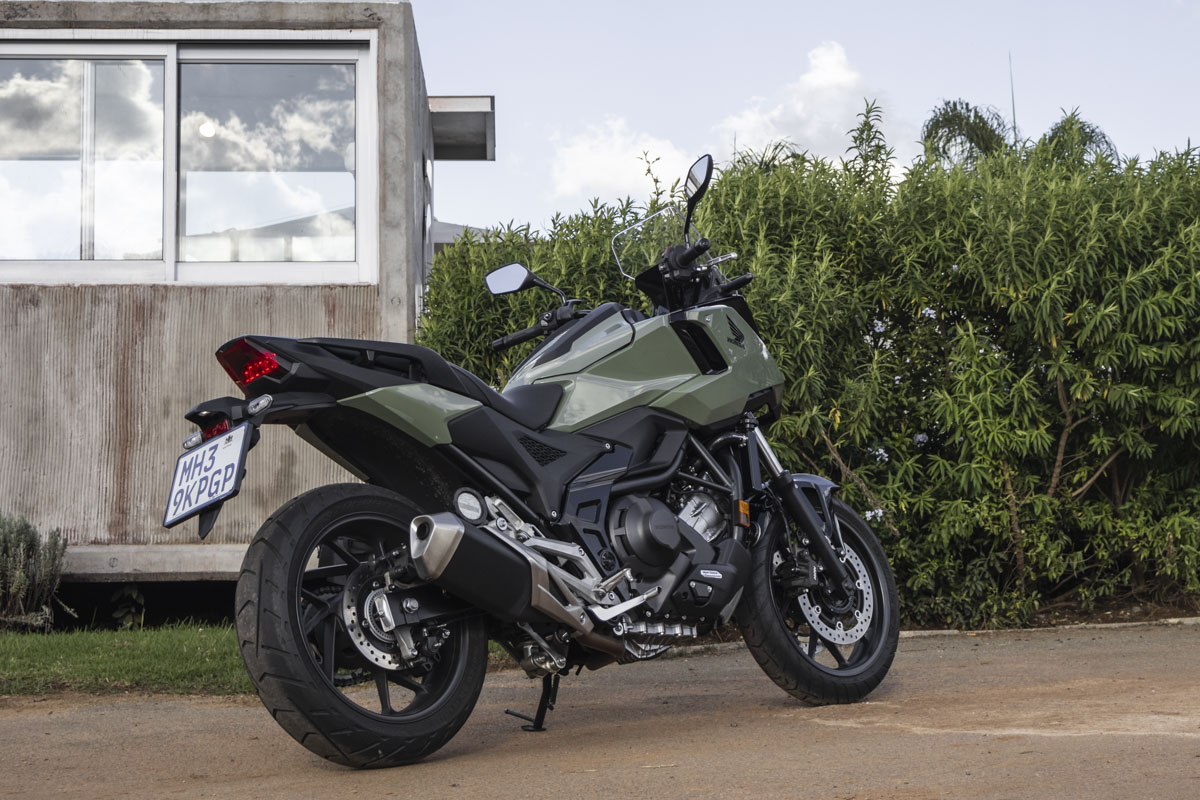
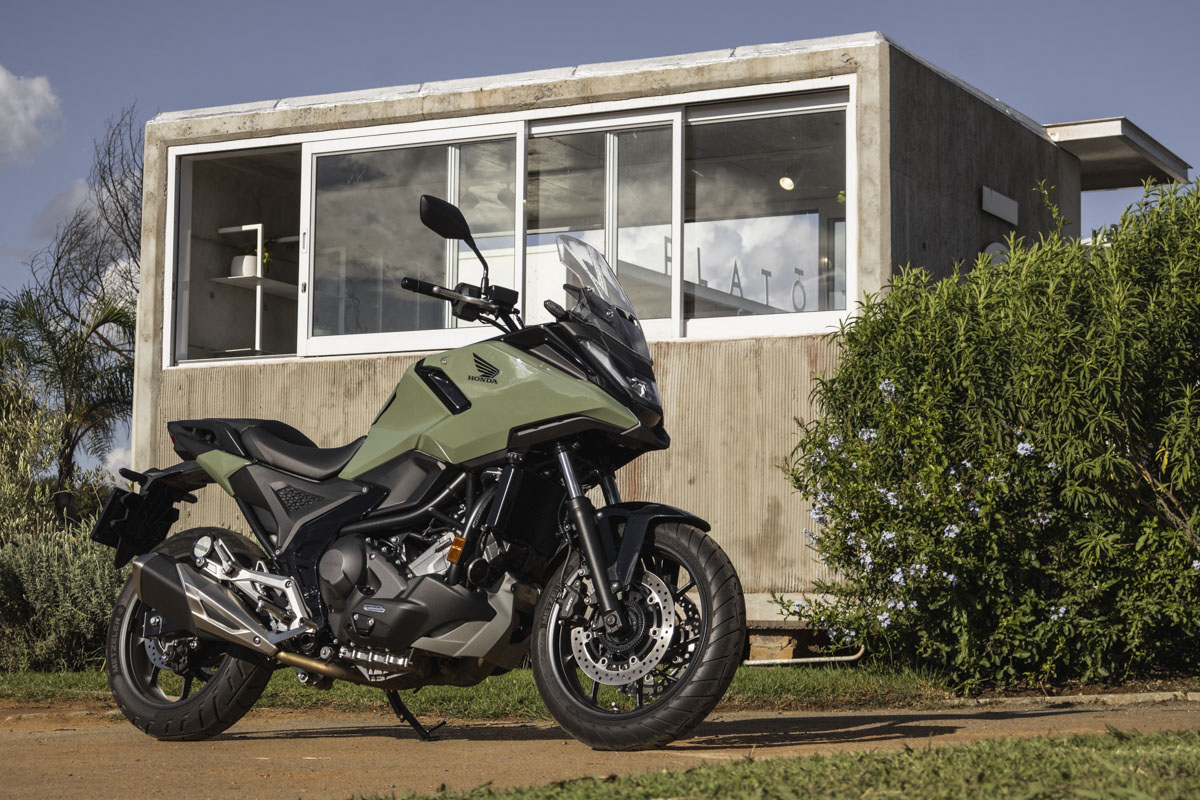
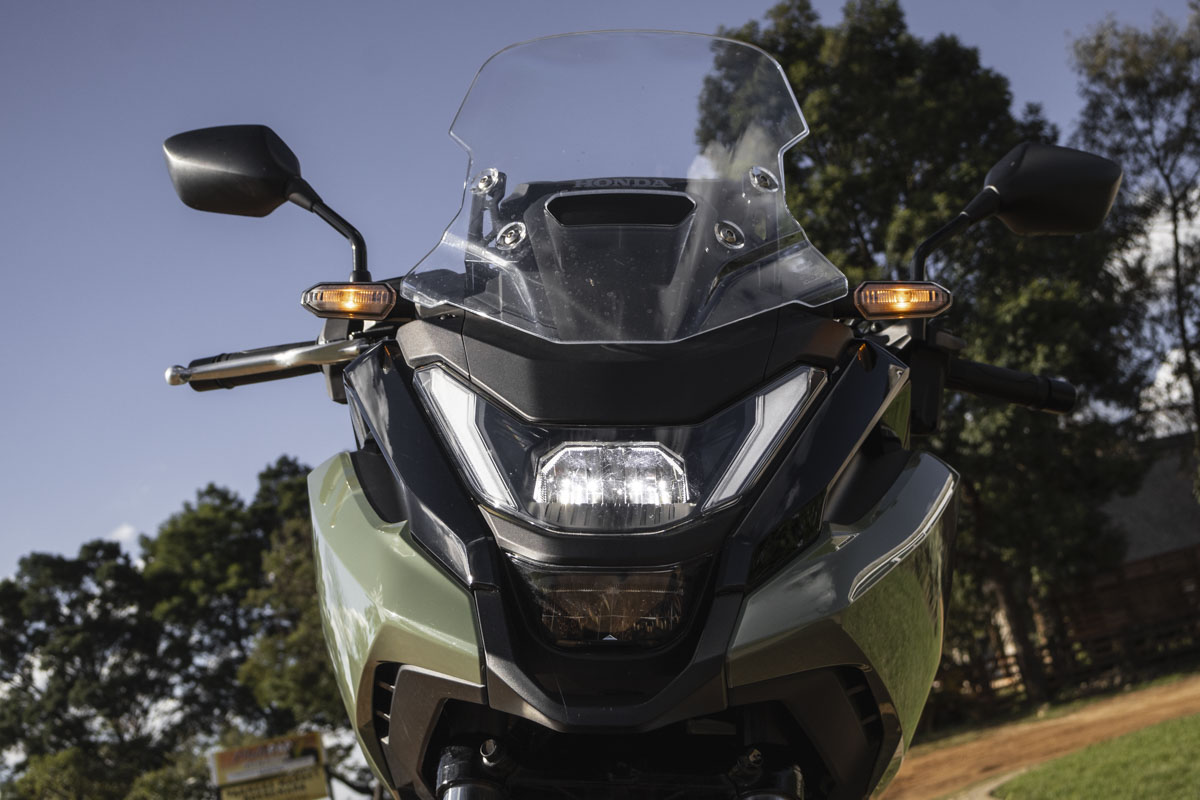
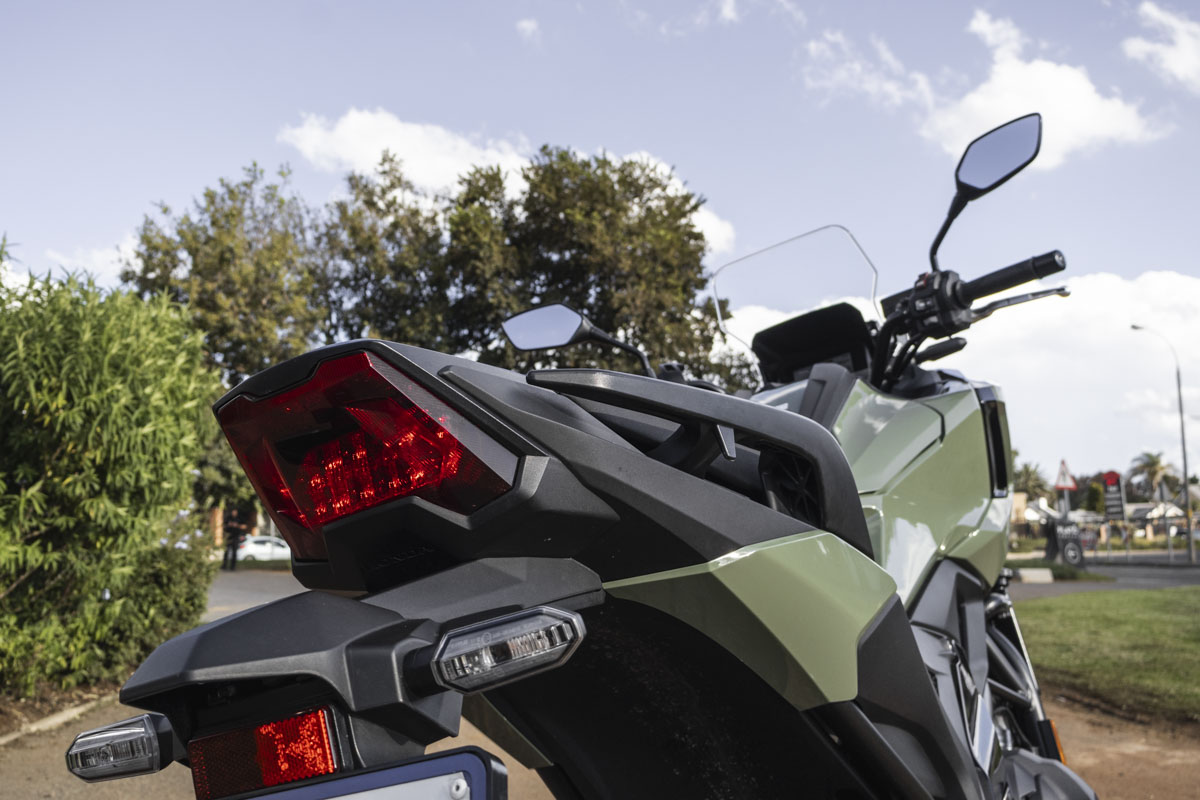
The styling has also changed over the years, and we like the current look a lot. There have been very small changes to the engine – and that is a good thing, don’t try fixing something that already works perfectly.
So, would I trade my 2017 NC for a new model? Absolutely. The latest styling cues are so cool and – as an all round package, it just feels better in just about every way.
Whether you are a new rider or a person who spends their life in the saddle, this is a bike that, absolutelly makes a lot of sense both for day to day with lots of comfort for a pillion out back on that weekend ride.
By the way, the NC750X is still offered in manual format if you are not enticed by the convenience of DCT.