The Triumph Rocket III was never a motorcycle that went unnoticed. With its enormous 2.3-litre three-cylinder engine, massive proportions and mountains of torque, it was already one of those motorcycles that made you stop and have a second look.
Then along came British custom builder Roger Allmond.
Commissioned by Bennetts Insurance in 2007, Allmond took a Rocket III and basically asked himself one question: “How far can I push this?”
The answer was pretty bloody far.
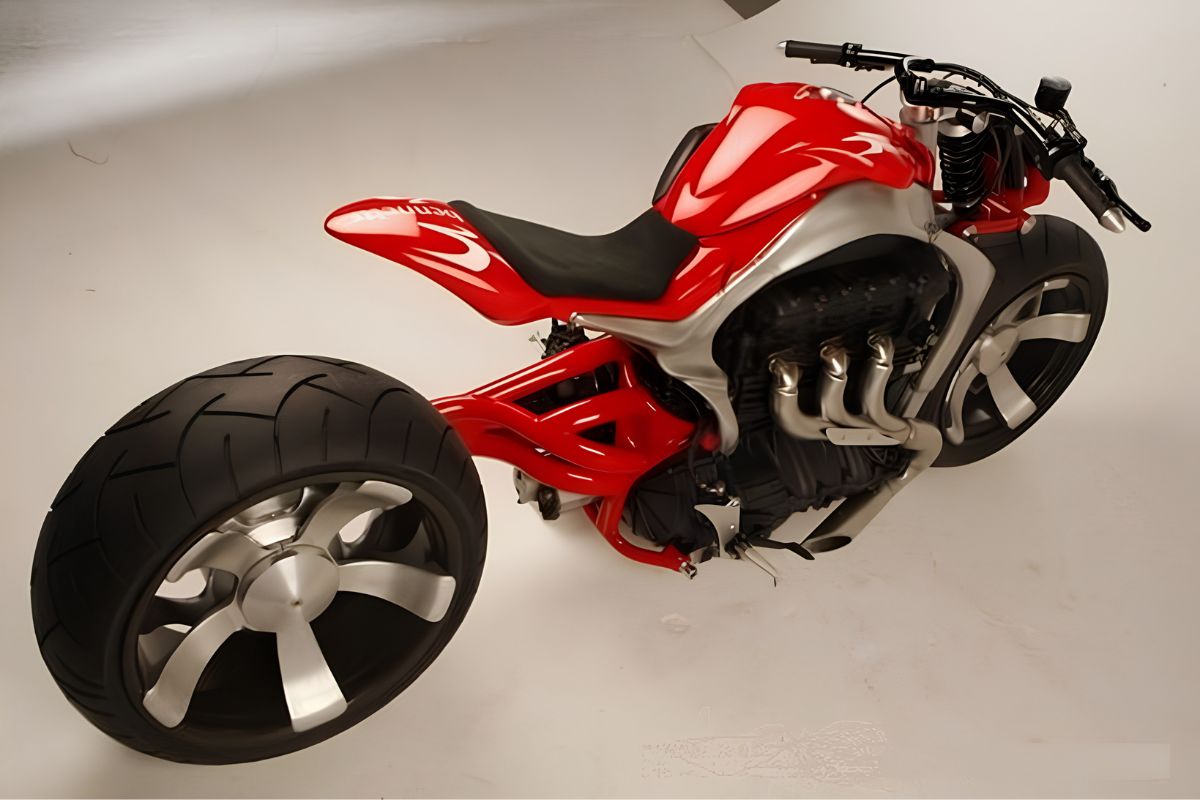
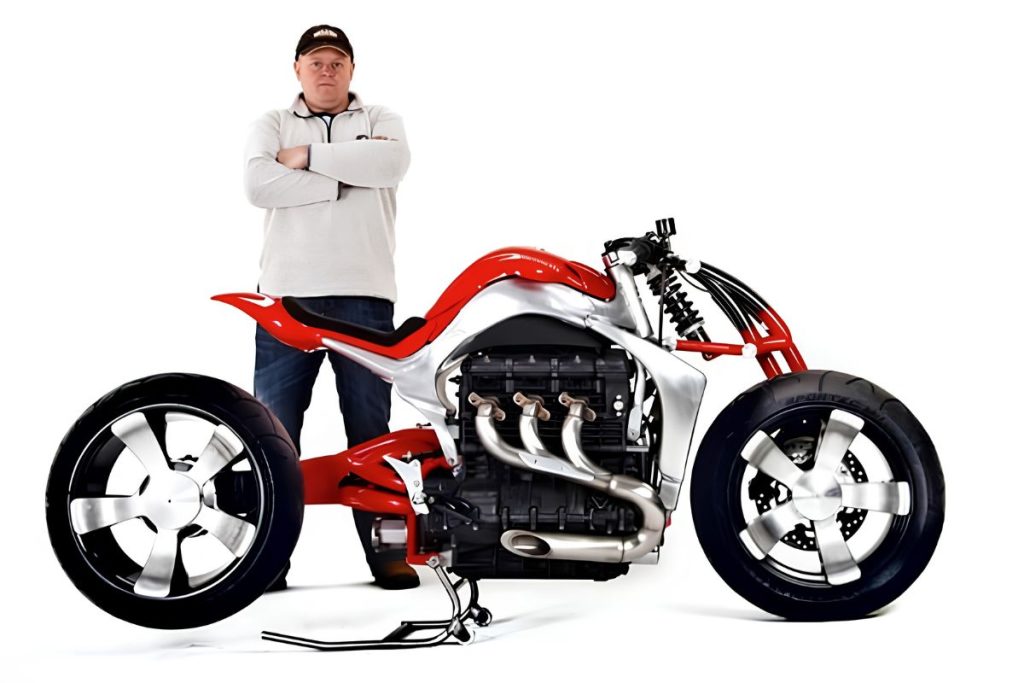
He spent more than 2,000 hours creating a one-off machine using aerospace and Formula One-inspired thinking. The finished motorcycle retains the Rocket’s spectacular engine, fuel injection, wiring and shaft drive, but almost everything around those components was redesigned or fabricated specifically for this machine.
And that is what makes Roger Allmond’s Rocket III such a perfect Quirky Bike.
THE ENGINE – THE HEART OF THE BEAST
Thankfully, Allmond didn’t mess around with the best bit.
The Rocket III’s enormous 2,294cc three-cylinder engine remains the centrepiece of the motorcycle. This was the engine that made the original Rocket III famous, a huge liquid-cooled triple with the sort of displacement normally associated with a small car rather than a motorcycle.
The engine uses DOHC cylinder heads and 12 valves, with electronic fuel injection feeding the big triple. In standard Rocket III form, it produced around 142 PS and 200 Nm of torque, with peak torque arriving at just 2,500 rpm.
But rather than hide that massive engine behind conventional bodywork, Allmond effectively built the rest of the motorcycle around it.
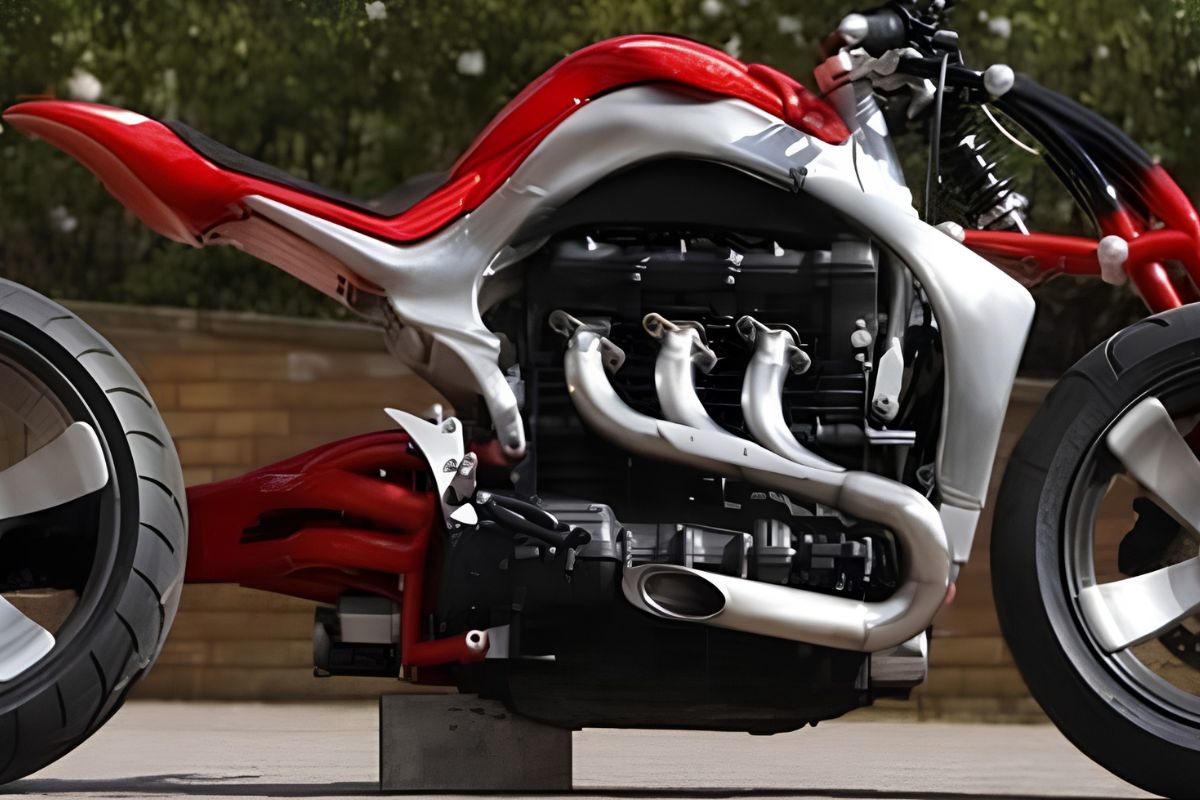
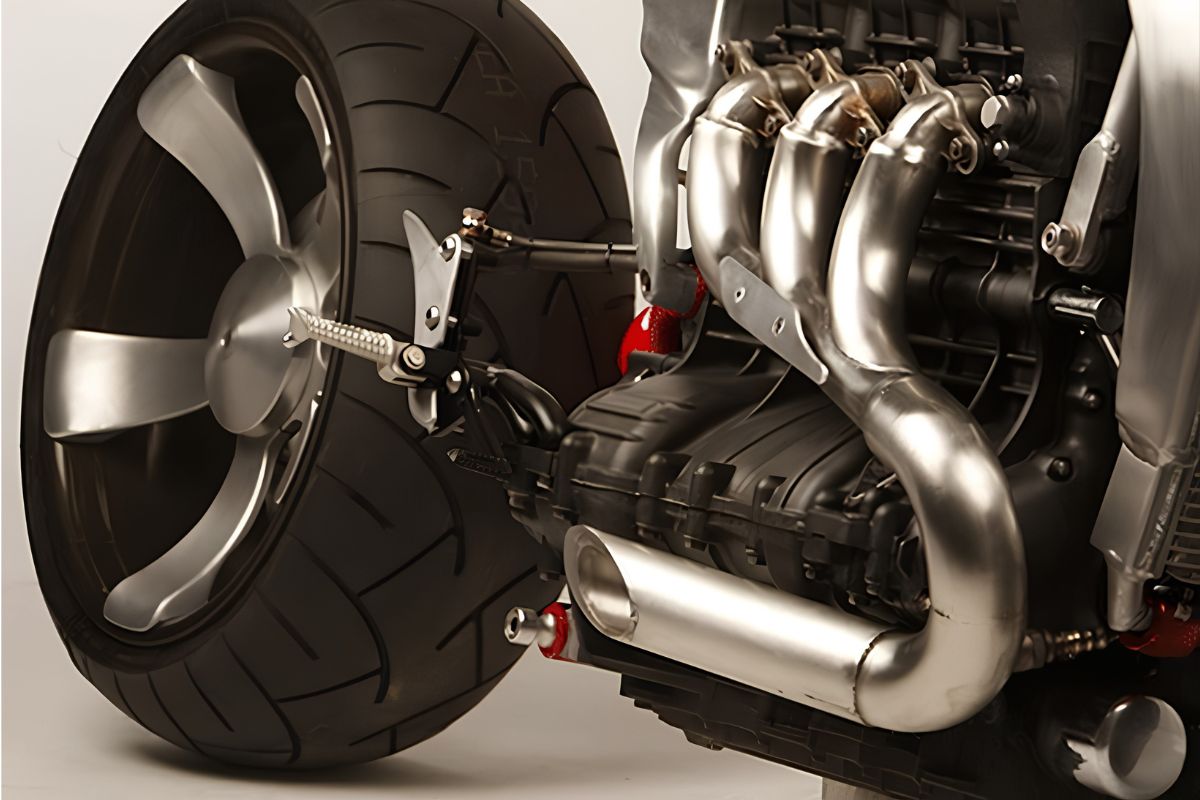
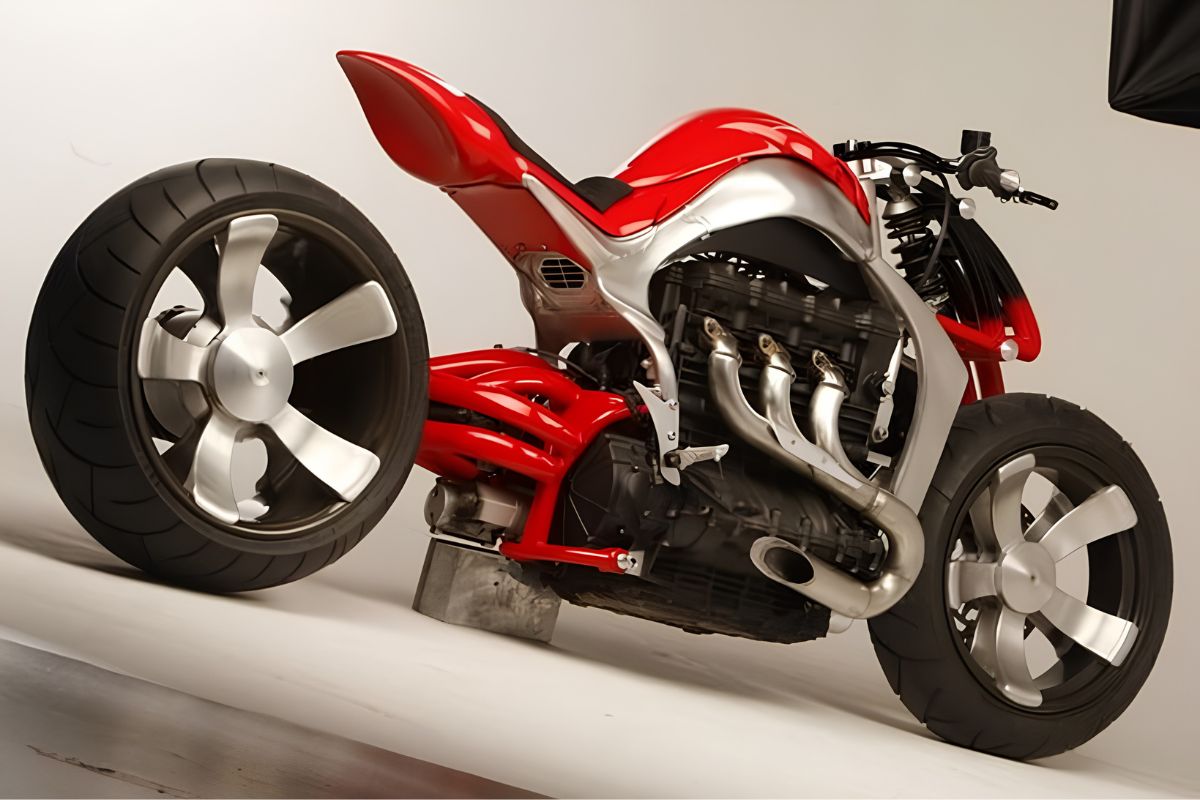
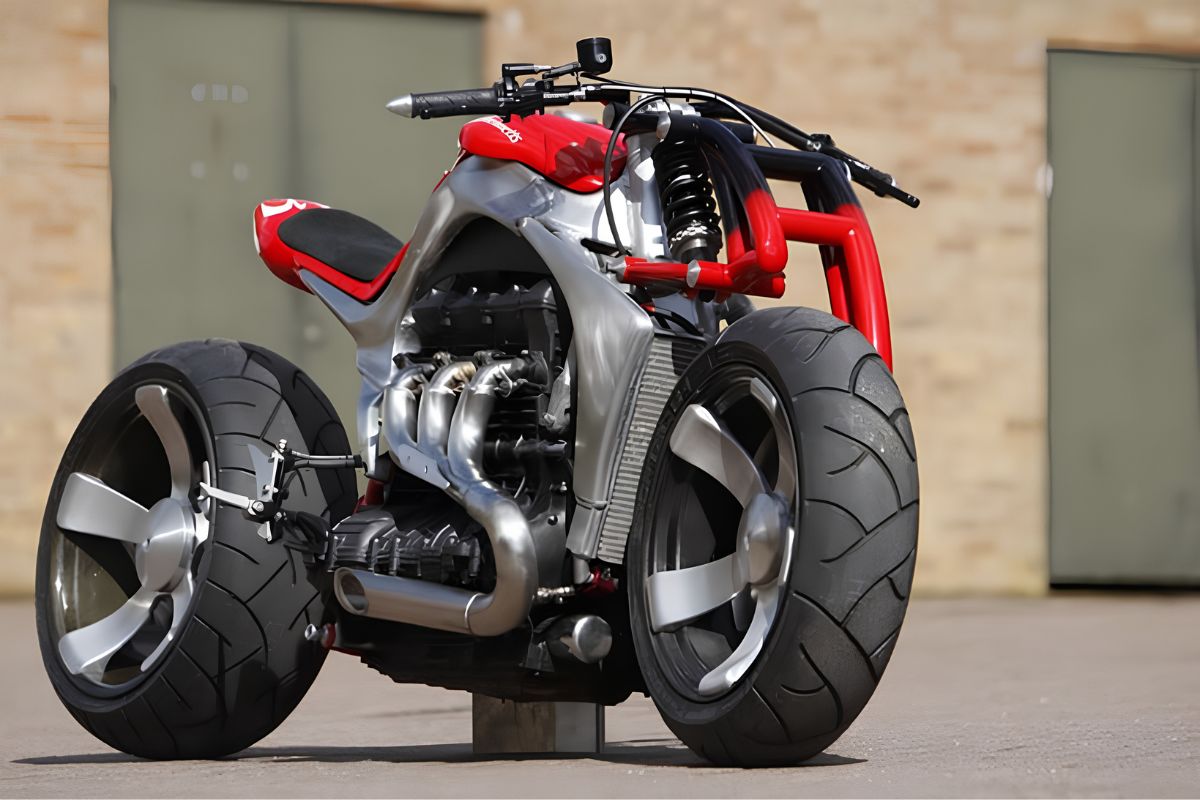
The result is spectacularly mechanical. The engine, exhaust headers and surrounding components are all on display, making it look less like a traditional cruiser and more like someone has taken a massive engine and constructed a motorcycle around it.
And, frankly, that’s exactly what happened.
THE FRAME – START AGAIN
The original Rocket III frame was history.
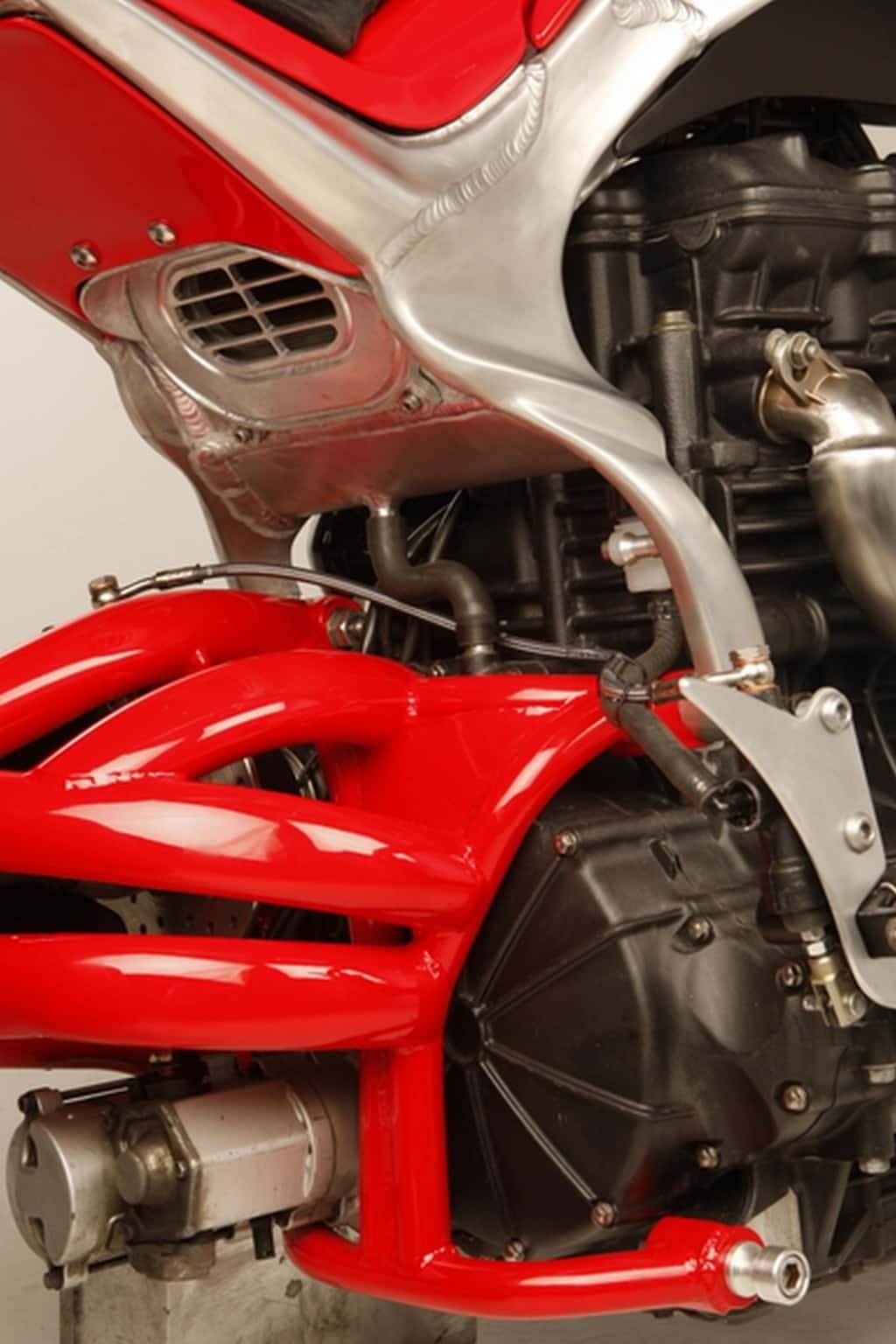
Allmond created an entirely new aluminium frame, designed specifically for the project.
It is beautifully minimal and flows around the engine rather than trying to hide it. The frame almost becomes part of the bodywork, creating one continuous shape from the front of the motorcycle through to the rear.
This is one of the cleverest parts of the build because the frame isn’t simply a structure holding everything together. It is part of the styling.
The engine is the visual centre of the bike, while the frame almost wraps itself around it.
Allmond also fabricated the hubs and much of the suspension hardware himself, making this far more than a bolt-on custom job.
This is essentially a new motorcycle built around an existing engine and drivetrain.
SUSPENSION – WHERE ARE THE FORKS?
This is where things get properly quirky.
Forget conventional telescopic forks.
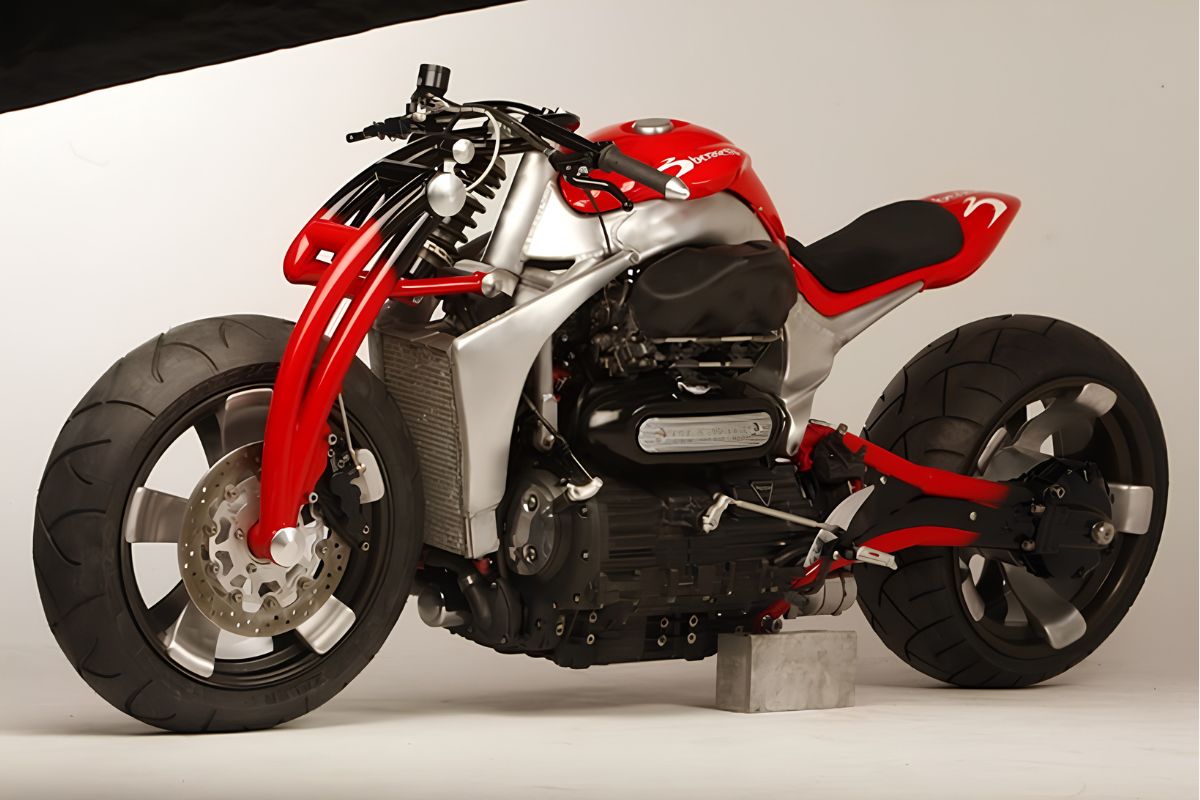
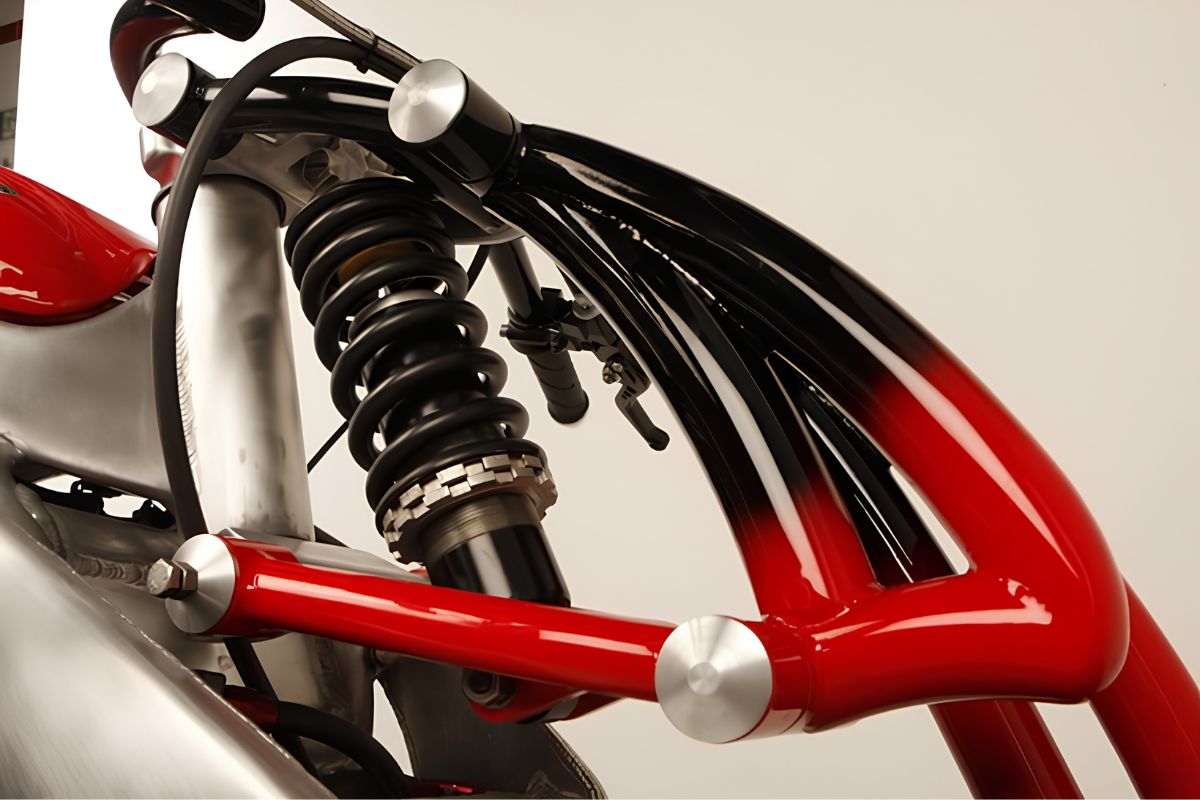
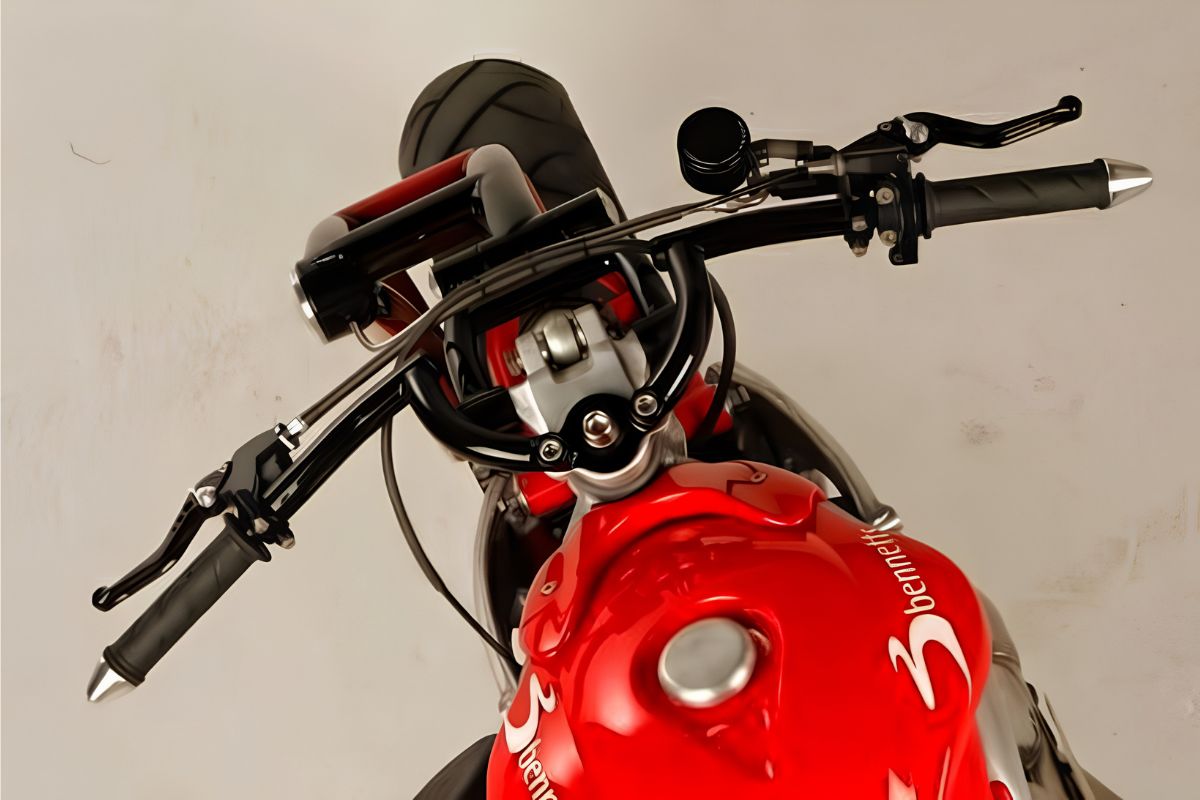
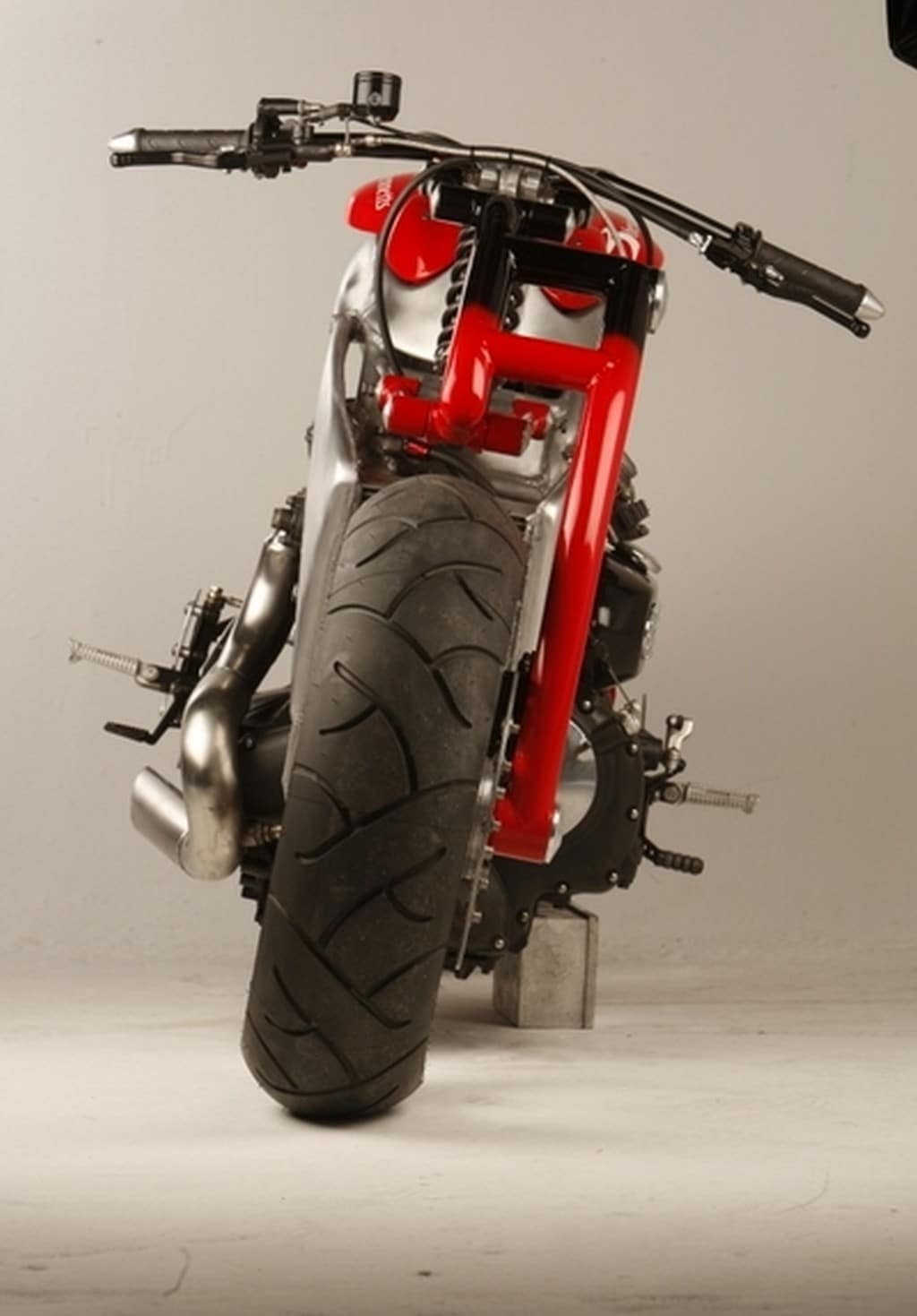
The Rocket uses a single-sided tubular front suspension and steering arrangement, designed and fabricated specifically for the bike.
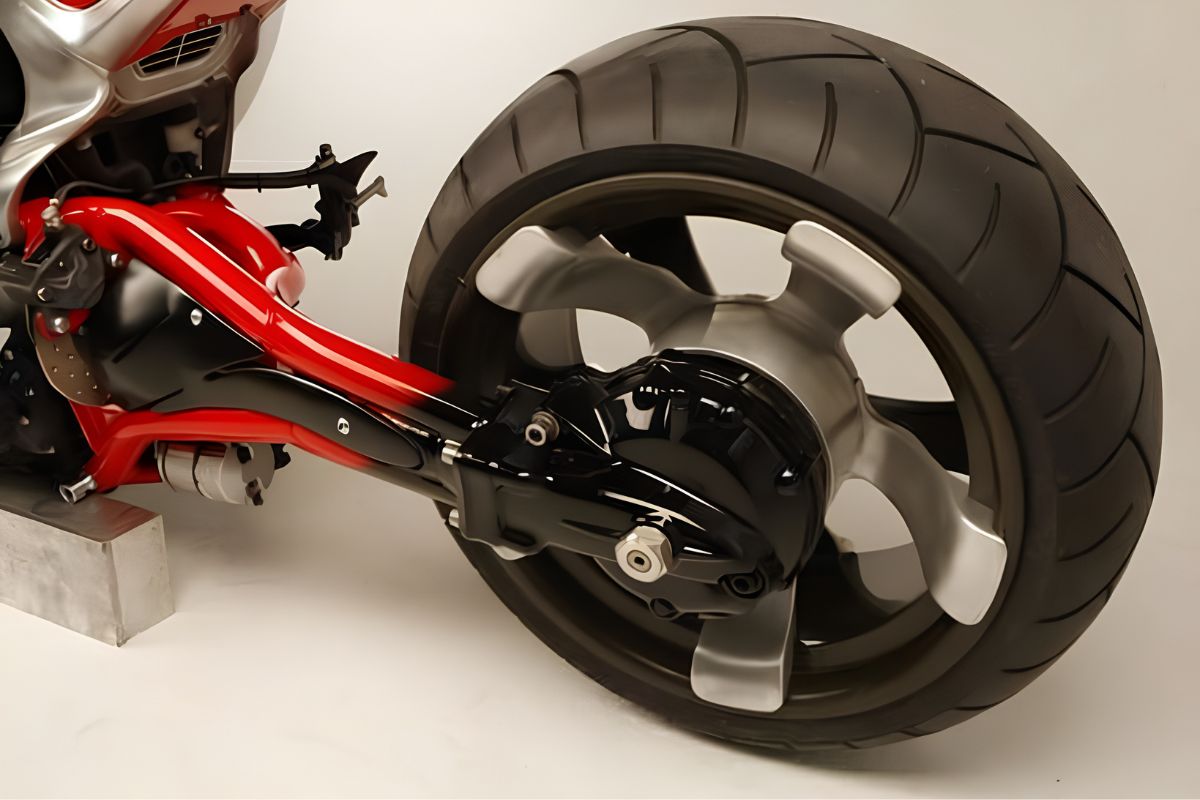
At the rear, Allmond went with a similarly radical single-sided arrangement.
It gives the front of the motorcycle an almost skeletal appearance, with the enormous front wheel sitting out in the open instead of being connected to a conventional pair of fork legs.
The rear is equally unusual, with the custom single-sided swingarm incorporating the shaft-drive arrangement.
It looks outrageous, but there is serious engineering behind the madness.
And that is an important part of this bike. It wasn’t designed simply to look strange. The strange-looking components were engineered to perform a job.
THE WHEELS – BIG AND BEAUTIFUL
Then you notice the wheels.
Allmond fabricated the aluminium hubs and spokes, which were combined with huge Dymag carbon-fibre rims.
They are enormous, beautifully machined and completely unlike anything you would normally expect to see on a Rocket III.
The carbon-fibre rims also fit perfectly with the project’s aerospace and motorsport-inspired philosophy.
This wasn’t about throwing the biggest chrome wheels possible onto a cruiser.
These were engineered specifically for the motorcycle.
The wheels are also a big part of what gives the bike its almost futuristic appearance. Everything is exposed, clean and mechanical.
THE BRAKES – NOW THIS IS WEIRD
Here’s one of the details that really earns this bike its place in our Quirky Bikes collection.
The rear brake isn’t mounted at the wheel in the conventional way.
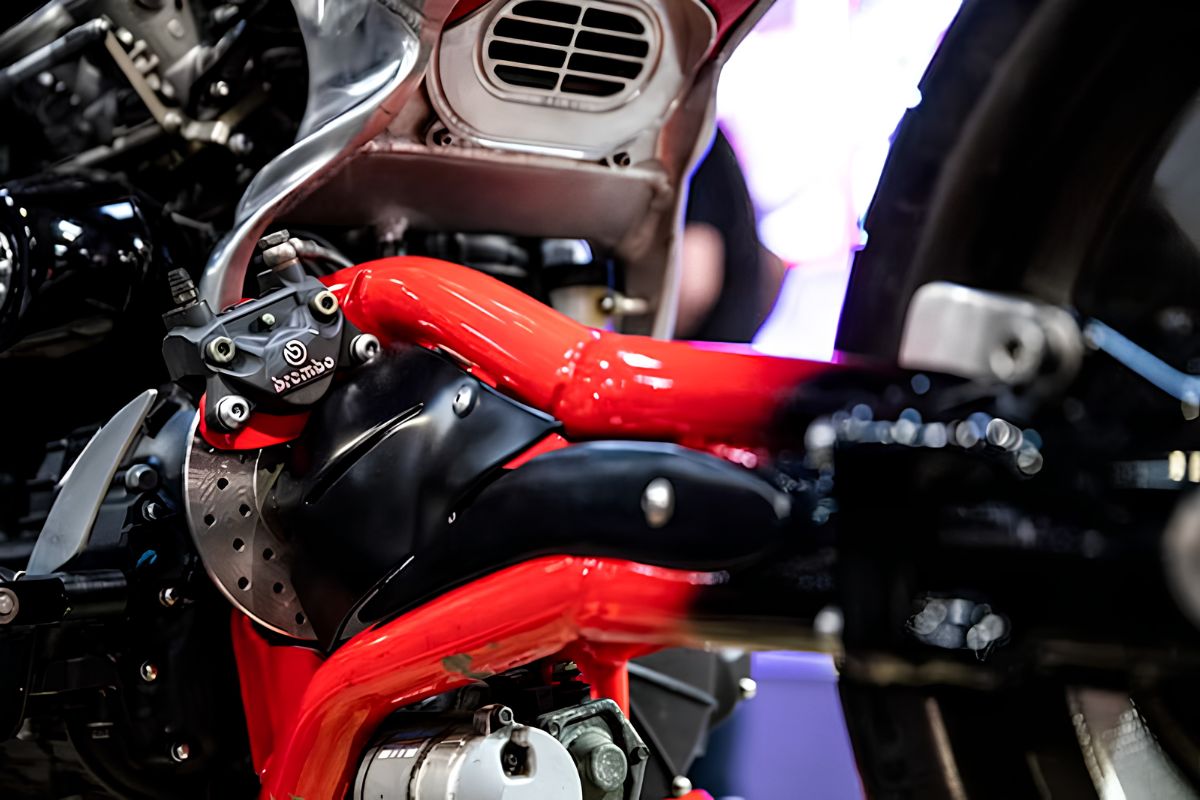
Instead, Allmond moved the rear brake to the countershaft, with the brake disc rotating in the same plane as the crankshaft.
Why?
Because when you redesign practically the entire rear end of a motorcycle around a single-sided arrangement, you have to start thinking differently about where everything goes.
And Allmond did exactly that.
It is one of those solutions that makes you stare at the photograph and think:
“Wait… is that where the rear brake is?”
Yep.
The front brake setup is equally serious, with high-performance braking hardware tucked into the radical front-end design.
Again, nothing was simply bolted on for appearance. The braking system had to work with the completely redesigned chassis.
ELECTRONICS – KEEP IT SIMPLE
There isn’t a whole lot of electronic wizardry here.
This is a machine from the late 2000s, and the electronics are deliberately uncomplicated compared with today’s motorcycles.
The original fuel injection and wiring were retained, along with the engine management required to keep that enormous Triumph triple running.
There are no riding modes, traction-control menus, TFT screens or electronic suspension settings.
And there doesn’t even appear to be any attempt to clutter the design with unnecessary equipment.
This motorcycle was built around mechanical engineering, not electronic gadgetry.
Which, considering what we are looking at, seems entirely appropriate.
THE EXHAUST – WHY HIDE IT?
The exhaust is another major part of the visual drama.
The headers sweep dramatically out from the three-cylinder engine before joining the custom exhaust arrangement.
And they’re deliberately left exposed.
Nothing is hidden.
Nothing is trying to make the engine look smaller.
The whole point is to celebrate the machinery.
The exhaust pipes also add to the visual impression that the engine has simply been dropped into a piece of mechanical artwork.
And with a 2.3-litre triple sitting behind those pipes, you can only imagine what this thing sounds like.
THE BODYWORK – MORE SCULPTURE THAN FAIRING
Then there is the bodywork.
The red and silver panels flow over the aluminium frame in a way that makes the motorcycle look almost organic.
There are no unnecessary panels or conventional cruiser shapes.
Everything seems to have been designed to follow the lines of the chassis, engine and suspension.
The tank and seat area in particular give the bike its distinctive flowing shape, while the tail section rises dramatically behind the rider.
It almost looks like the motorcycle is moving while standing still.
That is one of the things I really like about this build.
It is incredibly mechanical underneath, yet the bodywork is almost artistic.
THE SHAFT DRIVE – ONE OF THE SURVIVORS
Interestingly, the shaft drive was one of the major components retained from the original Rocket III.
But even though the basic drivetrain remained, Allmond had to integrate it into his completely new rear-end design.
The shaft drive runs through the custom rear suspension arrangement, making the drivetrain an important part of the engineering puzzle.
And this is another reason the bike is so interesting.
Allmond didn’t simply replace everything for the sake of it.
Where Triumph’s original engineering worked, he kept it.
Where it didn’t fit his vision, he redesigned it.
THE QUIRKY BOTTOM LINE
There are plenty of custom motorcycles that look spectacular.
There are fewer that make you stop and ask how the hell somebody actually built them.
Roger Allmond’s Triumph Rocket III does both.
It takes an already outrageous motorcycle and throws away almost everything conventional about it. The frame, suspension, wheels, brakes and bodywork were all reconsidered, redesigned and rebuilt around that enormous three-cylinder engine.
More than 2,000 hours went into creating the machine, and the result is something that doesn’t really fit neatly into the usual motorcycle categories.
It’s part custom bike, part engineering exercise and part rolling sculpture.
And that’s exactly what we love about Quirky Bikes.
Because sometimes a motorcycle doesn’t have to make perfect sense.
Sometimes it just has to make you look at it and say: