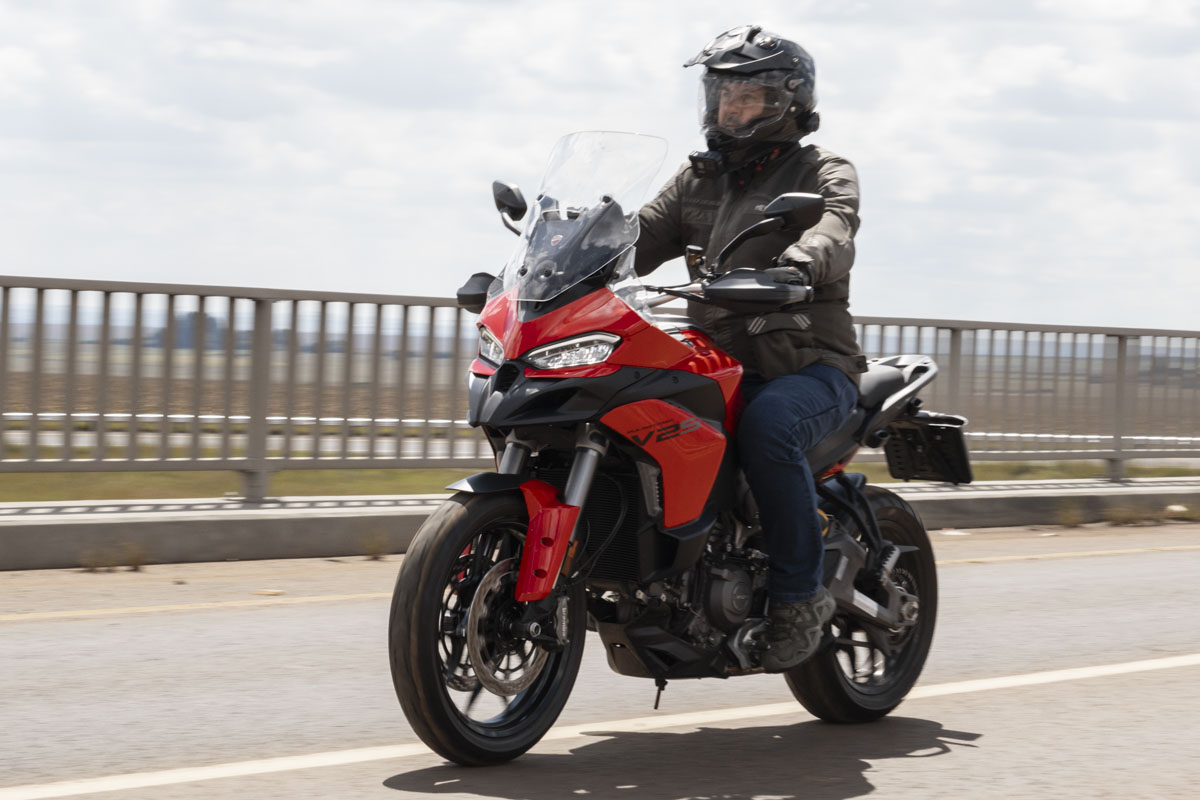
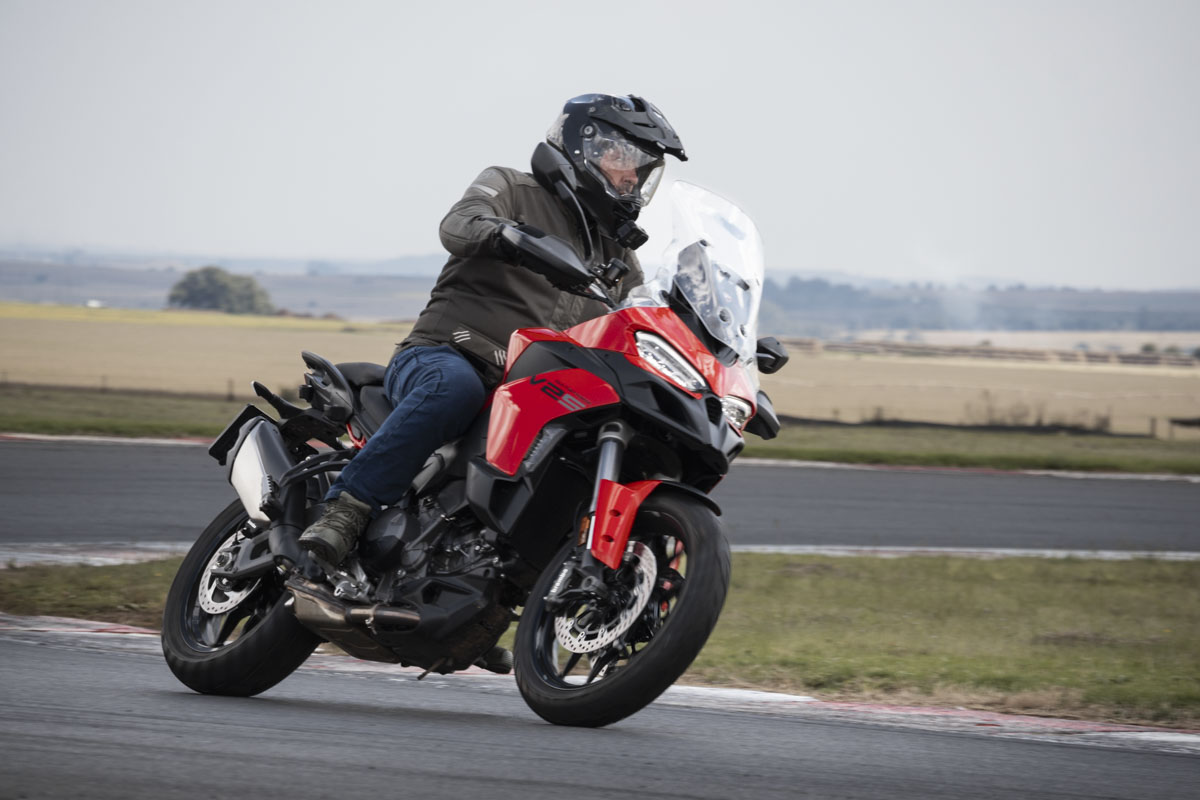
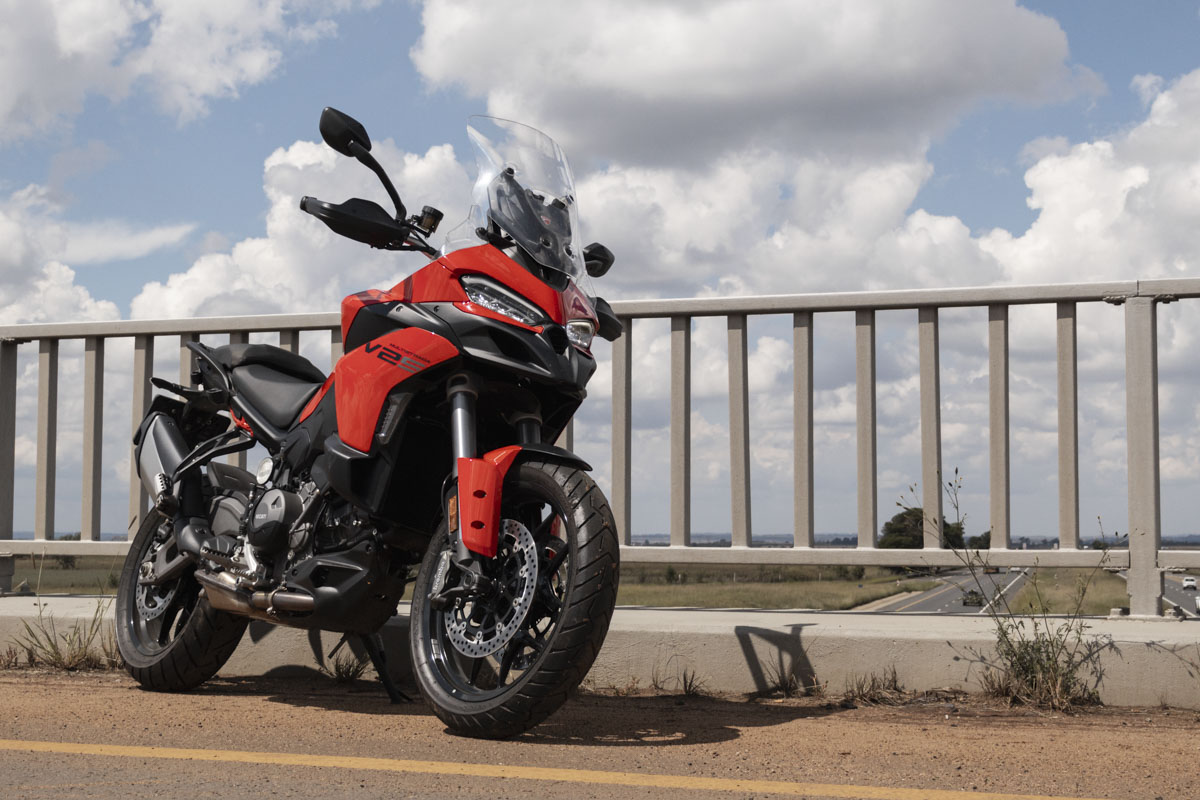
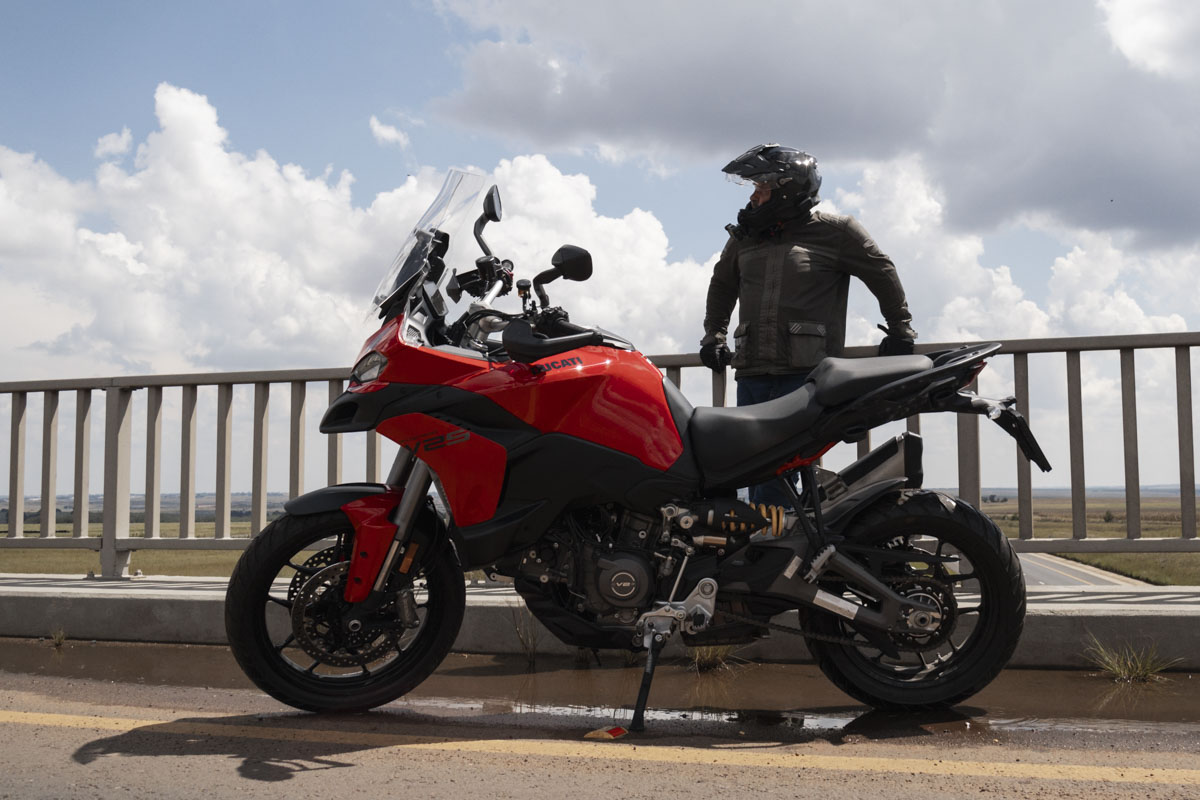
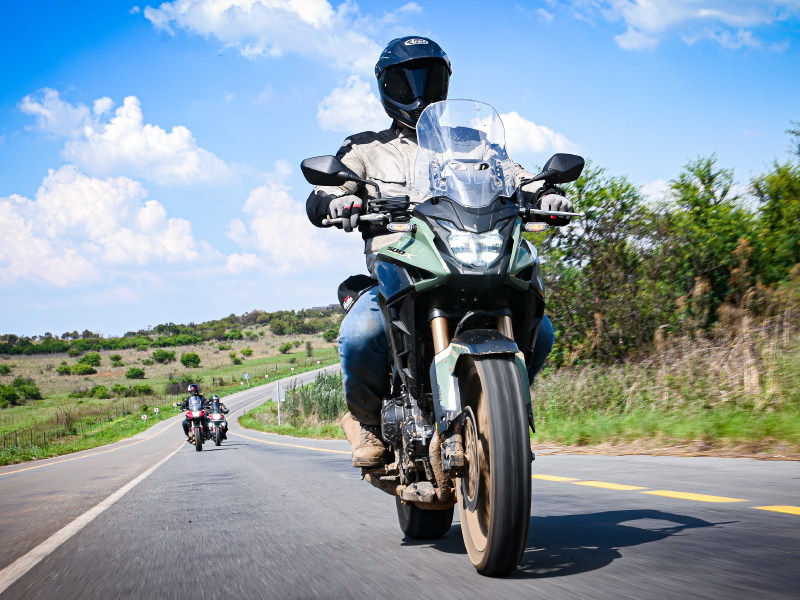
The other day Donovan from The Bike Show arrived at our offices with a spankin new 2026 Ducati V-2 S Multistrada. “This is a Glenn bike!” He Announced. “I know that you’ll like it.”
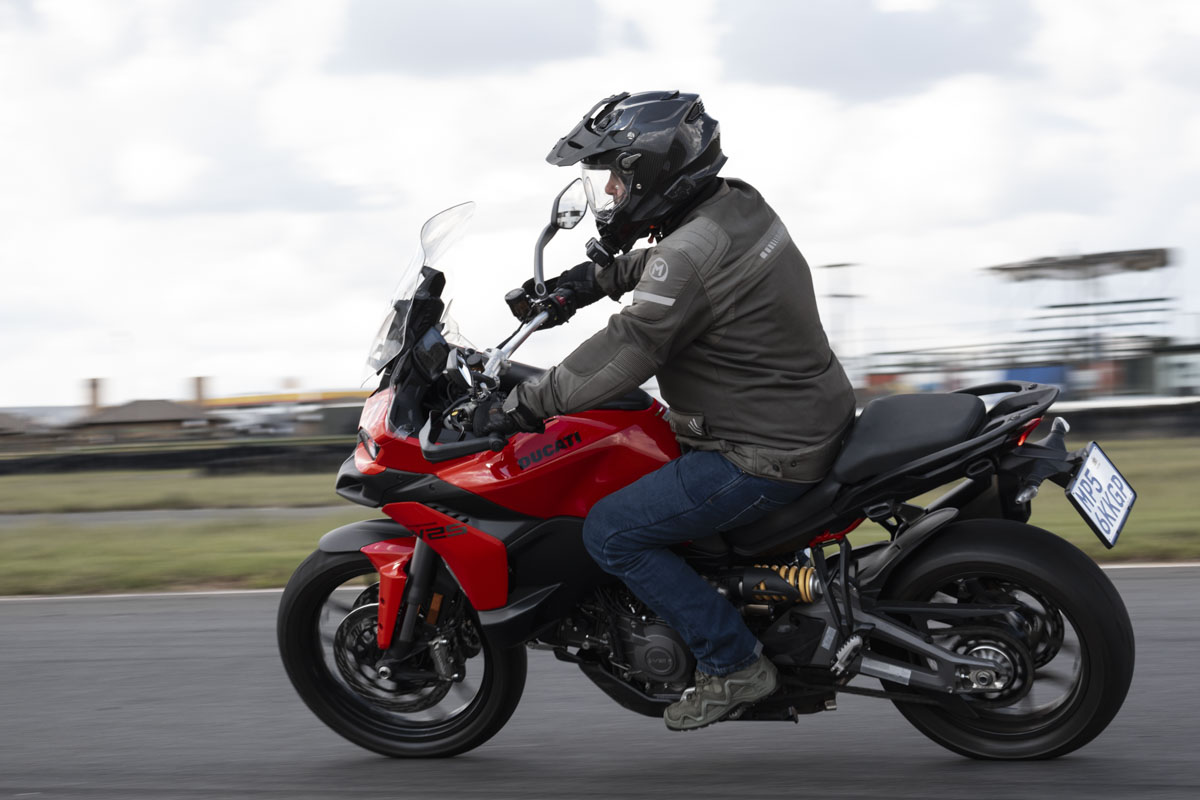
He was correct, this is a fine example of Ducati’s ability to build a bike for the masses. With it’s comfortable seating, uncomplicated electronics and great Italian looks it did all lend itself to a seriously cool day out in the highveld sunshine.
Having ridden the Ducati V4 Multistrada just a few short months ago, we were quite keen to see how this bike stacked in the Multistrada family. The V4 is really a fantastic fire breathing 1200cc monster that churns out enormous horsepower and performance, while Ducati tells us that the 890 twin is aimed at the majority who, they say are not interested in arm stretching horsepower and who are more interested in a bike that can be ridden just about anywhere every day.
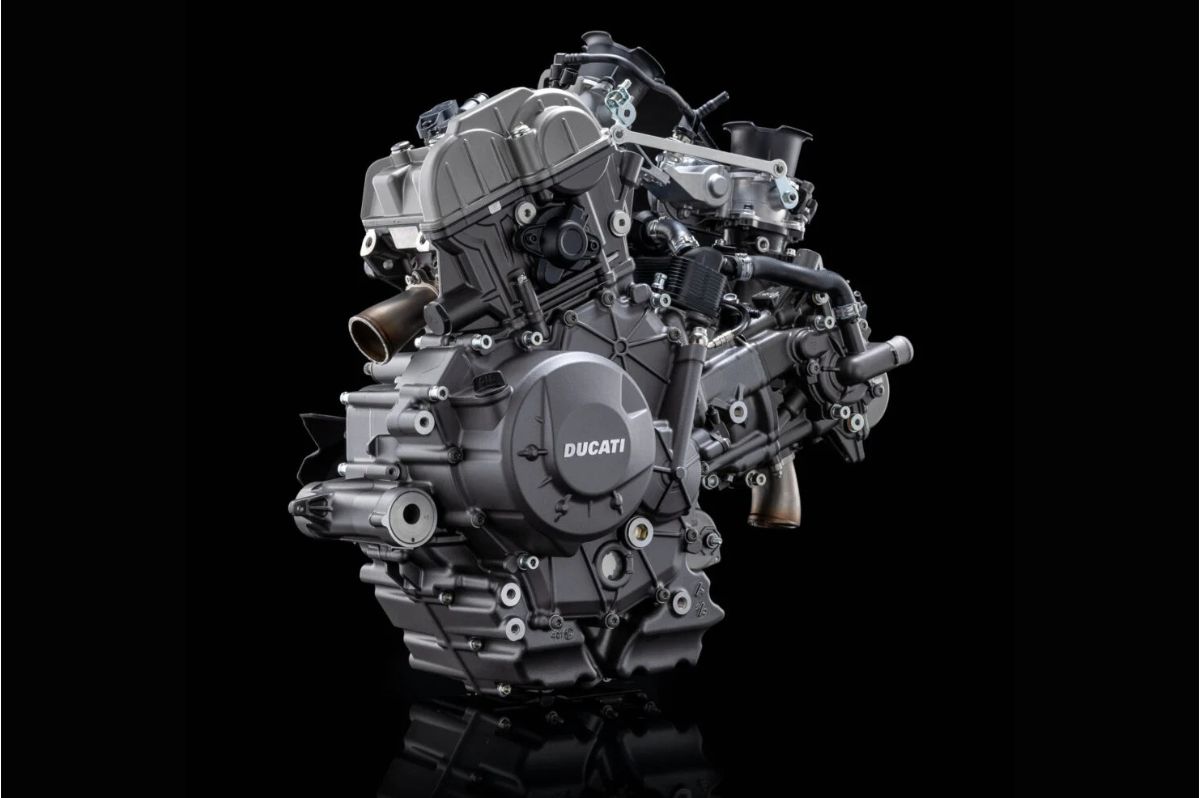
To this end, they kind of toned things down, downsizing the original 950 engine and fitting a brand new, lighter 890cc donk.
You might have read about the new engine in the Panigale V2 in RideFast Online, but in a nutshell, the old V2’s 937cc Desmo, belt-driven Testastretta has been swapped out for Ducati’s new 890cc V-twin, with valve springs instead of Desmodromics and a camchain instead of cam-belts – just like the V4.
It’s more compact and also lighter, 5.4kg less than the old 937cc Testastretta.
It’s interesting that while Ducati has reduced the bore, it makes almost the same figures as it’s 950 predecessor – 114bhp @ 10,750rpm compared to the old V-twin’s 111bhp @ 9000rpm.
Interesting stuff this, it just goes to show how technology progresses.
A lighter and slightly more revvy engine, which produces more power and just a fraction less torque than the old 950 all in a lighter chassis.
But wait. There’s a lot more to this bike than just a new engine:
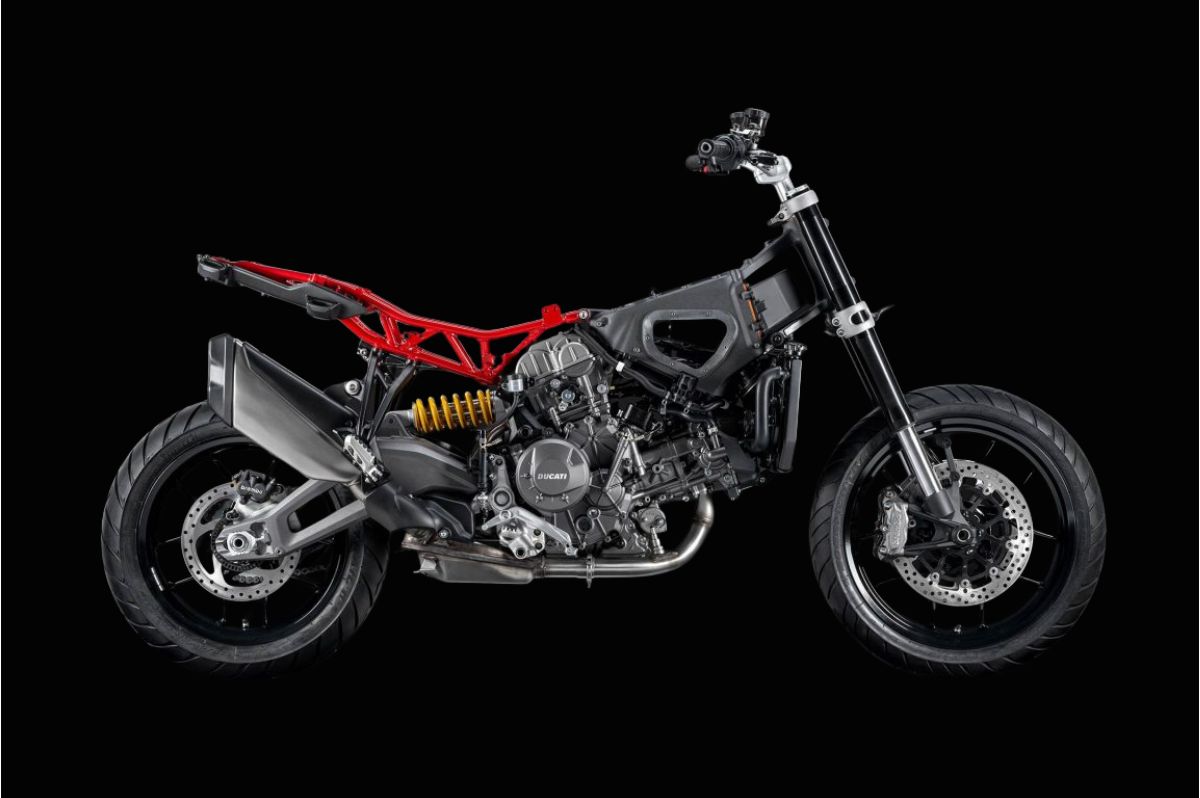
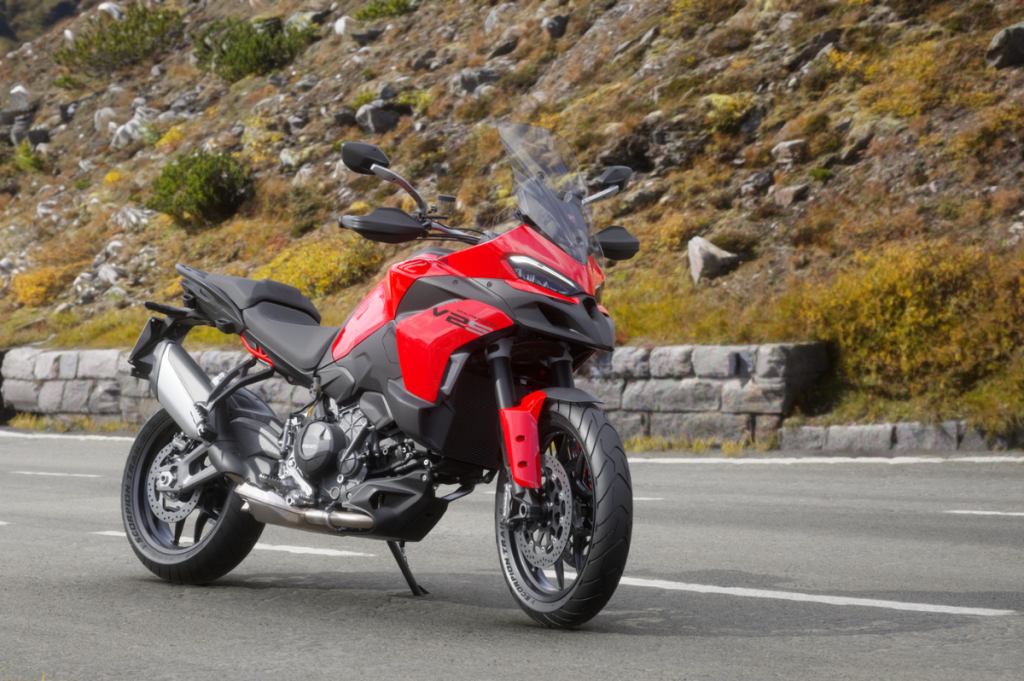
The V2 S’s chassis is almost all new. It swaps the previous Multistrada V2’s steel tube trellis for a V4-style aluminium monocoque weighing in at just 4kg’s. The engine is included as a stressed member with the airbox, air-filter, throttle bodies and injectors located inside the frames cavity.
A twin-sided aluminium swingarm is bolted directly to the crankcases, and the subframe is a steel tube lattice work of Italian art.
Suspension, courtesy of Marzocchi is semi active. 45mm USD forks and arising rate shock. Suspension modes include Dynamic, Comfort, Low Grip and Off-Road, and can be adjusted on the move via its own button on the right bar cluster.
Cool huh!
Travel is 170mm front and rear. Wheels are cast aluminium, 19/17 and are shod in Pirelli Scorpion trail tyres. Brakes are courtesy of Brembo and are carried over from the previous bike. M4.32 monobloc four-pot radials on 320mm discs.
Cornering ABS is now three-way adjustable, as per the Multi V4.
Ducati then went on to pack the bike with an arsenal of cool stuff:
Rider Modes including a dedicated Rain Mode, Sport, Touring, Urban and Enduro, all set-up with different levels of traction control, anti-wheelie, torque control, peak power, throttle response, engine braking, ABS and semi-active suspension…
And it can all be fine tuned to a rider’s preference.
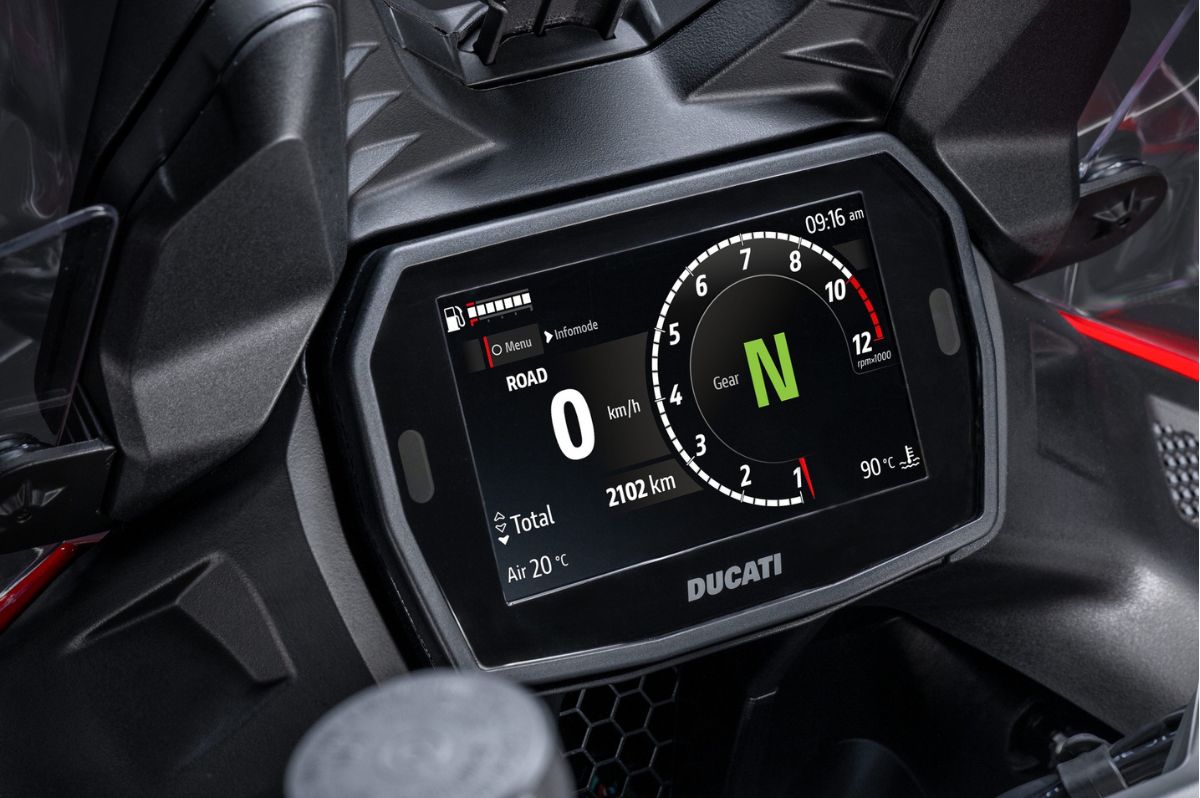
Cruise control is standard, there’s a cool new 5 inch TFT dash with a choice of three different displays – Road, Road Pro and Rally. They have included a USB-A port behind a hinged plastic cover in the fairing. All good stuff.
How does it all translate on the road?
If Ducati was going for manageability and comfort, they nailed it.
The 890 Multistrada feels small, compact and narrow.
The seat is firm and comfortable, the riding position natural. The narrowish seat means that getting your foot to the ground is easy and your knees tuck neatly into the flattish 19 litre tank as you tear off down the freeways.
You sit on the bike – not in it and it’s all good.
There’s lots of bottom and mid-range torque on tap – the place where we spend most of our lives.
The bike feels light and is seriously peppy when you open the throttle, hitting the 200 plus KPH mark in a big hurry.
That new V-twin mill is seriously cool!
Ducati gives you a quickshifter and autoblip and that works just fine. We had no missed gears and the bike gives a cool little burble as she talks back to you when you kick down.
The littlest Multistrada can also be exceptionally chilled and is perfectly happy and fun to ride at normal speeds and in and out of traffic.
Hit the legal speed limits, engage cruise control and you’ll love life as it whizzes past.
The screen, adjusted via a single-hand slider is wide and features wind deflectors. It’s pretty upright and does a good job guiding air over your head with minimal turbulence in the cockpit.
The bikes feel on the road is great, the suspension handles our sometimes interesting roads with no fuss.
Cornering is where Ducati’s genes really show – she’s taut, planted and faster than most riders we know.

We did play with the modes and they were all simple enough to operate. We kicked out of Sport to sample Enduro for a short flip down a seriously soggy gravel road and that sorted the power delivery and setup so that we didn’t manage to fall over.
All the while we had to bear in mind that Ducati SA actually hadn’t lent the bike to us, so any damages would go poor old Dons way.
Perhaps we’ll beg this bike for a more detailed off-road feature soon.
We did, however like what we felt.
Rain mode was engaged when the skies opened on our ride back home, it drops the power to 95bhp, sets the suspension to ‘low grip’ and turns up the lean-sensitive rider aids. Once again,the bike did a perfect job at slowing things down, reducing slip and making sure that we got home in one piece. Interestingly the screen did a fair job at preventing a proper soaking…
The sun was going down as we pulled into the garage and parked her up for the night. When we switched off, switched off we noticed the ‘coming home’ headlight function, that leaves the lights on after the ignition is turned off for a short while. for the first time in a long time, we locked up without tripping over the workbench…
They really have thought of pretty much everything…
At a glance:
Engine size 891cc
Engine type Liquid-cooled, 8v, 90° V-twin
Frame type Aluminium monocoque
Fuel capacity 19 litres
Seat height 830mm
Bike weight 217kg
Front suspension 45mm, Marzocchi USD forks, semi-active with multiple custom settings
Rear suspension Marzocchi, rising rate, semi-active with multiple custom settings, electronic preload selection, and manual miniumim preload button
Front brake 2 x 320mm discs with Brembo four-piston radial caliper, adjustable cornering ABS
Rear brake 265mm single disc with Brembo two-piston caliper, adjustable cornering ABS
Front tyre size 120/70 x 19
Rear tyre size 170/60 x 17