What Happens When an 80's Honda CBX Goes Completely Mental
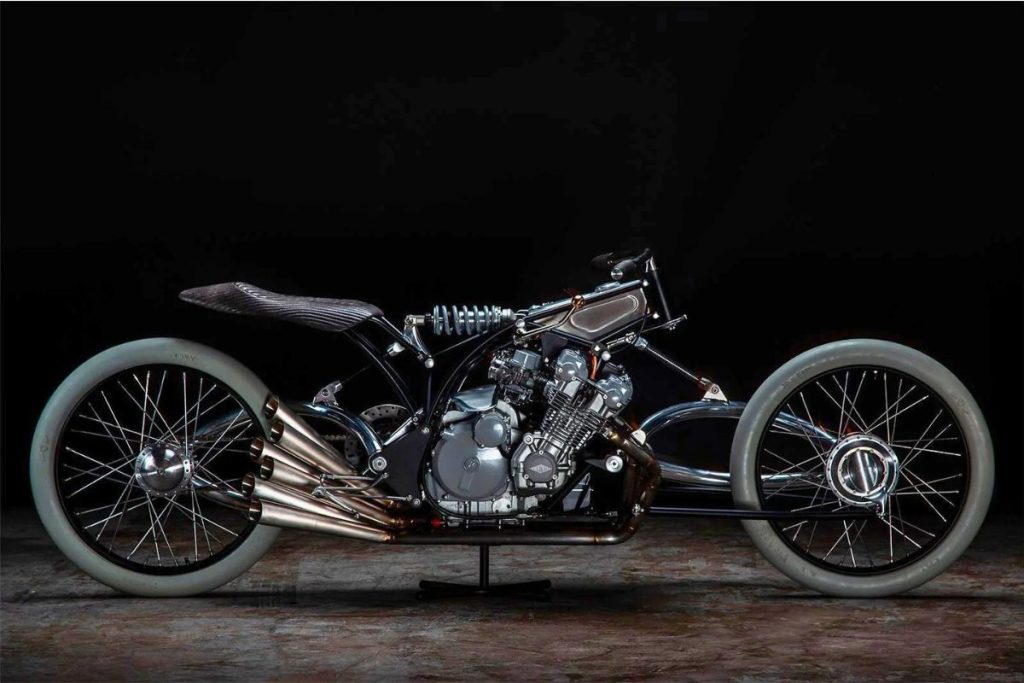
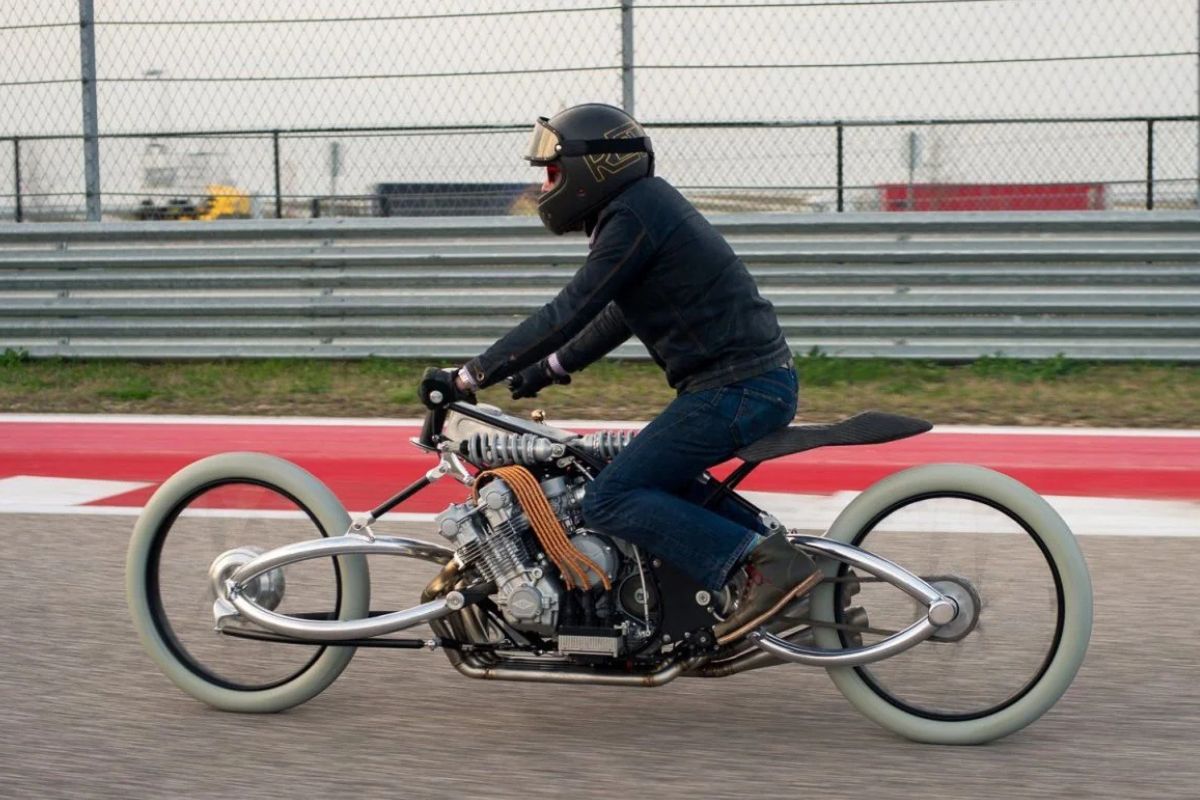
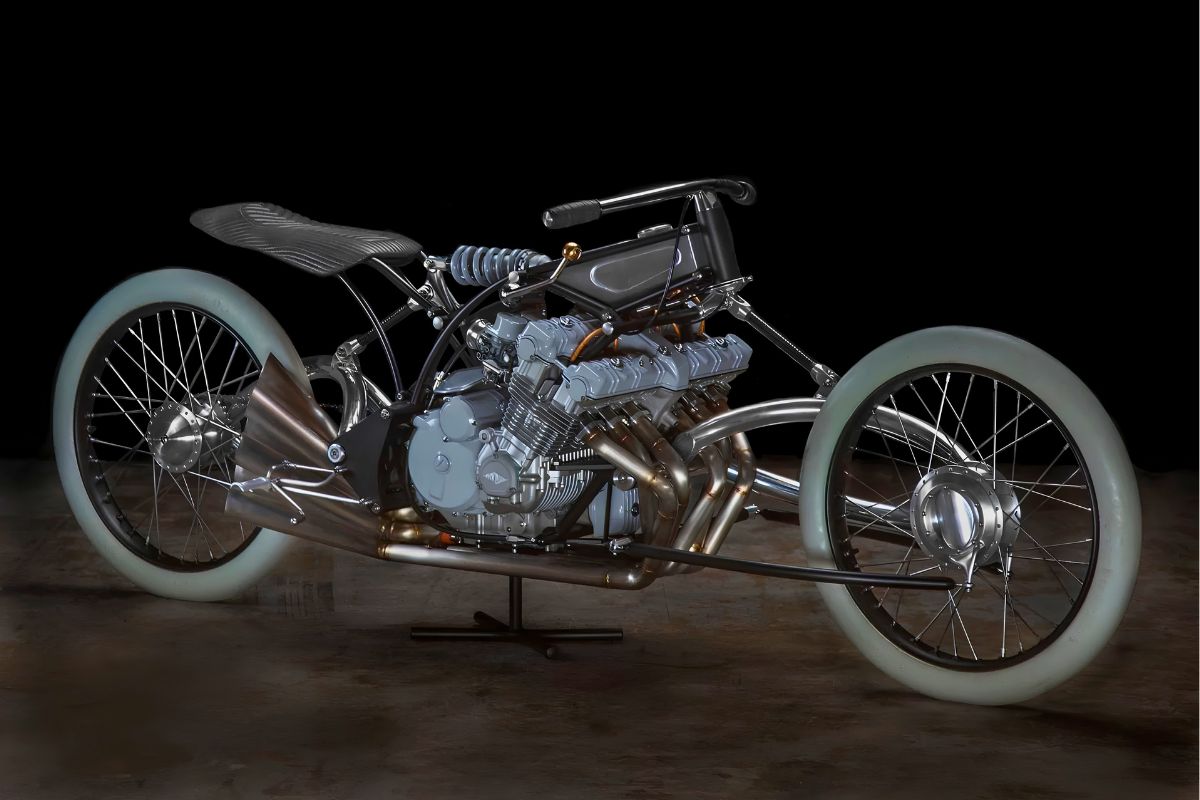
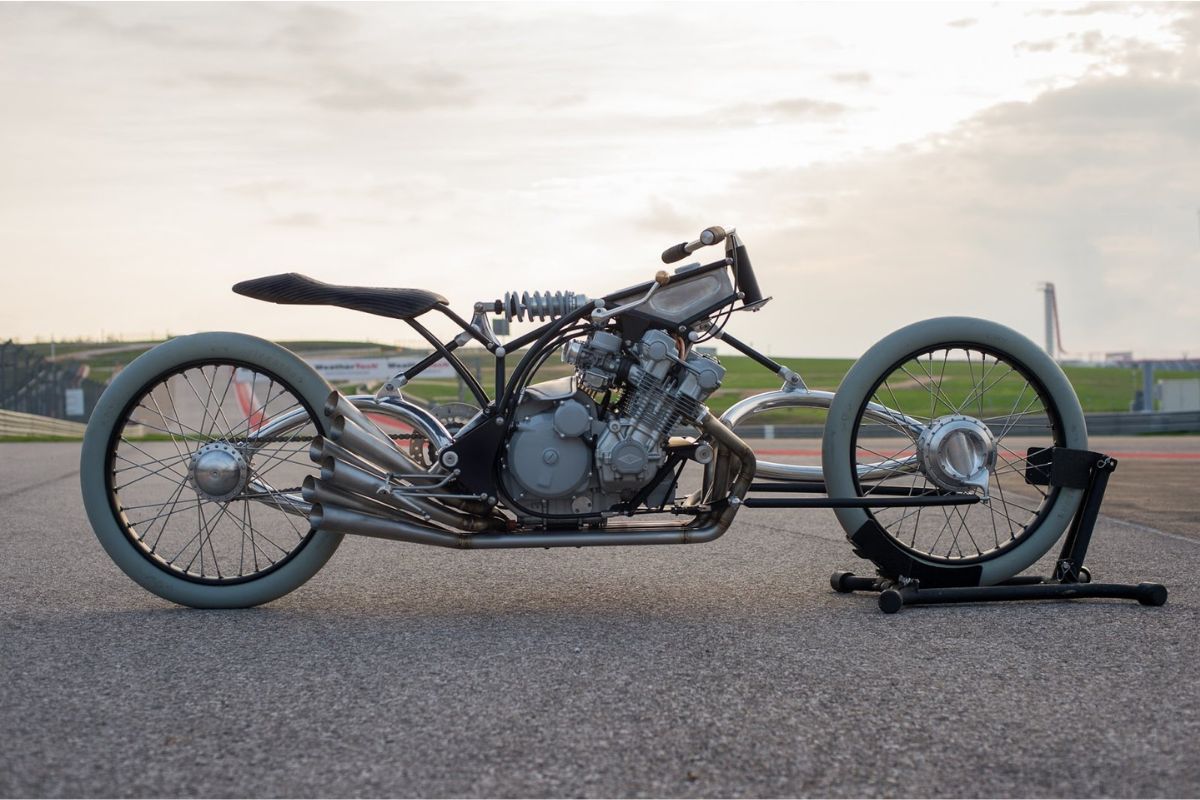
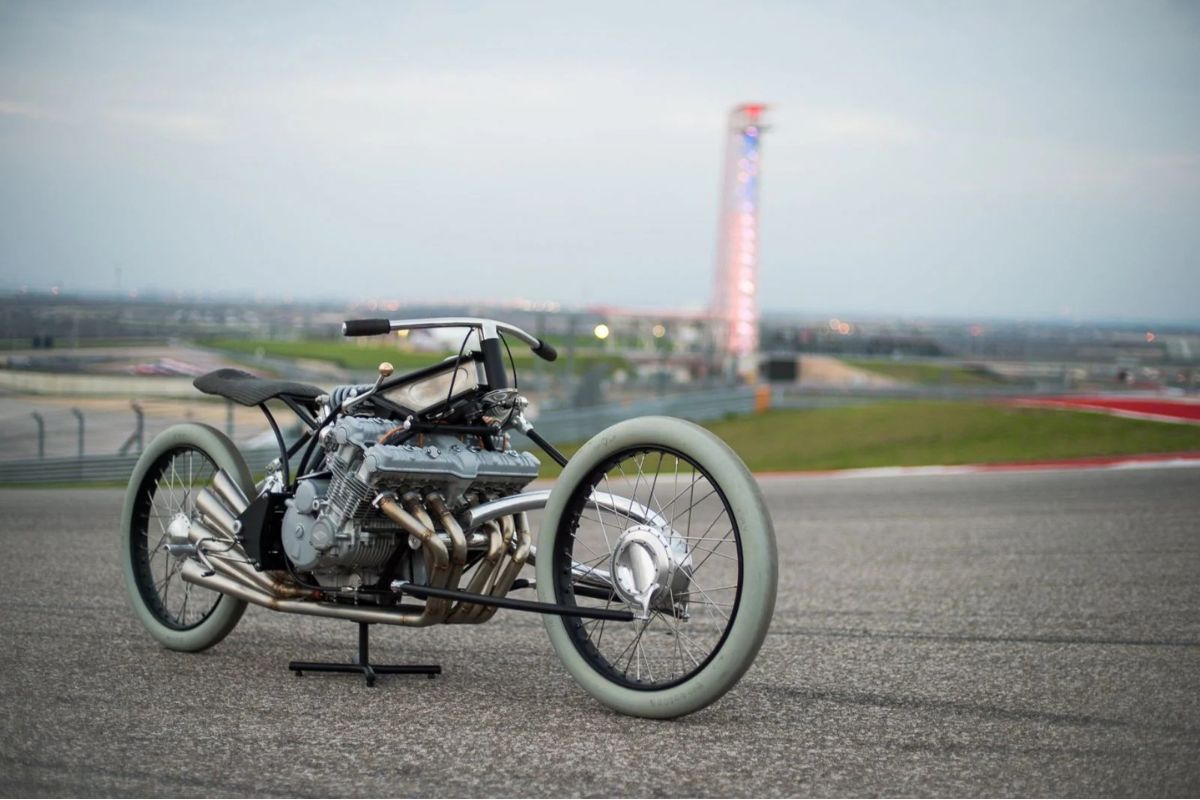
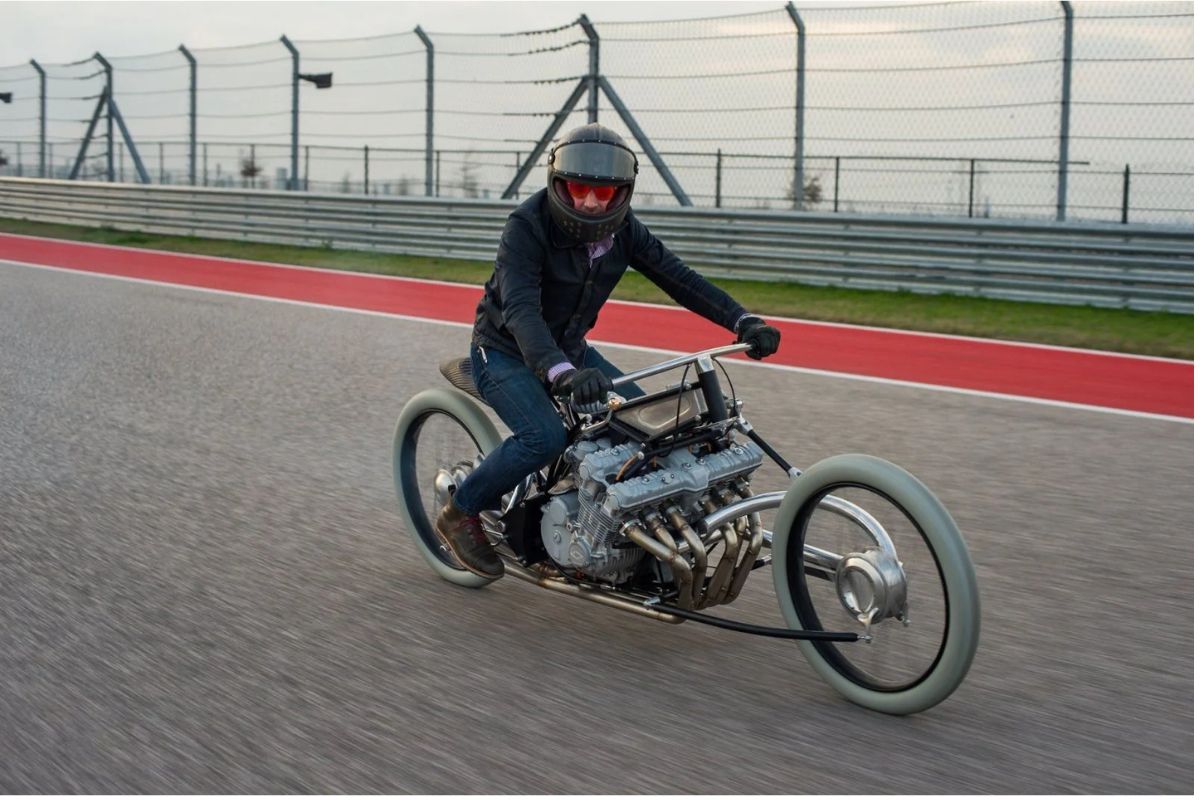
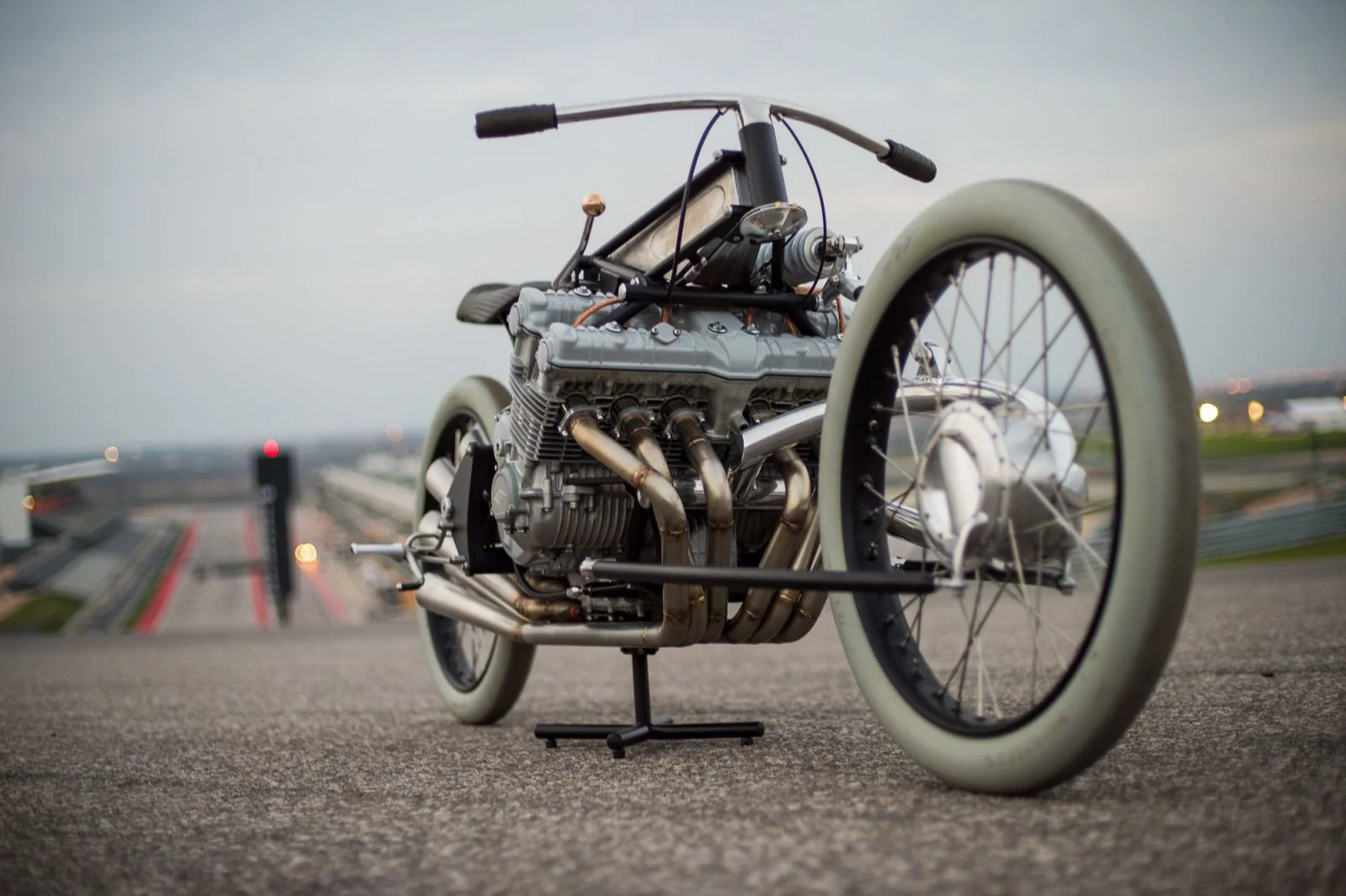
Take one Honda CBX 1000, throw away most of the motorcycle around it, fit 28-inch wheels, invent your own steering system and finish the whole thing with six open megaphones.
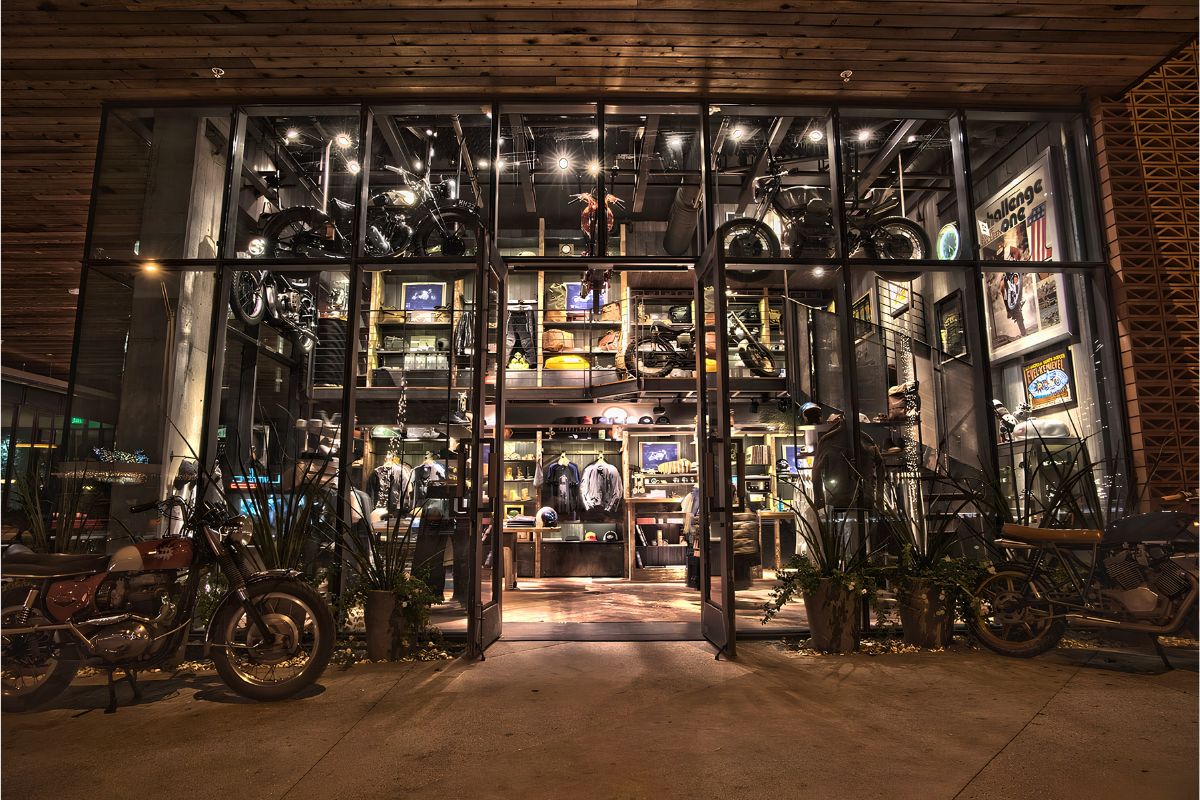
Based in Austin, Texas, Revival Cycles is a custom motorcycle workshop known for building machines where engineering and design get mixed together in rather unhealthy quantities.
Founded by Alan Stulberg, Revival has built everything from beautifully restored classics to completely one-off creations like The Six. Their bikes aren’t simply about making an old motorcycle look pretty. A big part of the Revival approach is rethinking how the machine works, designing components from scratch and then actually riding the finished product.
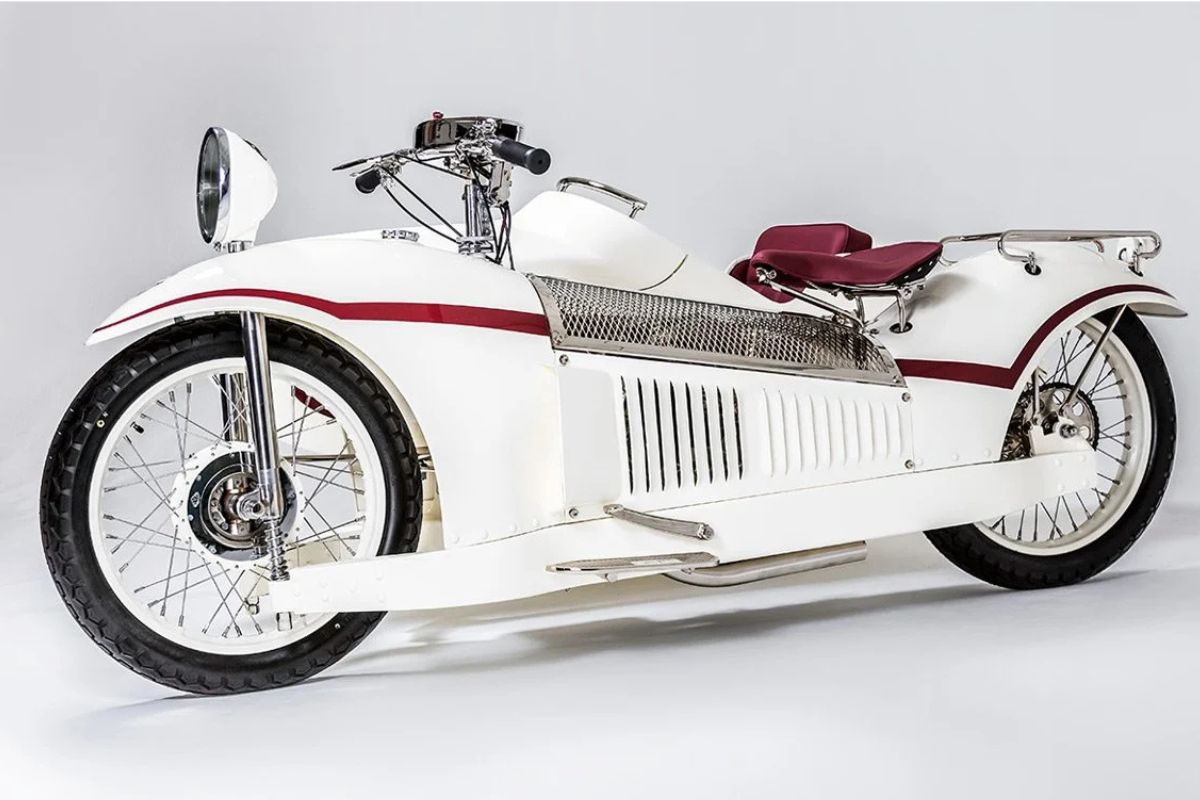
The Six was built for motorcycle collector and Haas Moto Museum founder Bobby Haas, with the original idea to create a modern interpretation of the strange 1929 French Majestic.
That plan changed along the way.
Once Revival had created the chassis, suspension and steering system, they realised there was no point hiding all that beautiful engineering under bodywork.
So they left it naked.
And we’re very glad they did.
Engine
At the heart of The Six is the engine that gives the motorcycle its name.
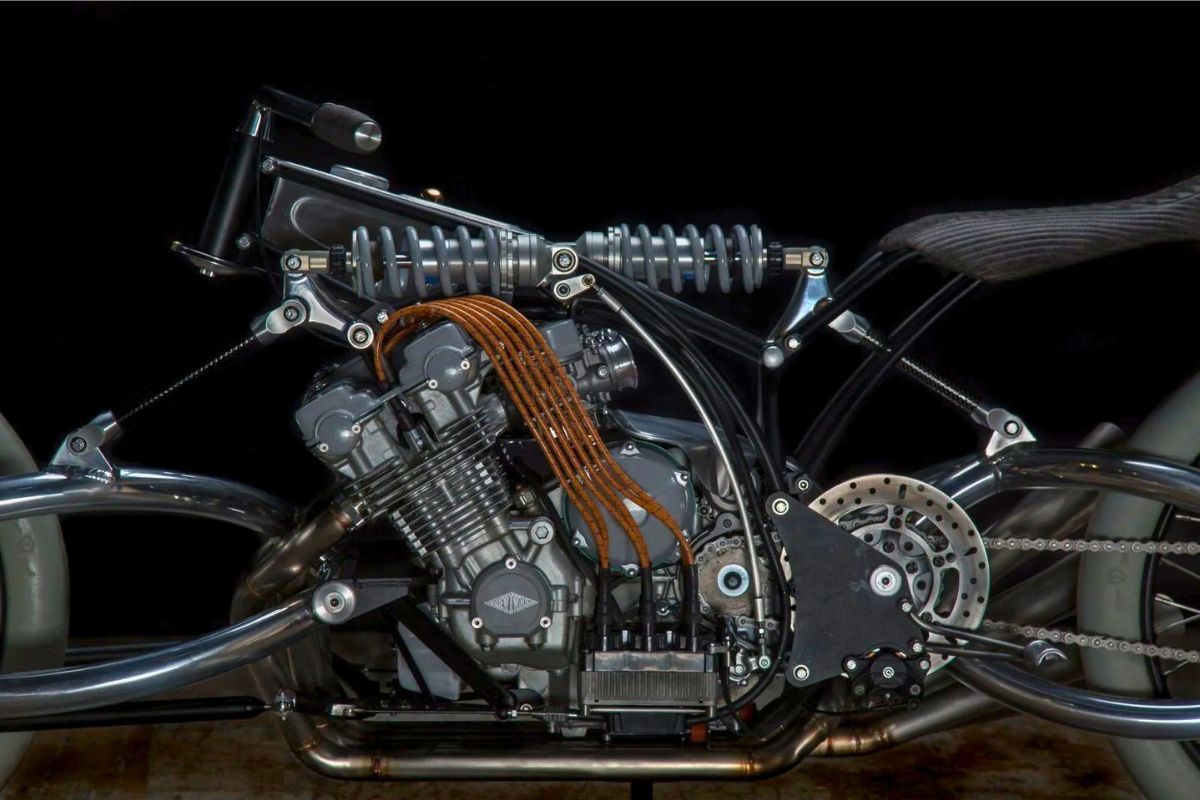
It’s based around Honda’s legendary 1,047cc CBX inline-six, the engine that made the original CBX one of the wildest superbikes of its era.
But this isn’t simply a CBX motor dropped into a fancy frame.
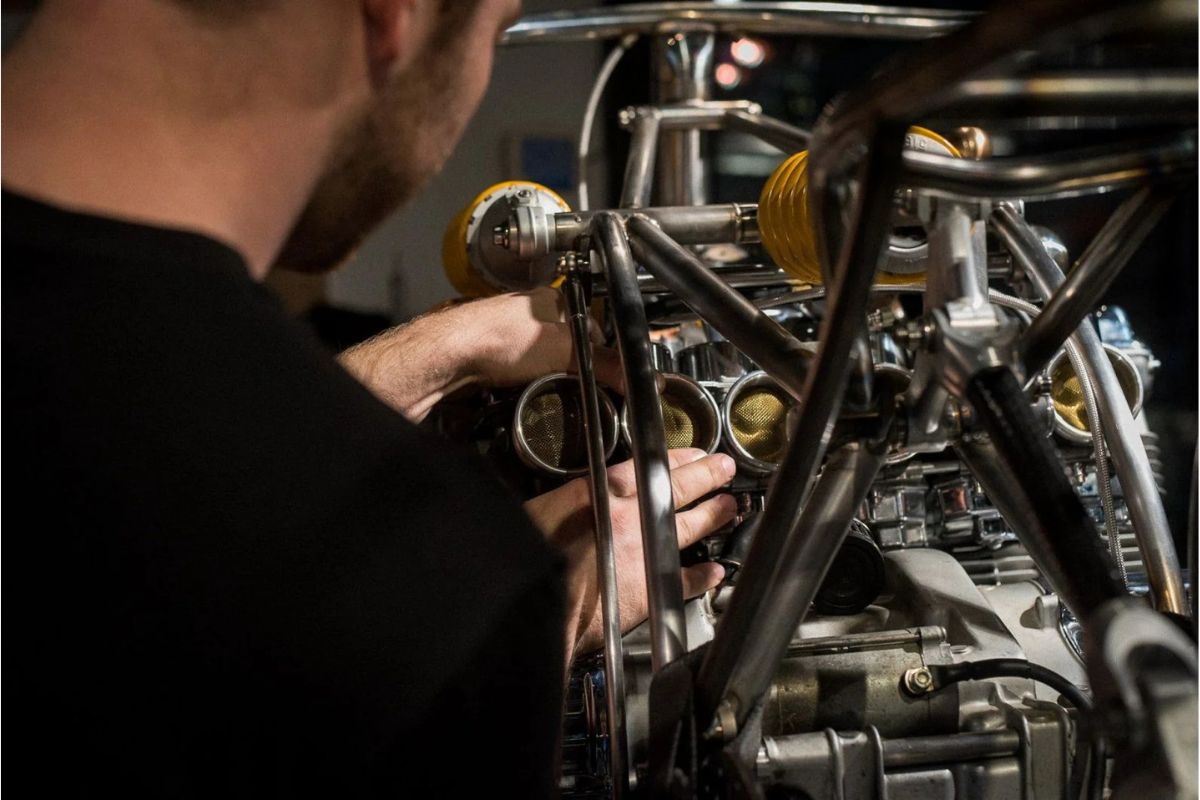
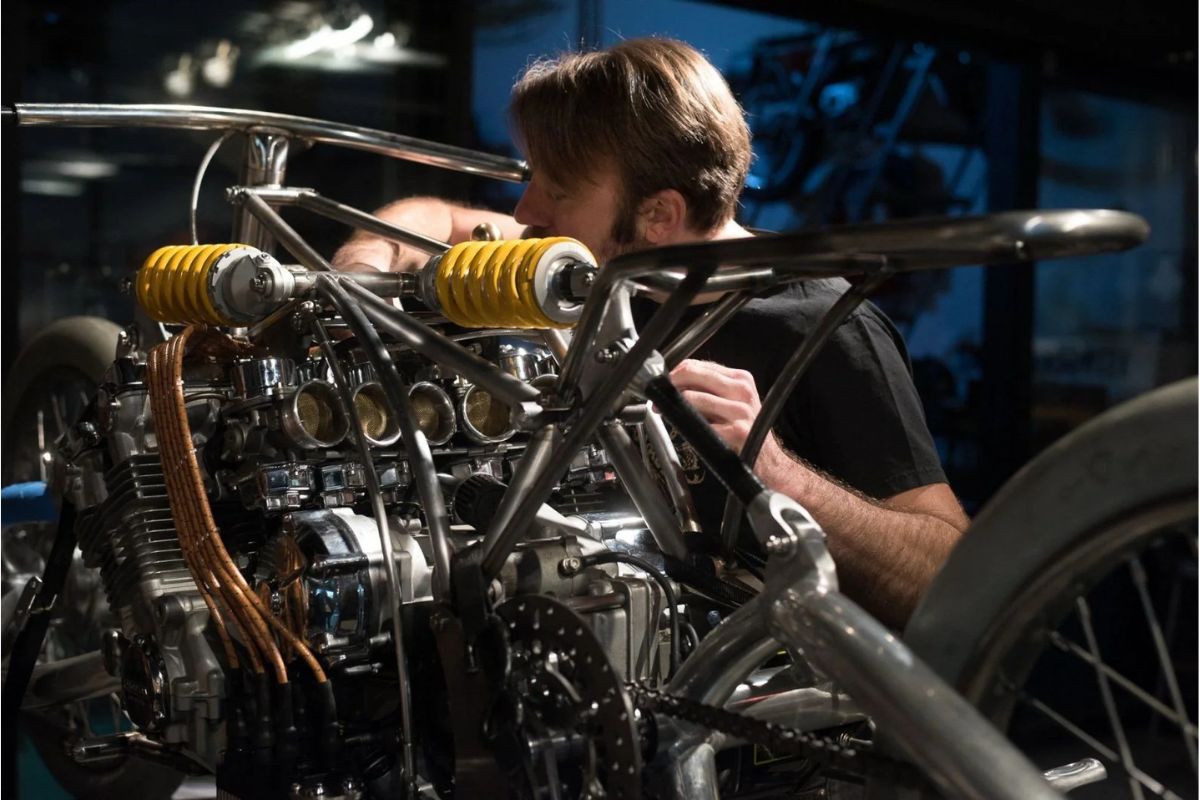
Revival rebuilt the engine and fitted a modern fuel-injection system, while the exhaust was transformed into one of the bike’s defining visual features.
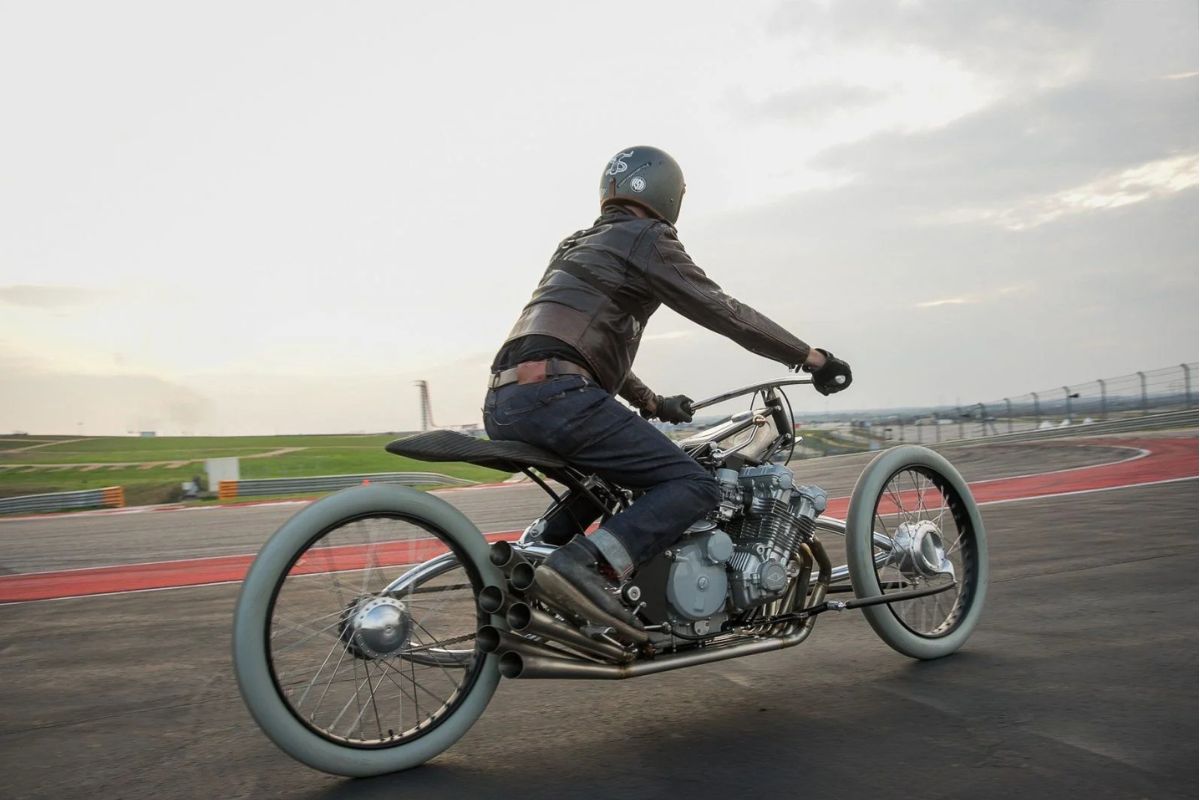
Six individual exhaust pipes exit from the engine and finish in open megaphones, leaving absolutely no doubt about what is happening inside. There is no silencer hiding the noise. No big catalytic convertor.
Just six cylinders, six pipes and a rather glorious disregard for subtlety.
Gearbox
Even the gearbox got the Revival treatment.
The Six uses a suicide-style hand shifter, mounted out where you normally wouldn’t expect a motorcycle gear lever to be. Instead of clicking through the gears with your left foot like a normal human being, the rider gets to operate the gearbox by hand. It’s an old-school idea that looks completely at home on The Six.
And there’s something wonderfully ridiculous about sitting behind a 1,047cc Honda inline-six, staring down those enormous 28-inch wheels, six open megaphones pointing at the sky and then reaching down to change gear with a lever.
Because apparently foot-operated gears were just far too sensible for this thing.
Suspension
This is where The Six gets properly weird.
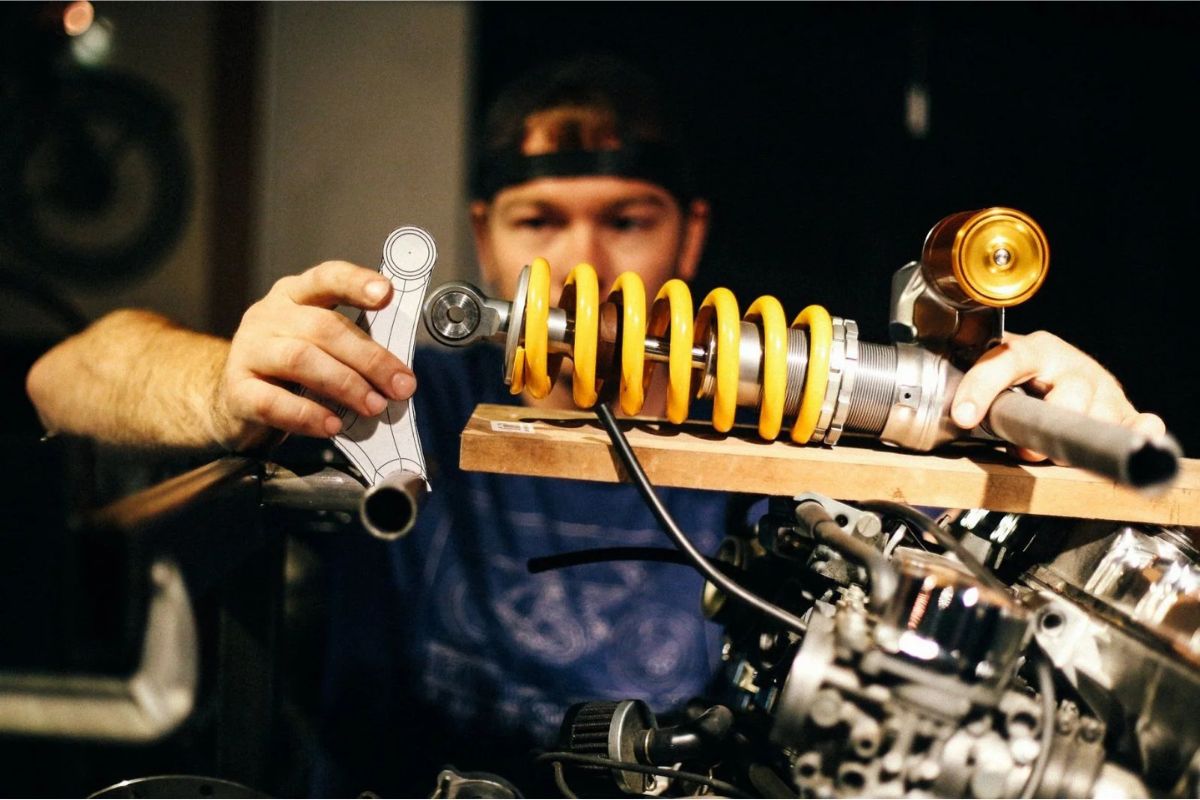
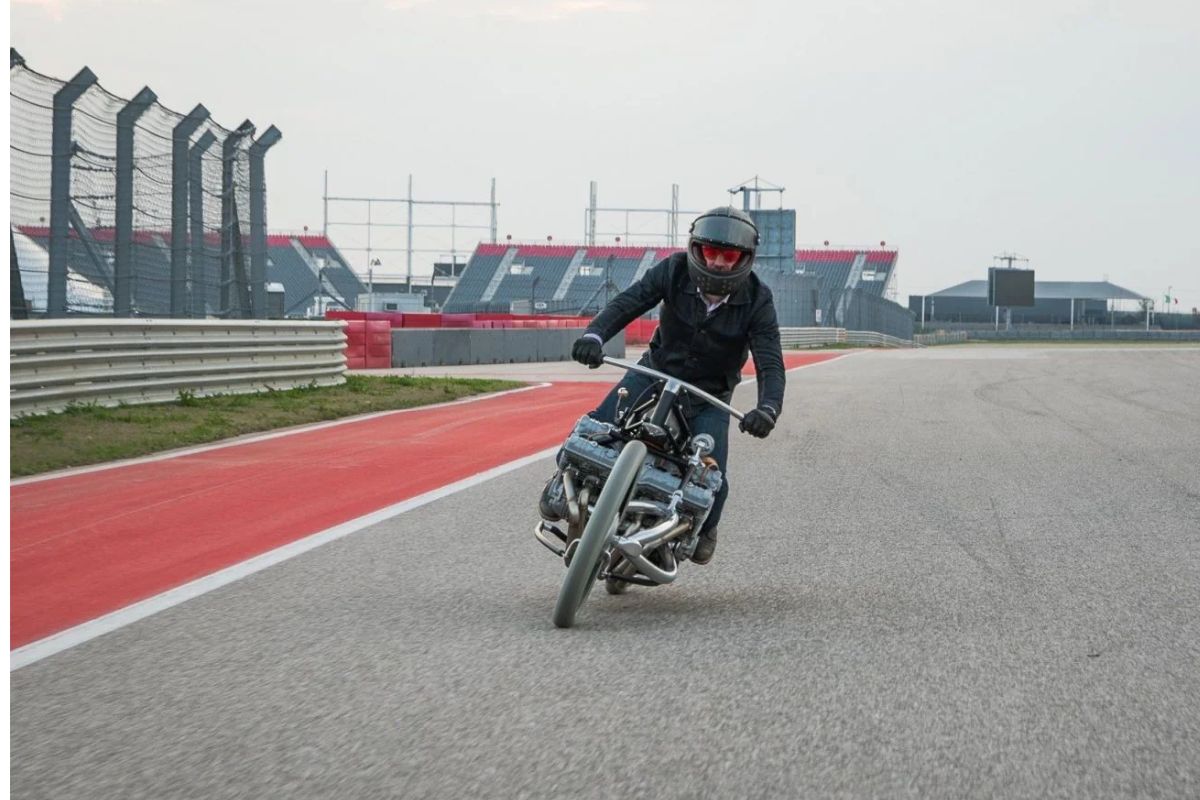
The front end doesn’t use a conventional telescopic fork. Instead, Revival designed its own suspension and steering arrangement, with the front wheel carried by a custom parallelogram-style system.
The idea was to achieve the long, low visual character of the Majestic while still creating a functioning motorcycle.
And then there are those wheels. They’re enormous.
The Six runs 28-inch wheels front and rear, giving the motorcycle a stance that looks almost cartoonish until you start looking closely at the engineering required to make those wheels actually work.
There isn’t much about this bike that could be described as conventional.
Brakes
The rear brake is another little bit of Revival madness.
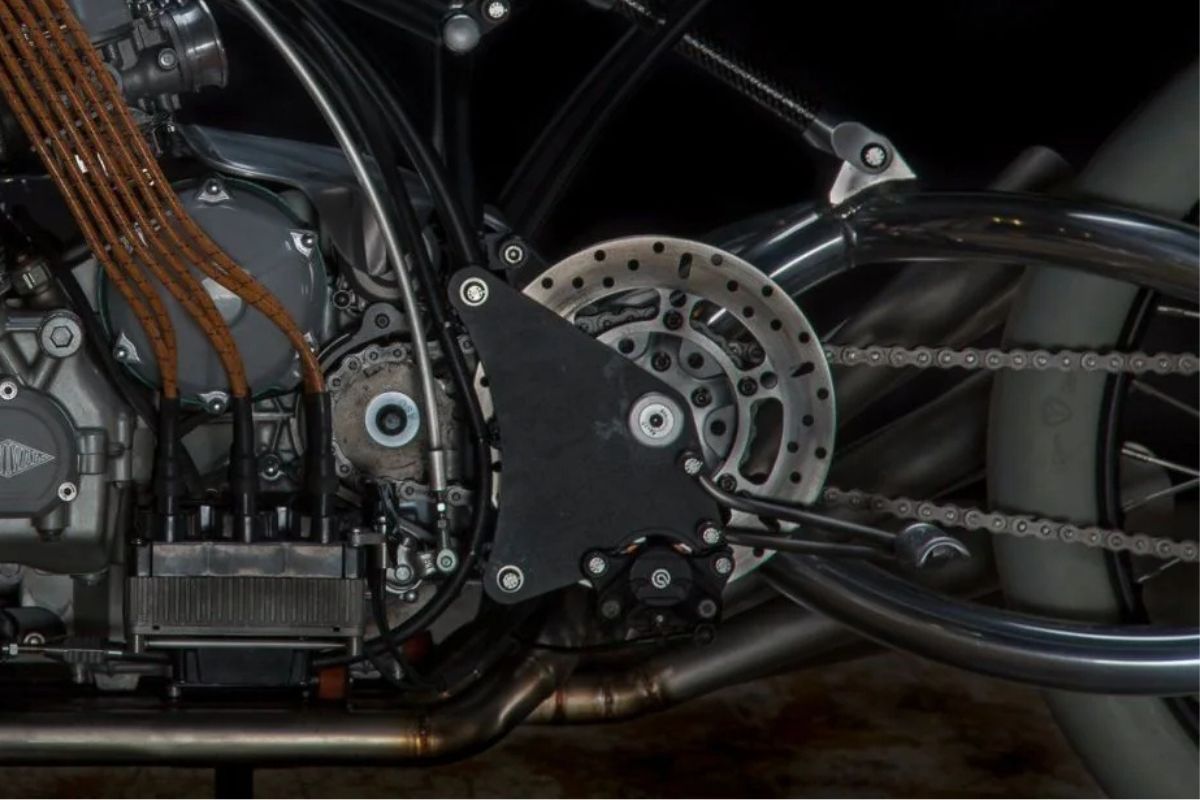
Instead of mounting the brake at the rear wheel in the conventional way, Revival used a jackshaft arrangement on the drive sprocket, allowing the rear brake to sit inboard.
That means the enormous 28-inch rear wheel can remain clean and uncluttered, while the braking hardware is tucked away closer to the centre of the motorcycle.
There’s some serious custom engineering hiding in there too, including a CNC-machined rotor carrier, Brembo master cylinder and caliper, and a custom-built brake line.
It’s a clever solution, but on The Six, it’s also part of the visual trick.
Look at the rear wheel and you see this huge, almost bicycle-like hoop with very little going on around it.
Look closer and you realise there’s a rather clever braking system hiding somewhere else entirely.
Wheels
The 28-inch wheels are probably the first thing most people notice.
They’re ridiculously large for a motorcycle and completely change the proportions of the CBX underneath them.
But they’re not fitted simply for shock value.
The huge wheels were part of Revival’s attempt to capture the distinctive proportions and visual language of the 1929 Majestic while creating something that could actually function as a modern motorcycle.
They make the bike look stretched, low and almost impossibly long.
And somehow, it works.
Chassis
The chassis is where Revival really went down the rabbit hole.
Rather than modifying an existing frame, the team created a completely new structure around the CBX engine.
The frame is beautifully exposed, with the engine hanging inside it like a piece of mechanical artwork.
There’s no traditional fuel tank dominating the top of the motorcycle either. The components have been arranged so that the mechanical structure becomes the design.
This is probably the biggest difference between The Six and a normal custom motorcycle.
Most builders start with a motorcycle and modify it.
Revival essentially started with an idea and then built the motorcycle around it.
Electronics
The Six may look like something that escaped from a 1930s engineering sketchbook, but underneath all that old-school visual drama is modern motorcycle technology.
The CBX engine has been converted to modern electronic fuel injection, allowing Revival to make the big six-cylinder motor more usable while keeping its character.
The electrical system is similarly integrated into the custom build rather than simply hanging off the frame.
There isn’t a giant dashboard or a collection of switches competing for attention.
The Six keeps things deliberately clean.
Ergonomics
Calling The Six comfortable would probably be stretching things.
The riding position is low and stretched, with the wheels and long chassis making the rider look almost like they’re sitting inside the motorcycle rather than on top of it.
But comfort was never really the point.
This bike was built to make people stop, stare and then walk around it looking for another ridiculous detail.
And there are plenty of them.
The Six isn’t trying to be a better CBX.
It is trying to be something completely different.
The Mental Bit
This is where the whole project starts making sense.
The original CBX was already a fairly outrageous motorcycle. Honda stuffed a six-cylinder engine into a production superbike and sent it onto the road.
Revival took that idea and basically asked:
What if we stopped being sensible?
The answer is The Six.
Huge wheels.
A hand-built chassis.
A completely reworked front end.
Six individual megaphones.
And enough exposed engineering to keep you staring at it for ages.
It’s part motorcycle, part engineering experiment and part rolling sculpture.
And despite looking like something that should be parked permanently inside a museum, The Six was built as a functioning motorcycle.
That’s important.
Because Revival’s creations aren’t just exercises in making something look outrageous. There’s a genuine engineering thought process behind the madness.
The Verdict
The Six is exactly what the Quirky Bikes series is all about.
Take something already interesting, forget the rulebook and see where the idea takes you.
The Honda CBX provided the six-cylinder heart.
The Majestic provided the inspiration.
Revival Cycles provided the lunacy.
And the result is one of those motorcycles that makes absolutely no sense until you see it in the metal.
Then it makes perfect sense.
Sometimes a motorcycle doesn’t need to be practical, sensible or even remotely normal.
Sometimes it just needs six cylinders, six pipes and 28-inch wheels.